
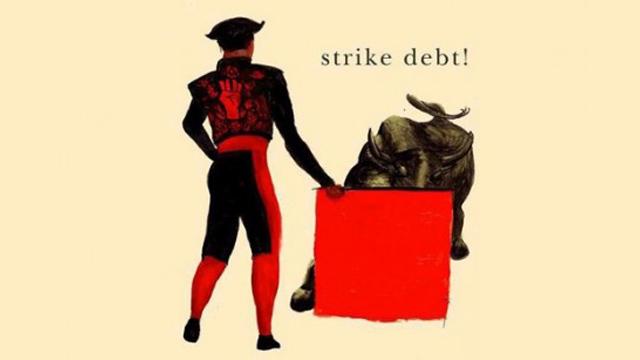
OWS Buys Up Debt — To Abolish it

Search form

OWS Buys Up Debt — To Abolish it

OWS Buys Up Debt — To Abolish it

Tue, 11/13/2012 - by Matthew Sparkes
This article originally appeared on The Telegraph

The Rolling Jubilee project is seeking donations to help it buy up distressed debts, including student loans and outstanding medical bills, and then wipe the slate clean by writing them off.

Individuals or companies can buy distressed debt from lenders at knock-down prices if it the borrower is in default or behind with payments and are then free to do with it as they see fit, including cancelling it free of charge.

As a test run the group spent $500 on distressed debt, buying $14,000 worth of outstanding loans and pardoning the debtors. They have now raised $115,000, which they say is enough money to buy and cancel more than $2.3 million of debt. After a variety show and telethon this Thursday, both sums will surely rise substantially.

David Rees, one of the organizers behind the project, writes on his blog: "This is a simple, powerful way to help folks in need - to free them from heavy debt loads so they can focus on being productive, happy and healthy.

"Now, after many consultations with attorneys, the IRS, and our moles in the debt-brokerage world, we are ready to take the Rolling Jubilee program live and nationwide, buying debt in communities that have been struggling during the recession."

A video released to promote the project says: "We shouldn't be forced into debt to cover basic needs like healthcare, housing and education. We need a jubilee, a clean slate. The math is on our side; a little bit of money goes a long way. If we can raise $50,000 we can buy a million dollars worth of debt and abolish it.

"We bailed-out the banks and in return they turned their backs on us. We don't owe them anything, we owe each other everything. It's time for a bail-out of the people, by the people."

Read more: The Deliciousness of the Rolling Jubilee, Occupy Gets Into the Debt Market.

Sign Up

Article Tabs

Student demonstrators tried to disrupt President Sebastian Piñera's final state of the nation speech to Congress.

There is no limit to the amount of money billionaires can give to influence the political discussion in this country.

People sometimes have the power to make change happen — if and when they come together and act.

PBS is free to create content that educates, informs and inspires — so long as it does not offend the plutocrats who keep it alive—.

We must either defy the corporate state or accept our extinction as a species.

Monsanto snuck a "rider" last week into the latest Senate agricultural legislation, giving the biotech giant blanket immunity from USDA action to halt potentially harmful GMO crops.

There's a big difference between our perception of wealth inequality in America, and how the real numbers add up.

Last weekend, 4,000 supporters of Binz, Zurich’s longest-established squat, were met with tear gas, rubber bullets and water cannons when a party turned into a march to protest their imminent eviction.

Tens of thousands from across the world called for new measures of liberty and dignity as they descended on Tunis to open the weeklong World Social Forum.

20 per cent of the country’s children are now classified as poor.

The Battleline: Their Coal Exports Or Our Future

The public commenting period to block the latest massive coal export facility from being built at Cherry Point in Washington state ends tomorrow. The future belongs to Peabody Coal and Goldman Sachs, or it belongs to us.

U.K. Lawmakers to Question Execs in Tax Dodging Probe

U.K. lawmakers will quiz executives of Starbucks, Google and Amazon about how they have managed to pay only small amounts of tax in Britain while racking up billions of dollars worth of sales.

Photo: Kevin Hagen

While the aims and parameters of the American Revolution and Occupy Wall Street do not align entirely, there are some striking parallels.

Making Walmart Work for Us

Workers responsible for moving an estimated $1 trillion worth of goods a year through the global economy are paid low wages, often denied breaks and basic protective gear, and are employed primarily through temp agencies. Now they are on strike.