
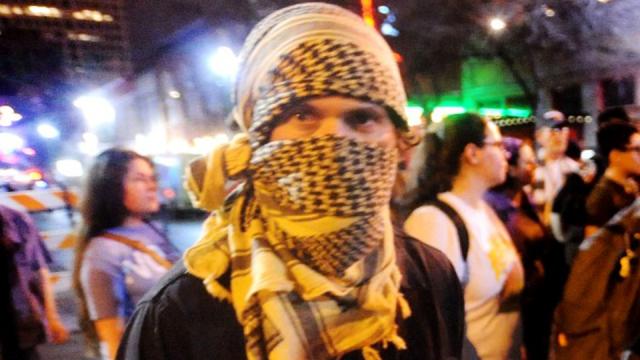
Photo: John Jack Anderson. Undercover officer Shannon G. Dowell at an Occupy Austin Gathering.
When the local offshoot of Occupy Wall Street began a five-month encampment in Austin, Texas last fall, the Austin police assigned at least three undercover officers to infiltrate the group and gather information on potentially illegal actions.
According to the Austin Statesman, court documents and interviews show that the infiltrators “camped with other participants in the movement, marched in rallies and attended strategy meetings.”
They may also have gone further, acting as provocateurs to encourage the use of lockboxes or “sleeping dragons” — lengths of PVC pipe into which protestors insert their arms to make it harder for police to remove them during a demonstration.
Seven protestors who used the devices while blocking a port entrance in Houston last December 12 have been charged with a felony and face jail terms of from two to ten years under what the Statesman calls “an obscure statute that prohibits using a device that is manufactured or adapted for the purpose of participating in a crime.”
The question of the lockboxes came up during a district court hearing in Harris County this week at which one of those seven, Ronnie Garza, sought to have the charge against him dropped. It was disclosed at the hearing that Austin Police Detective Shannon Dowell — known to Occupiers as “Butch” — had purchased the necessary pipe and other materials using funds supplied by Occupy Austin, constructed the devices himself, and provided them to demonstrators.
According to Occupy Austin supporter Kit OConnell, the occupiers figured out “Butch’s” true identity after their encampment was evicted last winter. Affadavits from Occupy Austin members have pointed to Dowell as the person who pushed for the use of the lockboxes and allege that he would regularly pull participants aside “in order to express his frustration with debate and eagerness for more aggressive and provocative actions.”
Garza’s attorney, Greg Gladden of the National Lawyer’s Guild, has accused the police of entrapment and possible misconduct. Judge Joan Campbell, who had initially dismissed the case until prosecutors obtained indictments from a grand jury, says she will decide next week whether to allow the proceeding to go forward.
At the hearing, Dowell told the judge that he had could not produce subpoenaed documents because emails he had sent about the operation from his work computer had been deleted and he had lost a thumb drive containing photos when it dropped out of his pocket and fell in the gutter.
The Statesman reports that Judge Campbell expressed frustration with Dowell, while Garza’s attorney remarked, “I think he decided it was time the dog ate his homework.”
Judge Campbell has threatened to dismiss the case unless the required documents and the real names of the two other undercover officers, “Dirk” and “Rick,” are presented at the next hearing on September 5.
Police officials declined to comment on the question of it was Dowell who first proposed using the lockboxes, but they did confirm that their department had ordered the infiltration.
Austin Police Chief Sean Mannix said that his department had begun receiving reports from confidential informants that the occupiers might be planning illegal protests. “We obviously had an interest in ensuring people didn’t step it up to criminal activity,” he said. “There is obviously a vested public interest to make sure that we didn’t allow civil unrest, violent actions to occur.”
Mannix does not believe any laws or departmental policies were violated, but he confirmed that the infiltration effort is the subject of a high-level internal review which is “absolutely looking into all aspects of what their undercover work was.”
3 WAYS TO SHOW YOUR SUPPORT



- Log in to post comments


