
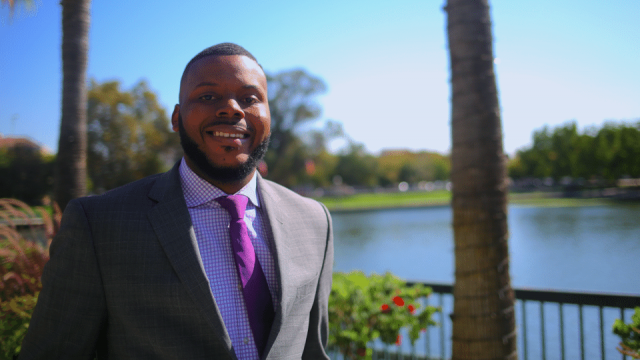
Next year, a random sample of the 300,000 residents of Stockton, a port city in California’s Central Valley, will get $500 per month ($6,000 a year) with no strings attached.
It’s the latest test of a policy known as basic income, funded not out of city revenues but by individual and foundation philanthropy. The first $1 million in funding comes from the Economic Security Project, a pro-basic income advocacy and research group co-chaired by Facebook co-founder and former New Republic publisher Chris Hughes and activists Natalie Foster and Dorian Warren; Hughes provided the group’s initial funding. Stockton Mayor Michael Tubbs hopes to launch the basic income project as early as August 2018.
The project — known as the Stockton Economic Empowerment Demonstration (SEED) — will be, in a way, the purest expression to date of Silicon Valley’s passion for basic income proposals, which many tech entrepreneurs and investors see as a necessary way to support Americans if artificial intelligence and other automation advances lead to unemployment for vast swaths of the population.
To the tech world, basic income is a way to redistribute the vast wealth that Silicon Valley creates to poorer people and localities left behind. And what better place to start than by redirecting part of a Facebook fortune to Stockton, an overwhelmingly nonwhite exurb of the Bay Area that became the largest city in the U.S. to declare bankruptcy during the financial crisis?
An hour and half from San Francisco (if traffic is forgiving) and thus boasting the longest commute times in America, Stockton is tantalizingly close to big tech and its wealth, but just far enough away to experience significantly lower incomes and a higher poverty rate than San Francisco, San Jose, or Oakland.
Tubbs is particularly well-suited to be the policy’s champion. Upon winning the mayoral election last year, he became both Stockton’s first black mayor and, at 26, the youngest mayor of a city of more than 100,000 people in American history. Tubbs cites as his inspiration Martin Luther King Jr., who called for a guaranteed minimum income in his last book, Where Do We Go From Here: Chaos or Community?, as well as his own experience “growing up in poverty and seeing how much of some of the stress came from trying to stretch dollars to pay for necessities, like bills or school uniforms. When things came up unexpectedly it would cause a lot of hardships.”
“The stress isn’t because people don’t have character,” Tubbs adds. “It’s because people don’t have cash.”
What Stockton’s Experiment Hopes to Learn
Many important aspects of the policy remain to be determined. Tubbs plans to start with a six- to nine-month planning period, where the city will finalize eligibility criteria and the payment amount, and request proposals from researchers on how best to design the program to add to our knowledge about cash programs.
Ontario, Canada; Finland; and the international charity GiveDirectly in Kenya have all launched basic income experiments of their own. Yet another study, funded by the early-stage venture capital firm Y Combinator, is launching soon, and Glasgow, Edinburgh, North Ayrshire, and Fife in Scotland are jumping into the ring too. (A full list of ongoing and announced basic income pilots can be found here.)
Each of those studies has different goals. Ontario, Finland, and Scotland are interested in potentially reforming their welfare/social assistance systems, attracted by the simplicity of just giving people cash without conditions. (Finland has already largely botched its experiment through poor design, rendering its research value rather limited.)
GiveDirectly wants to test the viability of regular cash payments as a global development tool, for use by aid and development agencies like USAID or the United Nations or World Bank as well as national governments in poor countries.
Y Combinator wants to see what risks people take when given an unconditional stipend: if they start more businesses or become more creative and ambitious or if they just keep on working.
Tubbs says his goal with the Stockton experiment is to see the myriad ways recipients invest the money, whether that’s toward taking more time off work to spend on other activities, or going back to school, or volunteering. “I’m excited about just showing what people do with increased economic opportunity,” he says. “Being able to devote their time full time as a parent or caregiver, going back to school to reskill, investing in a new business. I know the ingenuity of some of the folks in my city.”
Tubbs says he hopes the experiment will run at least three years and benefit at least 100 people, which would put the total cost of the transfers at $1.8 million (before implementation costs). If it works, he envisions a public-private partnership eventually expanding the approach to cover more of the city.
That would probably require significant outside funding. The fiscal situation in Stockton is much improved from when it fell into bankruptcy, but a truly universal, not-lotteried benefit at the municipal level would be challenging to enact. The plan would likely trigger an influx of residents from nearby towns (and maybe even some from farther away). The town, facing high borrowing costs due to its junk bond-level credit ratings post-bankruptcy, would need to raise taxes in response to that. Higher taxes could in turn lead some high-income residents to leave, setting off a vicious cycle.
Tubbs concedes that ideally this is the kind of policy that would be implemented at the state or national level. Nonetheless, he says, “It’s a great opportunity to have this conversation about all these factors. … Stockton is a proxy for America: its diversity, its people. It’s a place that’s emerging and has big bold ideas.”
3 WAYS TO SHOW YOUR SUPPORT



- Log in to post comments


