
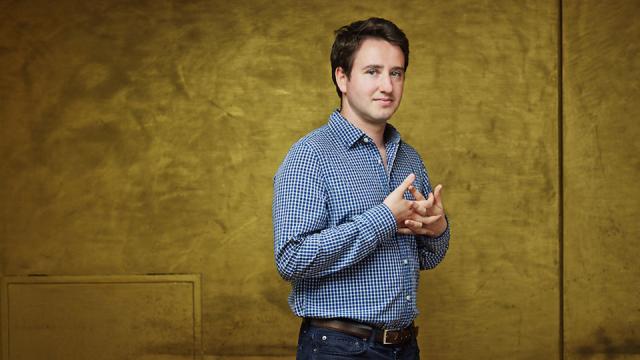
Gabriel Zucman is a 27-year-old French economist who decided to solve a puzzle: Why do international balance sheets each year show more liabilities than assets, as if the world is in debt to itself?
Over the last couple of decades, the few international economists who have addressed this question have offered a simple explanation: tax evasion. Money that, say, leaves the United States for an offshore tax shelter is recorded as a liability here, but it is listed nowhere as an asset — its mission, after all, is disappearance.
But until now the economists lacked hard numbers to confirm their suspicions. By analyzing data released in recent years by central banks in Switzerland and Luxembourg on foreigners’ bank holdings, then extrapolating to other tax havens, Mr. Zucman has put creditable numbers on tax evasion, showing that it’s rampant — and a major driver of wealth inequality.
Mr. Zucman estimates — conservatively, in his view — that $7.6 trillion — 8 percent of the world’s personal financial wealth — is stashed in tax havens. If all of this illegally hidden money were properly recorded and taxed, global tax revenues would grow by more than $200 billion a year, he believes. And these numbers do not include much larger corporate tax avoidance, which usually follows the letter but hardly the spirit of the law.
According to Mr. Zucman’s calculations, 20 percent of all corporate profits in the United States are shifted offshore, and tax avoidance deprives the government of a third of corporate tax revenues. Corporate tax avoidance has become so widespread that from the late 1980s until now, the effective corporate tax rate in the United States has dropped from 30 percent to 15 percent, Mr. Zucman found, even though the tax rate hasn’t changed.
Mr. Zucman, an assistant economics professor at the London School of Economics, is part of a wave of data-focused economists led by his mentor, Thomas Piketty, of the Paris School of Economics. Mr. Zucman’s short book on tax evasion, “The Missing Wealth of Nations,” was a best seller in France last year.
Mr. Zucman’s tax evasion numbers are big enough to upend common assumptions, like the notion that China has become the world’s “owner” while Europe and America have become large debtors. The idea of the rich world’s indebtedness is “an illusion caused by tax havens,” Mr. Zucman wrote in a paper published last year.
In fact, if offshore assets were properly measured, Europe would be a net creditor, and American indebtedness would fall from 18 percent of gross domestic product to 9 percent.
Only multinational corporations and people with at least $50 million in financial assets usually have the resources to engage in offshore tax evasion. Since the less wealthy continue paying taxes, the practice deepens wealth inequality.
Indeed, newly invigorated efforts in the United States to curb personal tax evasion, codified in the 2010 Foreign Account Tax Compliance Act, have armed the Internal Revenue Service with strong sanctions to levy on foreign banks that fail to disclose accounts held by American residents. This has made it “more difficult for moderately wealthy individuals to dodge taxes,” Mr. Zucman says, while the richest account holders still have more elaborate evasive techniques at their disposal.
“There’s a profound shift in attitudes that happened in the 1980s,” Mr. Zucman says. “In the ’50s, ’60s and ’70s, taxes were much higher, yet it was not considered normal to try to aggressively minimize your tax bill and even to evade taxes.” He finds it “no coincidence” that the era of widespread tax evasion began in the Reagan era, with the rise of the idea that government is a beast that must be starved.
Because large-scale tax evasion skews key economics statistics, it hampers officials’ ability to manage the economy or make policy, Mr. Zucman says. It erodes respect for the law, preventing the government from carrying out one of its essential tasks. And it discourages job creation, since it rewards people and corporations for keeping money overseas, instead of investing it domestically.
Despite the obstacles that the tax compliance act faces, Mr. Zucman believes its passage marked a global turning point, starting an era of “remarkable progress” in reducing bank secrecy. Even so, only an international approach has a chance of stopping tax evasion, he says. Its most important feature would be a global financial registry, which would track wealth ownership in the same way that Americans routinely record real estate holdings now. “If you can’t measure wealth,” Mr. Zucman says, “it’s almost impossible to tax it.”
A registry would make it impossible for multinationals to falsely attribute profits to tax havens instead of the countries where the profits should be taxed. The United States and Europe could build momentum for a global registry by establishing national registries for their own residents, perhaps incorporating the idea into the free trade agreement that Europe and the United States are now negotiating.
What’s beyond question is that there is no economic, political or moral justification for tax evasion — it exists only because of the political influence that wealth buys. A society that fails to fight widespread tax evasion proclaims its own corruption.
Jacques Leslie is the author of “Deep Water: The Epic Struggle Over Dams, Displaced People, and the Environment.”
Originally published by The New York Times
3 WAYS TO SHOW YOUR SUPPORT



- Log in to post comments


