

A retired coal miner in eastern Kentucky recently sent me an early Christmas card warning. “Whatever you do,” he wrote, “I prefer dirty coal from Santa Claus instead of the annual drivel of ‘Christmas in Appalachia’ pity.”
Pity, poverty, depravity, coal despair, even the picturesque — name your favorite Appalachian or hillbilly caricature of the Mountain South over the past century.
But for a region that once served at the forefront of the American Revolution, the anti-slavery movement and labor and civil rights struggles and that gave us our first American female Nobel laureate for literature (Pearl S. Buck), among other cultural innovators, I think it is time to turn the page on nostalgia and grant Appalachia what it deserves: a regeneration fund.
Looking past the hand-wringing, the finger-pointing, the wars on coal, everyone can agree that coal-mining communities in central Appalachia perennially rank at the bottom of well-being indexes and need some form of economic renewal.
“You never change things by fighting the existing reality,” the famed visionary R. Buckminster Fuller reminded us decades ago. “To change something, build a new model that makes the existing model obsolete.”
But the obvious fulfillment of Fuller’s new model — clean energy jobs — is sorely lacking in central Appalachia. In a recent assessment, West Virginia ranked 49th in the country for a “clean energy edge.”
This is wrong, and this oversight must change. The time has come for our nation to pay its debt to Appalachia.
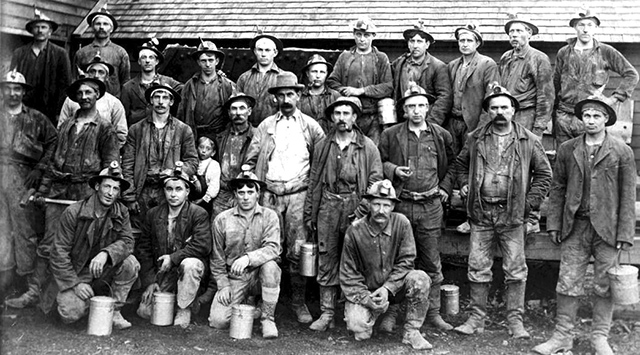
A GI Bill for Coal Miners?
After shouldering the health costs and powering our nation’s industrial rise to fortune over the past two centuries, don’t ailing and polluted coal-mining communities in Appalachia and elsewhere deserve their fair share of a transition fund for retraining and investment to jump-start reforestation and abandoned mine projects, clean energy manufacturing and energy-efficiency campaigns?
Small, decentralized, homegrown and growing economic diversification and sustainability projects abound in central Appalachia. In Williamson, W.Va, unemployed coal miners drew national attention two years ago for a solar-installation jobs project. Two weeks ago, the Energy Savings Action Center was launched as a website to help Appalachian residents save money and energy by promoting energy-efficiency loan programs through local electric utilities. Thanks to longtime transition efforts by citizens’ groups such as Kentuckians for the Commonwealth and the Mountain Association for Community Economic Development, eastern Kentuckians gathered Dec. 9 for a high-level government-sponsored summit on economic diversification. The following weekend, the Alliance for Appalachia hosted an Economic Transition Summit in West Virginia.
As historian Ron Eller noted last week, “Appalachia has never suffered from a lack of creative ideas.” But such ingenuity must be paired with startup funds, public and private investors and long-term support.
If we can pump out billions in federal subsidies for natural disasters and subsequent repairs, can’t we do the same for regenerative endeavors amid man-made ruin?
Call it the Coalfields Regeneration Fund — or even a GI Bill for Coal Miners and Coal Mining Communities.
Make it part of President Barack Obama’s climate mandate: Carbon sequestration begins with keeping the carbon in the ground.
If Germany can produce nearly 60 percent of its electricity (as measured on Oct. 3) from largely decentralized sources of wind and solar and once coal-laden Scotland (where black lung disease from coal dust was first diagnosed in the 1830s) can set out an ambitious road map to become 100 percent free of fossil fuels by 2020, why won’t the U.S. prioritize clean energy in a similar manner?
Indeed, if Obama and Congress are serious about climate change, they should make central Appalachia and other coal-mining areas the front-line showcase for our nation’s clean energy agenda, not the backwoods of denial. We all live in Appalachia
But the coal-mining industry in central Appalachia has always gone hand in hand with declining jobs, entrenched poverty and environmental ruin.
As first documented in Charles Kuralt’s landmark “Christmas in Appalachia” TV program in 1965, coal-mining jobs and community health in the region have over the years been undermined by mechanization and a shift toward large-scale strip-mining operations.
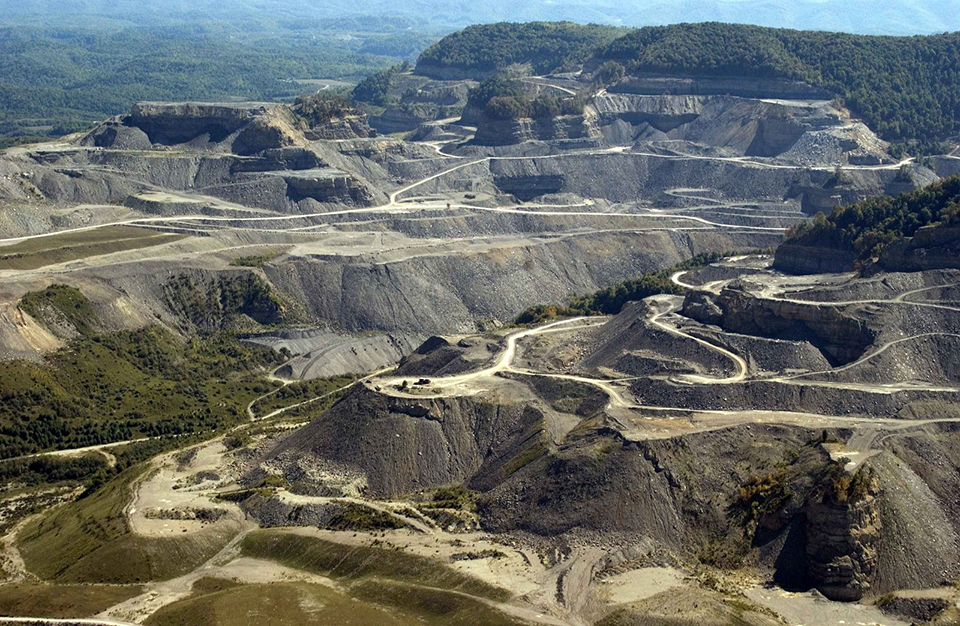
No realistic clean energy future is going to emerge until the needless devastation and mounting health care crisis from mountaintop-removal mining are brought to an end — most notably through the Appalachian Communities Health Emergency Act. The extreme, large-scale strip-mining process provides only a small fraction of national coal production, yet its costly fallout has placed a stranglehold on any meaningful economic diversification. The act, introduced by Rep. John Yarmuth, D-Ky., calls for a moratorium on mountaintop-removal mining until proper health assessments are made.
The coalfields in central Appalachia, of course, are not the only region beset by the boom-bust realities of the extraction industries. My kinfolk in southern Illinois are once again in the midst of an unprecedented coal-mining rush and soaring coal exports, and a hydraulic fracking campaign that will drill the natural gas out of the impoverished region’s bowels. (In another indicator, the region boasted not a single green job on the latest charts.) Strip-mining operations take place in nearly 25 states. The Northern Cheyenne, like many indigenous communities, are fighting expanding coal-mining plans that will be devastating for their future and anyone who cares about the climate crisis.
Even Wisconsin’s sacred “Sand County” hills, so dubbed by revered conservationist Aldo Leopold, who called the area his home, have been put on the chopping block as part of the natural-gas fracking rush.
In effect, Appalachia has been more a code word for extraction plunder than a geographical reference — a process more than a place.
We all live in Appalachia. This is true for all of us who flick on our lights and smartphones every day, thanks to the export-bound barges and the power plants that still burn coal and natural gas removed from underneath our farms, forests and homelands.
Now we must all support Appalachia — in southern Illinois, on the Navajo Nation, from Alabama to Alaska — with a road map for regeneration, not a relapse of nostalgia.
This holiday season, let’s drop the pity for Appalachia once and for all.
Or, as my coal-miner friend in eastern Kentucky would say: Let’s turn on the lights for Appalachia’s bright future with new energy.

3 WAYS TO SHOW YOUR SUPPORT



- Log in to post comments


