
Read

User menu

Search form

Bank of England Admits Occupy Was Right About Recession

Bank of England Admits Occupy Was Right About Recession
Tue, 10/30/2012 - by Phillip Inman
This article originally appeared on The Guardian

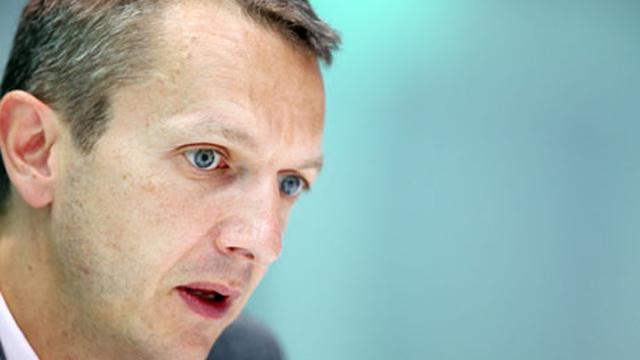
Photo: Rex Features. Occupy's voice had been "loud and persuasive," said Andrew Haldane, a senior Bank of England official.

The Occupy Movement has found an unlikely ally in a senior Bank of England official, Andrew Haldaner, who has praised protesters for their role in triggering an overhaul of the financial services sector.

Haldane, who oversees the City for the central bank, said Occupy acted as a lever on policymakers despite criticism that its aims were too vague. He said the protest movement was right to focus on inequality as the chief reason for the 2008 crash, following studies that showed the accumulation of huge wealth funded by debt was directly responsible for the domino-like collapse of the banking sector in 2008.

Speaking at a debate held by the Occupy Movement in central London, Haldane said regulations limiting credit use would undermine attempts by individuals to accumulate huge property and financial wealth at the expense of other members of society. Allowing banks to lend on a massive scale also drained funding from other industries, adding to the negative impact that unregulated banks had on the economy, he said.

The hard-hitting speech is unlikely to find a warm welcome in the Square Mile, which is keen for bank lending to recover to its heady pre-crisis levels and bring accompanying profits and commissions.

Lending to individuals and corporations in the UK has fallen to a fraction of the levels seen in 2007 when few banks checked the income status of individual borrowers or the risks being taken by corporate customers before offering a loan.

The Bank of England will impose stricter lending rules on banks next year when it takes over regulation of the industry from the Financial Services Authority.

Haldane said Occupy's voice had been "loud and persuasive" and that "policymakers have listened and are acting in ways which will close those fault-lines" with a "reformation of finance that Occupy has helped stir." He said inequality was fueled by bank lending for speculation on property and other assets that enriched some in society at the expense of others.

"The asset-rich, in particular the owner-occupying rich, became a lot richer. Meanwhile, the asset-less and indebted fell further behind. In other words, the pre-crisis asset price bubble acted like a regressive tax," he said.

3 WAYS TO SHOW YOUR SUPPORT

ONE-TIME DONATION

Just use the simple form below to make a single direct donation.

DONATE NOW

MONTHLY DONATION

Be a sustaining sponsor. Give a reacurring monthly donation at any level.

GET SOME MERCH!

Now you can wear your support too! From T-Shirts to tote bags.

SHOP TODAY

Sign Up

Article Tabs

From a pro-democratic perspective, civil society and new media organisations are surging in the aftermath of the Orban regime.

The country’s new prime minister, Andy Burnham, has promised a break from the politics of the last 40 years—realizing more broadly that Labour must stand up for the 99% against big business, or the party will become irrelevant.

The tragic shooting of Lorenzo Salgado Araujo is just the latest example of ICE having a fundamental disrespect for human life — further proving why the agency should be stripped of funding and shut down, and its rank-and-file agents and leadership prosecuted.

While the U.S., EU and their allies are enabling Rojava—the strongest force against Islamic State— to fall, it is vital for internationalists to continue to support this beacon of democracy and liberation.

June 23, 2026 may be remembered as the beginning of the end of the Democratic Party establishment.

The current wave of food recalls is a direct byproduct of President Donald Trump’s administration deliberately removing the safeguards put in place aimed at protecting American consumers more than a century ago.

From a pro-democratic perspective, civil society and new media organisations are surging in the aftermath of the Orban regime.

We can still celebrate success while simultaneously putting a cap on net worth.

The country’s new prime minister, Andy Burnham, has promised a break from the politics of the last 40 years—realizing more broadly that Labour must stand up for the 99% against big business, or the party will become irrelevant.

Much like the resistance to AI data centers, the opposition to Flock surveillance cameras has brought the left and the right together against billionaires who are trying to force America into becoming even more of a police state.

Much like the resistance to AI data centers, the opposition to Flock surveillance cameras has brought the left and the right together against billionaires who are trying to force America into becoming even more of a police state.

Posted 1 month 3 weeks ago

The country’s new prime minister, Andy Burnham, has promised a break from the politics of the last 40 years—realizing more broadly that Labour must stand up for the 99% against big business, or the party will become irrelevant.

Posted 1 month 3 weeks ago

We can still celebrate success while simultaneously putting a cap on net worth.

Posted 1 month 1 week ago

The current wave of food recalls is a direct byproduct of President Donald Trump’s administration deliberately removing the safeguards put in place aimed at protecting American consumers more than a century ago.

Posted 2 weeks 3 days ago

From a pro-democratic perspective, civil society and new media organisations are surging in the aftermath of the Orban regime.

Posted 2 weeks 5 days ago

The current wave of food recalls is a direct byproduct of President Donald Trump’s administration deliberately removing the safeguards put in place aimed at protecting American consumers more than a century ago.

From a pro-democratic perspective, civil society and new media organisations are surging in the aftermath of the Orban regime.