
Read

User menu

Search form

Climate Change Has ‘Loaded The Dice’ On The Frequency Of 100-Year Floods

Climate Change Has ‘Loaded The Dice’ On The Frequency Of 100-Year Floods
Fri, 9/1/2017 - by Chris D’Angelo
This article originally appeared on Huffington Post

As Earth’s climate changes, extreme floods now described as “100-year” and “500-year” events are expected to become more frequent. So will the number of times that the public gets confused by those labels.

Some experts wonder if it might be time to scrap such terminology.

So-called 100-year floods are becoming so common that the metric “is pretty much useless now as a baseline for an extreme event,” said Marshall Shepherd, director of the atmospheric sciences program at the University of Georgia and a former president of the American Meteorological Society.

“We are in a new normal,” he told HuffPost.

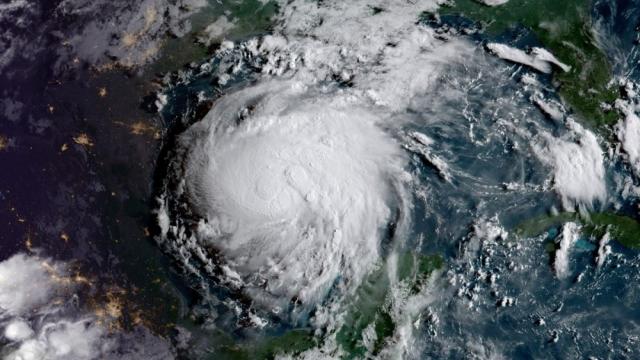
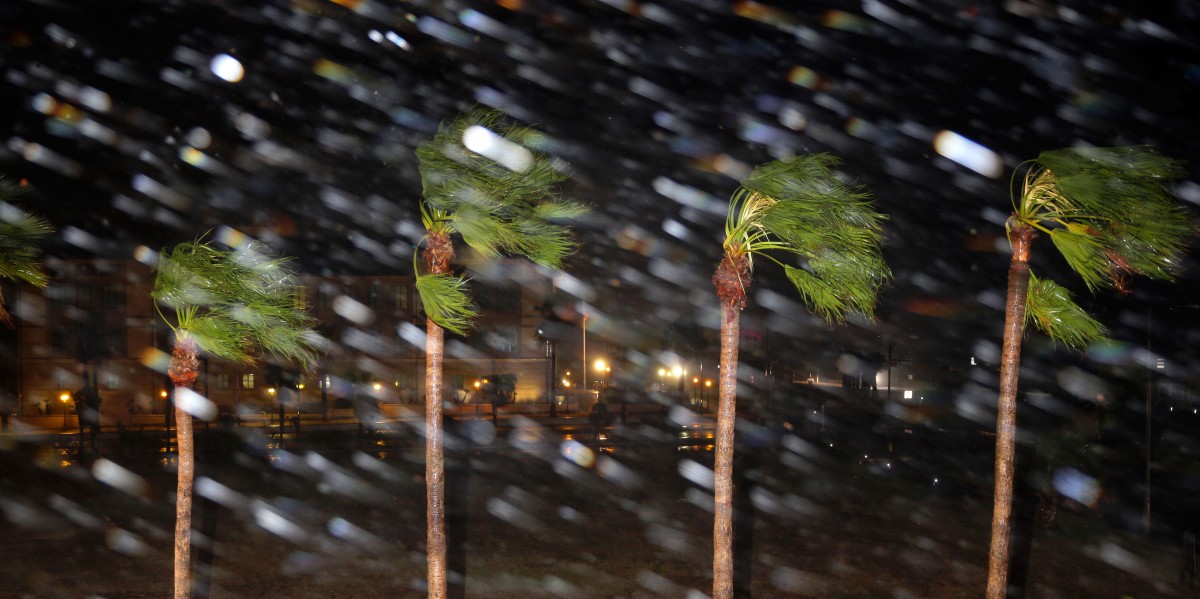
Over the last five days in Houston, the former Hurricane Harvey has unloaded huge amounts of rain — more than 50 inches in some areas — triggering the city’s third “500-year flood” in as many years. Water levels could yet reach the “1,000-year” benchmark — or higher.

Many, including President Donald Trump, have misunderstood the “500-year” label as describing a “once-in-500-year” event — that is, something that would likely not occur again for half a millennium. But that’s not what the terminology means.

There’s some meteorological shorthand here. The term “100-year flood” indicates a flood of a magnitude that “statistically has a 1-percent chance of occurring in any given year,” as the U.S. Geological Survey explains on its website. In other words, the probability of a 100-year flood occurring in, say, Houston this year is 1 in 100. A 500-year flood has a 1-in-500 chance of occurring in a given year.

That’s the good news about massive floods. The bad news is that a city that just faced a 100-year or 500-year flood still has the same probability of experiencing another the following year.
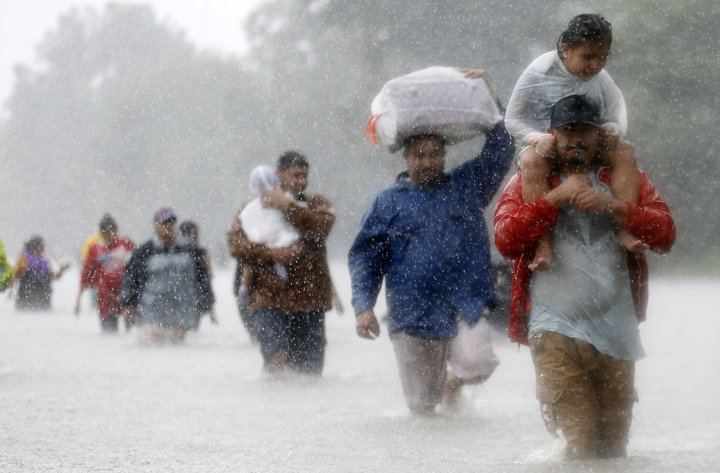
“People think, ’Well, it’s a one-in-100-year flood. We had one last year, so it won’t happen again,’” Sandra Knight, a senior research engineer at the University of Maryland and a former official at the Federal Emergency Management Agency, explained to The New York Times. But she said, “They can happen back to back.”

In Houston, those 500-year floods keep recurring — in 2015, 2016 — and now 2017.

Bear in mind that these flood measurements are based on historical data, so they don’t account for the latest changes in climate or landscape.

One of the likely contributing factors to the disaster in Houston is the city’s urban sprawl, The Washington Post noted. As the nation’s fourth-largest city continues to grow, more wetlands that once absorbed floodwater have been covered with buildings and pavement.

The destructive power of Harvey was also linked to climate change, according to an August 28 op-ed in The Guardian written by Michael Mann, a climate scientist at Pennsylvania State University. He concluded that while climate change did not cause Harvey, “we can say that it exacerbated several characteristics of the storm in a way that greatly increased the risk of damage and loss of life.”

As for the widely used labels for extreme weather events, Mann told HuffPost, the problem is that ″past is not prologue here.”

“What used to be, say, a 1,000 year event (like [Superstorm] Sandy or perhaps Harvey) is now, say, a 30 year event, and will eventually become an event we see every few years if we continue on the course that we’re on,” he said via email.

“[W]e’ve loaded the dice through climate change,” Mann warned, “so that these events are appearing far more often.”
Originally published by HuffPost

3 WAYS TO SHOW YOUR SUPPORT

ONE-TIME DONATION

Just use the simple form below to make a single direct donation.

DONATE NOW

MONTHLY DONATION

Be a sustaining sponsor. Give a reacurring monthly donation at any level.

GET SOME MERCH!

Now you can wear your support too! From T-Shirts to tote bags.

SHOP TODAY

Sign Up

Article Tabs

From a pro-democratic perspective, civil society and new media organisations are surging in the aftermath of the Orban regime.

The country’s new prime minister, Andy Burnham, has promised a break from the politics of the last 40 years—realizing more broadly that Labour must stand up for the 99% against big business, or the party will become irrelevant.

The tragic shooting of Lorenzo Salgado Araujo is just the latest example of ICE having a fundamental disrespect for human life — further proving why the agency should be stripped of funding and shut down, and its rank-and-file agents and leadership prosecuted.

While the U.S., EU and their allies are enabling Rojava—the strongest force against Islamic State— to fall, it is vital for internationalists to continue to support this beacon of democracy and liberation.

June 23, 2026 may be remembered as the beginning of the end of the Democratic Party establishment.

The current wave of food recalls is a direct byproduct of President Donald Trump’s administration deliberately removing the safeguards put in place aimed at protecting American consumers more than a century ago.

From a pro-democratic perspective, civil society and new media organisations are surging in the aftermath of the Orban regime.

We can still celebrate success while simultaneously putting a cap on net worth.

The country’s new prime minister, Andy Burnham, has promised a break from the politics of the last 40 years—realizing more broadly that Labour must stand up for the 99% against big business, or the party will become irrelevant.

Much like the resistance to AI data centers, the opposition to Flock surveillance cameras has brought the left and the right together against billionaires who are trying to force America into becoming even more of a police state.

Much like the resistance to AI data centers, the opposition to Flock surveillance cameras has brought the left and the right together against billionaires who are trying to force America into becoming even more of a police state.

Posted 1 month 3 weeks ago

The country’s new prime minister, Andy Burnham, has promised a break from the politics of the last 40 years—realizing more broadly that Labour must stand up for the 99% against big business, or the party will become irrelevant.

Posted 1 month 3 weeks ago

We can still celebrate success while simultaneously putting a cap on net worth.

Posted 1 month 1 week ago

The current wave of food recalls is a direct byproduct of President Donald Trump’s administration deliberately removing the safeguards put in place aimed at protecting American consumers more than a century ago.

Posted 2 weeks 5 days ago

From a pro-democratic perspective, civil society and new media organisations are surging in the aftermath of the Orban regime.

Posted 3 weeks 1 day ago

The current wave of food recalls is a direct byproduct of President Donald Trump’s administration deliberately removing the safeguards put in place aimed at protecting American consumers more than a century ago.

From a pro-democratic perspective, civil society and new media organisations are surging in the aftermath of the Orban regime.