
Billionaire dreams of colonizing Greenland, then Mars, is the stuff of nightmares. But many of those sponsoring Trump's presidency want to see precisely this occur. In Greenland, for example, they want to build cities that are hives of AI, with autonomous vehicles, space launchers and micro nuclear reactors, sources told Reuters in April 2025.
The rich want to write the rules in these cities, which they see as akin to free trade zones, where corporations are free to exploit workers and the environment with legislation providing weak safeguards. In these proposed cities, the richest’s consumption will rise massively, demanding even more minerals and resource extraction.
It's unsurprising that mining is at the top of Elon Musk's Martian colonisation plans, where he and his company SpaceX are supporting significant research.
Consuming beyond our means
Whether they know this or not, the billionaires’ dreams of hyper-consumption mean going beyond the Earth's limits.
When we think about the future, or how it comes about, there is a myth that technology drives what comes next. This has some truth to it. But it is also reductive.
Everyone can drive the future — for instance, by deciding what to invest in. Public healthcare was realised where societies forced governments to implement it after WWII. In a similar period, the motorcar became ever-dominant as road and motorway construction were prioritised.
The world cannot handle the overconsumption of resources needed for the current system — let alone how hyper-consumption will be necessary in the world envisioned by the tech-obsessed billionaires sponsoring Trump. We need another collective vision of the future, based on far less extraction.
How much can we mine?
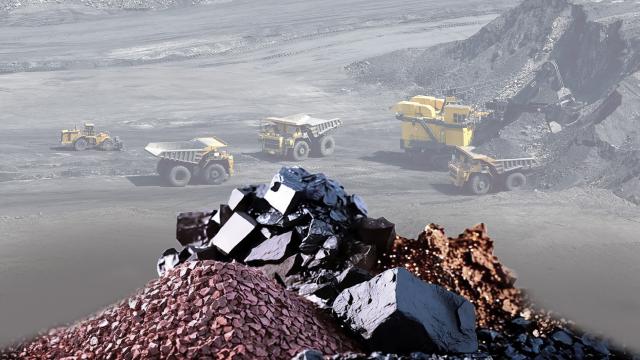
Putting aside mining Mars, even the “green transition” of capitalism requires much more mineral mining. Producing renewable energy demands more minerals than producing energy from oil. Electric vehicles require far more minerals than combustion cars.
These are just two examples of “The Role of Critical Minerals in Clean Energy Transitions” from an International Energy Agency report.
In the green transition, the IEA predicts lithium usage will rise by 40 times the current usage by 2050. Graphite, nickel and cobalt will increase 20 times. With other minerals rising about four to six times current amount, the question becomes: can the Earth handle this growth? The short answer is no.
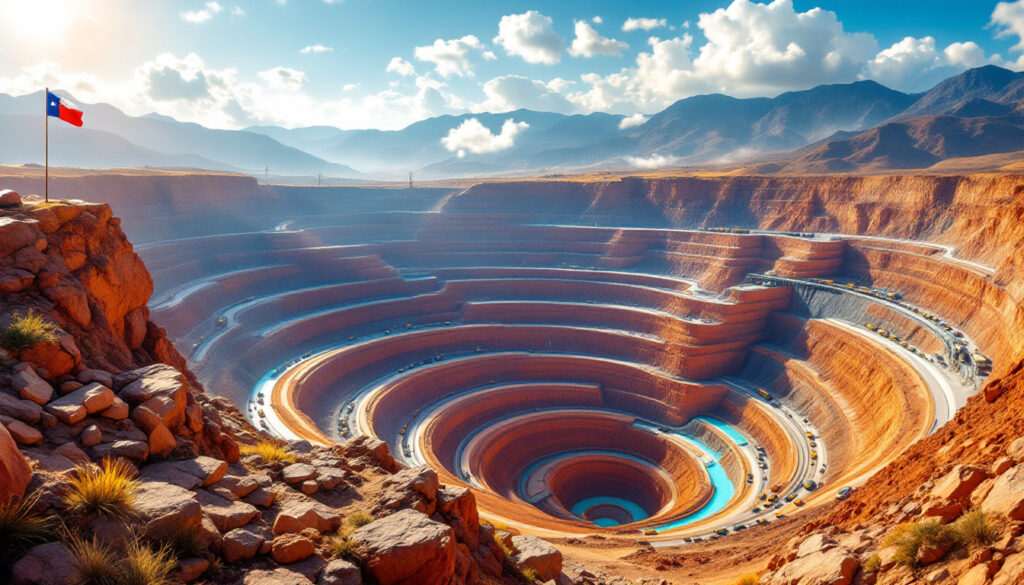
Take lithium, a form of mining that causes devastation where it is extracted, ruining whole river systems and regions in a process that takes enormous amounts of water.
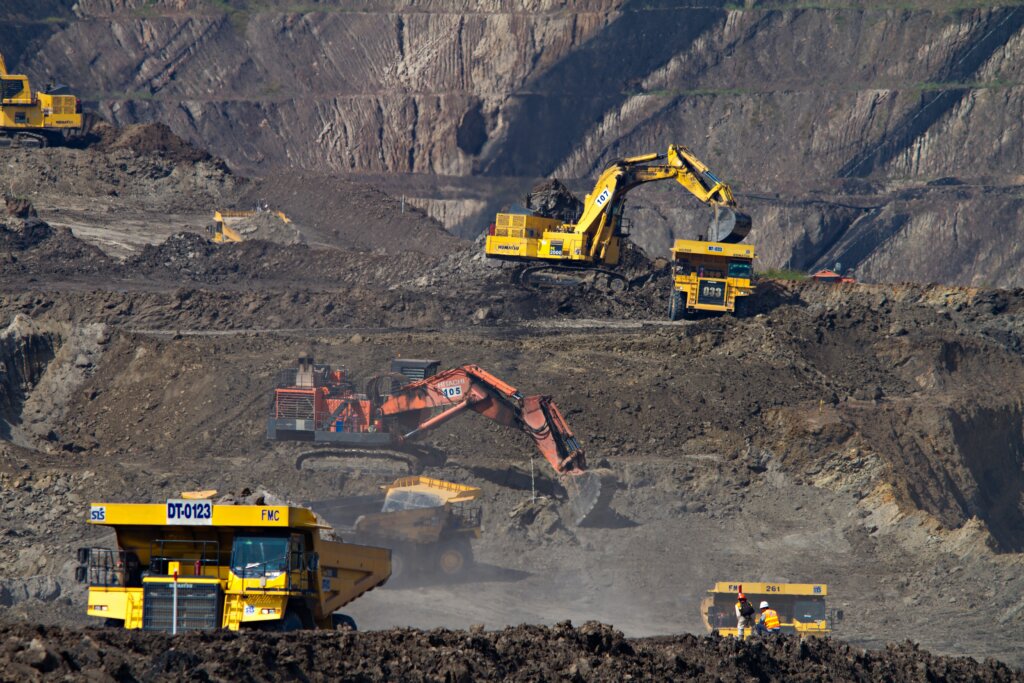
New mines for these additional minerals mean more green sacrifice zones — all on a planet that is already going through interrelated crises caused by extractivism, from climate meltdown to soil degradation and biodiversity loss.
Even more foreboding, substantive arguments suggest these figures are low-balled. Some reasons for this are that the quantitative science done to make the predictions is mainly funded by those who advocate for the green transition.
Second, researchers often exclude the entire supply chain — a case made by academics Alexander Dunlap and Louis Laratte in their peer-reviewed paper entitled “European Green Deal necropolitics.” Exploring the European Union's “green transition,” the authors point out how mining itself has massive carbon energy needs.
In their words, a green transition continues a global system based on “necropolitics,” translating into a system that profiteers off death. Essentially, the problem with the so-called green transition is that it justifies humanity continuing on the road of infinite growth, removing ever more resources from the Earth – while at the same time destroying Earth and reducing its inhabitability.
This position brings further questions. Is it possible to mine minerals in a way that is socially and ecologically responsible? Global Witness is among the NGOs trying to eliminate the most damaging impacts of mining.
An even broader question should also be discussed: can we imagine a different future that needs less minerals to begin with? There is a great deal of thinking on this subject, especially driven by the emergent degrowth movement, which deserves a society-wide debate.
Degrowth: How can we not over-mine the world?
The elephant in the room needs addressing. I'm writing this on a laptop. You're reading on a screen. If we want to live in a world where these tools still exist, how could it be done better? This laptop is five years old, and well-rated for avoiding conflict minerals, yet this is not enough.
When my previous laptop's keyboard broke, I plugged in an old external keyboard to extend its life. When the battery failed, I gave up on it, but many of its parts were still viable, like the screen and hard drive. Digital devices are central to our expanding need for mineral growth. How can we expand all digital devices' lifetimes and reuse parts?
Making devices modular, so you can interchange parts, is one way. Standardising all chargers, screens and other components across brand makes would mean we could change parts. Vitally, producers should make things to last. Instead, currently, the profit motive incentivizes corporations to make stuff that breaks.
These are all ways to reduce the need for mining, alongside more upcycling and recycling. The Fairphone takes a solid step in this direction, as does Re-Rewind, a UK based project aiming to reuse magnets in wind turbines that require rare earth elements and other critical minerals.
We could also consider how to simply share resources better. Transport is one example. Electric vehicles need about six times more minerals than combustion engines. Yet neither are sustainable based on their ecological impacts.
While combustion engines contribute to the global climate meltdown, EVs not only require masses of minerals to produce, but also to create the charging infrastructure that supplies them with power. Instead, for the majority of journeys we could build a highly functioning and interconnected mass transit system.
This requires some minerals and new infrastructure. But it can vastly reduce the mineral usage to miles, not to mention the reduction in road space, parking spaces and all the other ways cars impact on our cities and lives.
There are other things we need to reduce or stop. The demand for critical minerals is driven by many industries that are dangerous and outright destructive. One obvious thing to degrow is the war industry. The technologies needed for warfare have increasing mineral demand, and wars are increasingly fought to control minerals. We need to imagine a future where war is obsolete for so many more reasons as well.
Digitalisation, more screens and AI centres also require loads of minerals. Yet do we need to fill our cities with visual advertising screens – is this not just making people unhappy and driving more consumption?
Overall, the degrowth discussion offers so many ways we could imagine a future beyond endless mining and the crises it brings. It's time to broaden out this political debate that will determine the future so we can get off the path towards the billionaires' dystopia.