
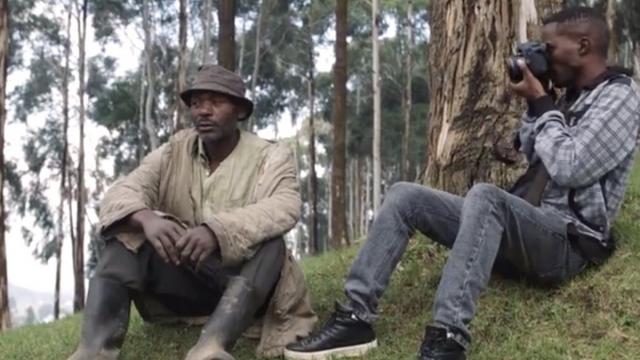
Three orphans of the Rwandan genocide who became professional photographers are featured in a forthcoming film, entitled Camera Kids. (Photo: The GroundTruth Project/Vimeo)
As the world marks the 25th anniversary of the Rwandan genocide on Sunday, a forthcoming documentary sheds light on the survivors and perpetrators' long journey toward justice and healing.
On April 7, 1994, members of Rwanda's dominant Hutu ethnic group launched a 100-day killing spree targeting Tutsis, an ethnic minority in the landlocked East African country. The international community stood by while an estimated 800,000 people or more were slaughtered—leaving 95,000 children without parents.
Gadi Habumugisha, Bizimana Jean, and Mussa Uwitonze were orphaned by the massacre. They are now professional photographers and fellows at The GroundTruth Project, the Boston-based nonprofit media organization behind the new film, entitled Camera Kids.
After the genocide ended, Gadi, Bizimana, and Mussa were raised by American humanitarian Rosamond Carr at the Imbabazi Orphanage in Mutura, Rwanda. There, they received disposable Fuji cameras from Through the Eyes of Children, a nonprofit started in 2000 that holds photography workshops to teach vulnerable children how to capture and share their stories with the world.
The 19 orphans in Rwanda who participated in the nonprofit's first workshops became known as "the camera kids." Today, the three men featured in the documentary, who are now in their late 20s, are all project coordinators for Through the Eyes of Children.
"When we were kids, [Carr] used to tell us that we have to share with others what we have," Bizimana told TIME. "This is the heritage she gave us. Giving other kids photography is doing what we promised her."
Storytelling through a camera lens, Mussa explains in the film, "that can be a like a medicine. That can heal someone."
"When I learned photography, that's when I was able to express myself," Gadi reveals. "I realized that I matter."
The GroundTruth Project's film, due out in 2020, follows the trio as they explore the genocide that claimed their parents' lives by interviewing and photographing those who survived, those responsible for the mass killing, and their families.
On Friday, PBS NewsHour aired a segment featuring clips from the film.
"I met this couple," says Gadi. "One is a son of a perpetrator and the other one is a survivor. From killing each other, forgiving each other, reuniting with each other, living with each other, and now marrying, it's a sign of how far things have come."
In a director's statement published by The GroundTruth Project, American filmmaker Beth Murphy emphasized the lessons about hatred and peace that the global community can take from the Rwandan genocide—and, hopefully, Camera Kids.
"It is impossible to study this history without drawing parallels to what's happening in our world today," Murphy wrote. "With the rise of far-right populism around the world, white nationalists throughout the U.S. and all Western countries are using the same fear-stoking language Rwanda's genocide perpetrators used in the months and years leading up to the 1994 genocide. That's chilling."
"When Rwanda emerged from its 100 days of darkness, forgiveness and reconciliation programs were not only encouraged, but also enforced," she noted. "As people had been taught how to hate, now they were taught how to make peace. Twenty-five years after the genocide, the country has found a way to balance justice and healing, vengeance and forgiveness, and has become a model of hope for the world."