Read

User menu

Search form

New Yale Study Confrims Fracking Linked to Cancer-Causing Chemicals

New Yale Study Confrims Fracking Linked to Cancer-Causing Chemicals
Wed, 11/2/2016 - by Denise L. Meyer
This article originally appeared on Yale School of Public Health

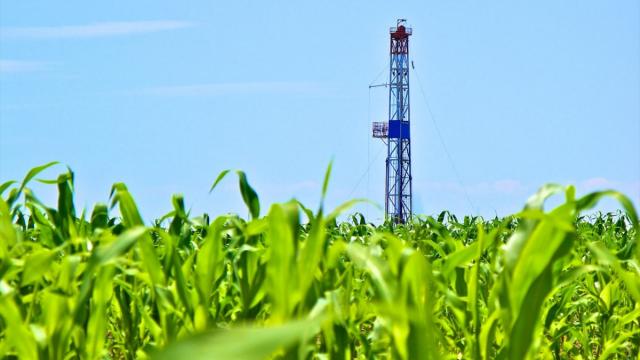
An expansive new analysis by Yale School of Public Health researchers confirms that numerous carcinogens involved in the controversial practice of hydraulic fracturing have the potential to contaminate air and water in nearby communities.

Fracking is now common in the United States, currently occurring in 30 states, and with millions of people living within one mile of a fracking site. The study suggests that the presence of carcinogens involved in or released by hydraulic fracturing operations has the potential to increase the risk of childhood leukemia. The presence of chemicals alone does not confirm exposure or risk of exposure to carcinogens and future studies are needed to evaluate cancer risk.

“Because children are a particularly vulnerable population, research efforts should first be directed toward investigating whether exposure to hydraulic fracturing is associated with an increased risk,” said lead author Nicole Deziel, Ph.D., assistant professor. Childhood leukemia is a particular concern because of the severity and short latency period of the disease.

The study is published in the journal Science of the Total Environment.

The team examined an extensive list of more than 1,000 chemicals that may be released into air or water as a result of fracking. “Previous studies have examined the carcinogenicity of more selective lists of chemicals,” said Deziel. “To our knowledge, our analysis represents the most expansive review of carcinogenicity of hydraulic fracturing-related chemicals in the published literature.”

According to the findings, the majority of chemicals (>80 percent) lacked sufficient data on cancer-causing potential, highlighting an important knowledge gap. Of the 119 compounds with sufficient data, 44 percent of the water pollutants and 60 percent of air pollutants were either confirmed or possible carcinogens. Because some chemicals could be released to both air and water, the study revealed a total of 55 unique compounds with carcinogenic potential. Furthermore, 20 chemicals had evidence of increased risk for leukemia or lymphoma specifically. This analysis creates a priority list of carcinogens to target for future exposure and health studies.

Fracking, also known as unconventional oil and gas development, has increased dramatically in recent years, and the practice is expected to grow in the future. The process involves drilling deep, as far as two miles, into the earth and releasing a high-pressure mixture of water, sand and chemicals that fracture the rock and release the gas or oil trapped inside. While fracking increases the production of domestic oil and natural gas and decreases prices, it is controversial because of the significant amounts of water that must be used as well as transported to fracking sites, as well as the release of carcinogens.

The team has begun been testing air and water samples for some of these known and suspected carcinogens in a community with particularly intense exposure to fracking to evaluate whether people there are exposed to these compounds, and if so, at what concentrations.

Originally published by Yale School of Public Health

3 WAYS TO SHOW YOUR SUPPORT

ONE-TIME DONATION

Just use the simple form below to make a single direct donation.

DONATE NOW

MONTHLY DONATION

Be a sustaining sponsor. Give a reacurring monthly donation at any level.

GET SOME MERCH!

Now you can wear your support too! From T-Shirts to tote bags.

SHOP TODAY

Sign Up

Article Tabs

From a pro-democratic perspective, civil society and new media organisations are surging in the aftermath of the Orban regime.

The country’s new prime minister, Andy Burnham, has promised a break from the politics of the last 40 years—realizing more broadly that Labour must stand up for the 99% against big business, or the party will become irrelevant.

The tragic shooting of Lorenzo Salgado Araujo is just the latest example of ICE having a fundamental disrespect for human life — further proving why the agency should be stripped of funding and shut down, and its rank-and-file agents and leadership prosecuted.

While the U.S., EU and their allies are enabling Rojava—the strongest force against Islamic State— to fall, it is vital for internationalists to continue to support this beacon of democracy and liberation.

June 23, 2026 may be remembered as the beginning of the end of the Democratic Party establishment.

The current wave of food recalls is a direct byproduct of President Donald Trump’s administration deliberately removing the safeguards put in place aimed at protecting American consumers more than a century ago.

From a pro-democratic perspective, civil society and new media organisations are surging in the aftermath of the Orban regime.

We can still celebrate success while simultaneously putting a cap on net worth.

The country’s new prime minister, Andy Burnham, has promised a break from the politics of the last 40 years—realizing more broadly that Labour must stand up for the 99% against big business, or the party will become irrelevant.

Much like the resistance to AI data centers, the opposition to Flock surveillance cameras has brought the left and the right together against billionaires who are trying to force America into becoming even more of a police state.

Much like the resistance to AI data centers, the opposition to Flock surveillance cameras has brought the left and the right together against billionaires who are trying to force America into becoming even more of a police state.

Posted 1 month 3 weeks ago

The country’s new prime minister, Andy Burnham, has promised a break from the politics of the last 40 years—realizing more broadly that Labour must stand up for the 99% against big business, or the party will become irrelevant.

Posted 1 month 3 weeks ago

We can still celebrate success while simultaneously putting a cap on net worth.

Posted 1 month 1 week ago

The current wave of food recalls is a direct byproduct of President Donald Trump’s administration deliberately removing the safeguards put in place aimed at protecting American consumers more than a century ago.

Posted 2 weeks 1 day ago

From a pro-democratic perspective, civil society and new media organisations are surging in the aftermath of the Orban regime.

Posted 2 weeks 4 days ago

The current wave of food recalls is a direct byproduct of President Donald Trump’s administration deliberately removing the safeguards put in place aimed at protecting American consumers more than a century ago.

From a pro-democratic perspective, civil society and new media organisations are surging in the aftermath of the Orban regime.