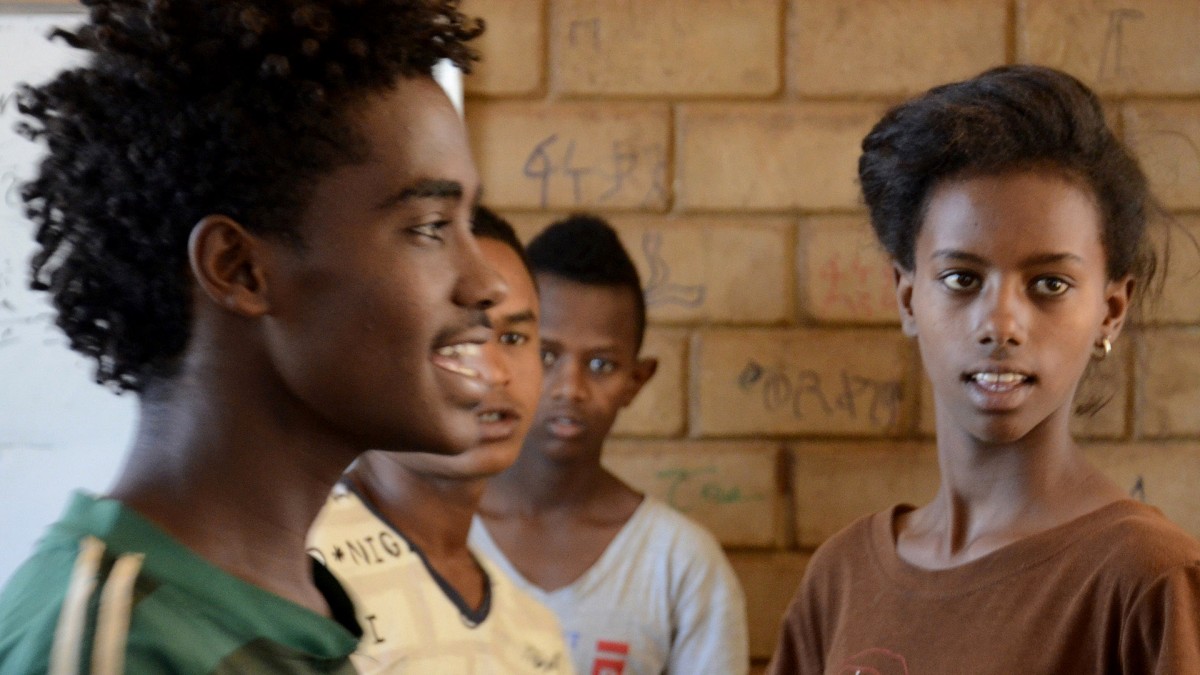
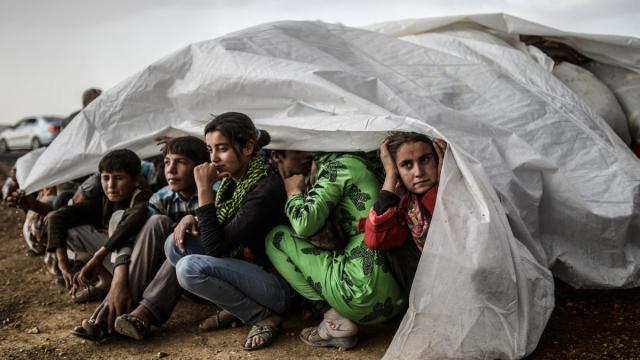
The global refugee crisis remains center stage as streams of people from Africa and the Middle East continue to seek asylum in Europewhile Central Americans travel to the United States to escape lives of desperation.
Figuring out how to relocate and help refugees remains an international concern – with visible political consequences, from Washington to Berlin – as some of the planet's most powerful economies struggle to handle the influx of people pouring across their borders. Yet while the situation has generally been portrayed as a crisis, there are also many benefits that refugees bring with them as they settle down in new places and start their lives anew.
The Local Impact of Refugees
While it’s easy for many to write off refugees as a burden on local economies, reports have revealed other, more positive impacts that refugee camps are having on neighboring towns.
For example, contrary to widespread opinion, mass migration has brought a flurry of “refugee entrepreneurs” with a diverse set of skills. When allowed to exercise their talents, refugees' effects on local economies are visible and tangible – something clearly demonstrated in the Kakuma refugee camp in Kenya.
In Australia, the arrival of scores of southeast Asian refugees has made powerful waves in local communities. Many have worked hard to learn English, scrape by and save money, then pool their resources to provide capital for new businesses which are contributing to Australia's economic growth.
And we’re not just talking about mom-and-pop shops that employ only their own families. The success of these small businesspeople is borne out in the hundreds of employees they’ve provided work for. Looked at another way, refugees have become job creators employing people in those same communities that took them in.
Refugees' Impact in America
The U.S. is meanwhile breaking records, albeit in the opposite direction, as the number of refugees admitted to the country stands at a 40-year low, with the number of migrants coming to the U.S. last year totalling just half the number from 2017 and a quarter the amount from the year before.
Why the decline? After all, this is a nation of foreigners, many of whom came to live here as refugees of one form or other seeking promise in the freedom of the United States. The statistics bear this out: America is home to [just shy of 60 million immigrants] (https://online.rutgers.edu/blog/strategies-helping-children-immigrant-fa...) and is on track to have no racial minority whatsoever in just over a quarter of a century. For centuries America has welcomed people from across the world; providing a future for them isn't just a humanitarian responsibility, it's the fabric of who we are as a nation.
While many people are arriving due to devastating conditions in their countries, it doesn’t mean those refugees aren't making big, positive impacts on our culture and society. Immigrants are responsible for a large percentage of the country's entrepreneurial output, helping create a significant number of small businesses. In California in particular – the state with the highest percentage of immigrant entrepreneurs – immigrants are responsible for nearly one out of every three startups.
And when it comes to refugees' role in local economies, the impacts are evident. Take Utica, a sleepy town in upstate New York dubbed“the town that loves refugees.” Utica has already felt a decisive impact from the influx of refugees, most of them positive.
The Negative Reaction
Despite the benefits that so many refugees offer America, the public's response to allowing more refugees into the country remains negative, particularly among the president and his conservative base. Their attitude has had [a disturbing impact] (http://www.occupy.com/article/trump-s-executive-order-already-hurting-re...) on refugees in the U.S., which has remained closed to the majority of new people seeking aid and turned a blind eye to the suffering of countless victims. It is a glaring failure for a country that claims to be the most humanitarian in the world.
Allowing Refugees to Shine
From joining the workforce, to lifting up struggling economies like the one in Utica, to literally starting businesses and helping employ the very people who gave them a fresh start, refugees are making a difference – mostly a positive one – in the communities where they are settling. To deny this fact, and to change the refugee narrative into one driven by fear of the other, is only hurting, not helping, the future of the country.