
Campaign groups and the biotech industry are digging in for a new round of conflict, following the European Union's decision to allow member states to set their own rules on growing genetically modified organisms.
Environmentalists who favor a GMO ban say the crops have not been properly tested – posing health risks for consumers and giving a small group of corporations too much control over food supplies. The biotech industry says farmers should be free to grow whatever crops they want, and GMOs are a safe way to boost food production and feed the planet's growing population.
Since the European Parliament vote on Jan. 13, neither industry nor campaigners have claimed victory.
Under planned legislation, expected to be finalized in March, member states would not be able to block GMOs with domestic health or environmental regulations.
Instead, countries that oppose cultivation can negotiate with companies individually, to ask them not to market the products on their territory. States would also be able to block GMOs under town planning and other rules.
Brandon Mitchener, a spokesman for Monsanto, the world's largest seed company and a big producer of genetically altered crops, said the E.U. decision was misguided.
It would allow "some member states to torpedo a proven, safe technology for helping farmers produce more with less even as U.S. farmers are setting new records with the same technology," he said in an email.
But the proposed legislation does not satisfy environmental campaigners either.
"The main problem we have with this law is it prevents member states from using environmental concerns to justify their bans," Marco Contiero, a spokesman for Greenpeace, told the Thomson Reuters Foundation.
Fight Shifts to Member States
Widely-grown in the Americas and Asia, GM crops in Europe have divided opinion. Many countries, including France and Germany, oppose them, while others, like Britain, favors them.
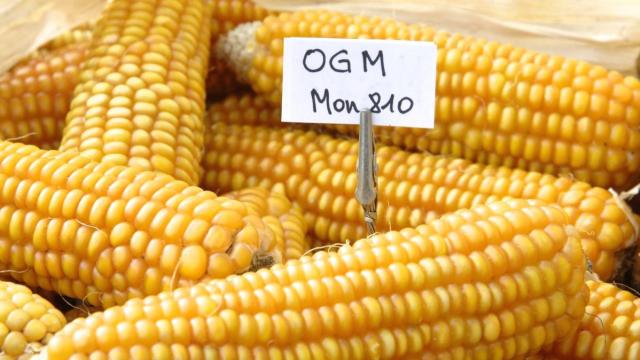
Currently, only one GM crop, Monsanto's insect resistant maize MON810, is approved for commercial growing in the E.U. Spain and Portugal are the main growers, and it is also planted in Slovakia, Romania and the Czech Republic.
Mark Buckingham, another Monsanto official, said he didn't expect the decision to boost the company's revenues in Europe. But new rules may "help over time to ease the political prejudice" against GM crops, he said.
The last major Europe-wide public opinion poll on GM crops, conducted in 2010 by Eurobarometer, found the majority of respondents were concerned over the safety of the crops.
Lobbying efforts from both camps will now focus on individual states rather than E.U. headquarters in Brussels, said Nina Holland, food issues campaigner at Corporate Europe, a watchdog group.
Opponents argue GMOs allow big corporations increasing control over global food supplies, lead to higher chemical use, and have uncertain long-term effects on human health and the environment.
"For each crop, there will be a fight in the member states," Holland told the Thomson Reuters Foundation. "Countries that want to have their own national bans will do so, with impacts on the rest of the world."
Supporters believe GMOs are crucial for raising yields, producing cheaper food and improving quality for technology. In 2013, just under 150,000 hectares were cultivated with GM crops across Europe, mostly in Spain, according to the journal Nature Plants.
While Monsanto's corn is the only GM crop currently grown in Europe, the continent imported around 30 million tonnes of GM produce in 2012 from other countries, mostly soya for animal feed.
3 WAYS TO SHOW YOUR SUPPORT



- Log in to post comments


Comments
preciado replied on
Purchase research chemicals
Purchase research chemicals
rcparmachemsolutions is a company specialising in the distribution of research chemicals. We work with laboratories
and researchers throughout the whole of Europe. Our aim is to supply innovative research chemicals to professionals.