

Brazil survived a disastrous own goal to win the World Cup opener in a match marred by controversy – particularly in the 71st minute, when the referee handed a penalty pick to Brazil that put the team ahead. Playing on home soil, where spectators can lift the mood and referees can be influenced by the intense atmosphere, the host nation is favored to win this year’s tournament.
But the unfairness of potentially biased referees isn't the only reason things look askew at the 2014 World Cup. In an attempt to highlight the gap between rich and poor in the countries whose teams are represented, the aid agency Oxfam has rebranded it the "Inequality World Cup" – and the results aren't too favorable.
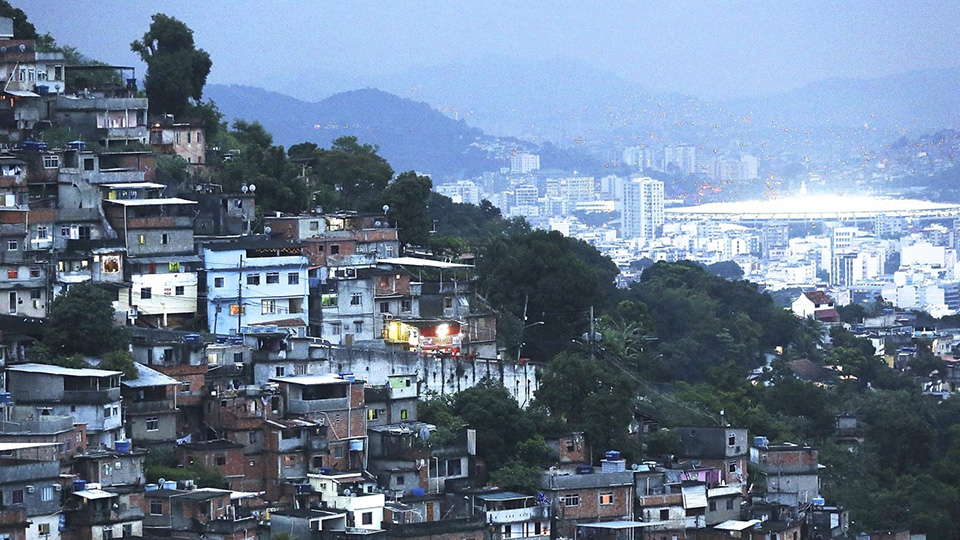
For starters, Oxfam predicts that Brazil crashes out in the first round. As the world’s leading broadcast corporations transmit the action from swanky, glass-fronted studios overlooking Copacabana Beach, coverage of the Brazilian games inevitably catch sight of the clusters of slums that mar Rio de Janeiro’s otherwise polished and refined urban landscape.
Before you even consider the angry ongoing protests over money spent on World Cup extravagance – for example, stadium construction and upgrades cost $3.5 billion, eclipsing much-needed funding for Brazil's schools, hospitals and sanitation – it's clear from the street images alone that this is a nation divided into two very different halves.
Yet, while Oxfam cited the wealth gap in Latin America as “staggering,” it added that Brazil was one of the few places where income inequality is actually decreasing. However, “despite some significant progress over recent years it continues to be amongst the most unequal regions in the world,” Ricardo Fuentes-Nieva of Oxfam told the BBC.
“The rules of the game in these countries still largely work in favor of the richest – and therefore the most powerful citizens.”
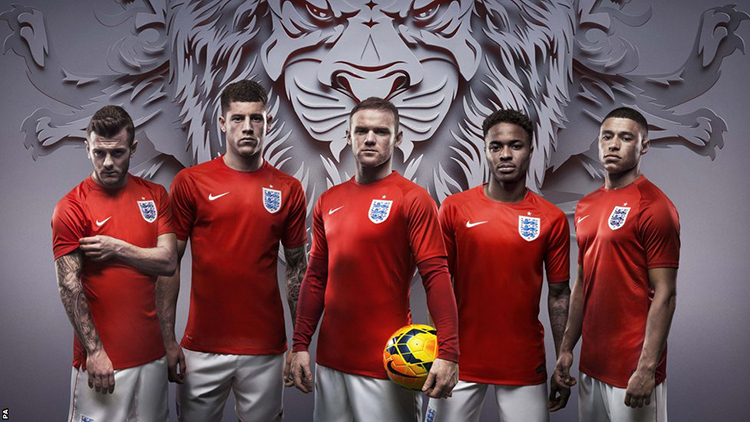
England Blunders in the Second Round
In typical English fashion, even when the side plays convincingly they still manage to lose. Having lost 1-2 to Italy in their opening game, England’s actual World Cup hopes look slim. And in the Inequality World Cup, the English side is nearly as disappointing with Oxfam predicting it would lose out to Japan in the second round.
The U.K.’s dramatic levels of wealth inequality were highlighted earlier this year in an Oxfam report that revealed the five richest families in Britain are worth more than the poorest 20% of the population. Specifically, the report unveiled the shocking data that only a handful of the U.K.'s filthy rich, led by the Duke of Westminster, control more financial assets and money than 12.6 million Britons put together.
Oxfam urged the U.K. Chancellor George Osborne to use a budget, introduce a living wage, and make a “fresh assault” on tax avoidance which costs the country billions annually. Instead, a paltry 1% pay rise was offered to Britain’s key public sector workers – a figure not even in line with the U.K.'s 1.9% rate of inflation – provoking 1.5 million workers to launch a nationwide strike planned for July 10.
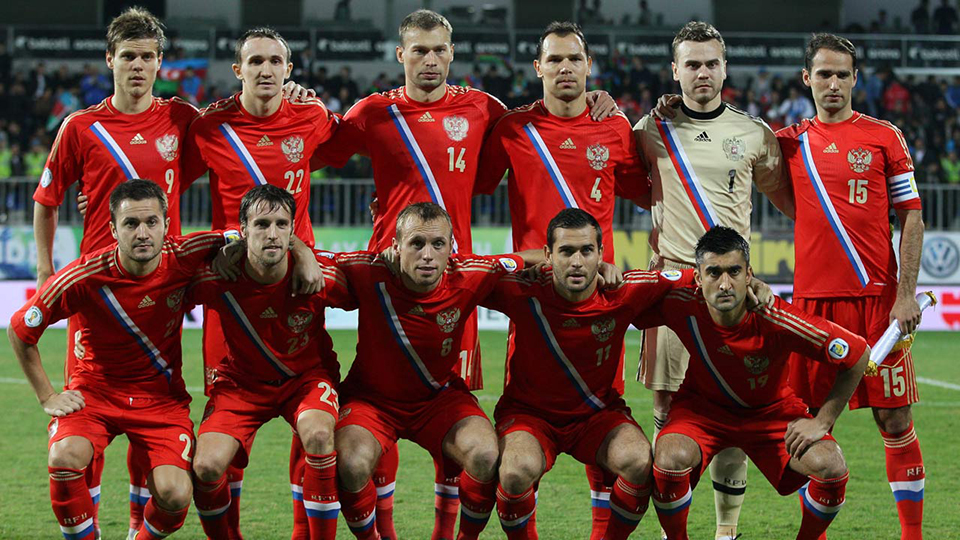
Russia and Ghana are Also Bad Performers
Russia and Ghana both make poor showings at the Inequality World Cup as well. Russia’s abysmal levels of wealth inequality were highlighted in a global wealth report published by the financial services giant Credit Suisse, which found that Russia had the highest levels of wealth inequality in the world. With just 110 Russian citizens controlling 35% of total household wealth in Russia, the statistics speak for themselves.
So, which countries in Oxfam’s Inequality World Cup actually perform well? Perhaps surprisingly, Nigeria, Australia, Uruguay, Mexico, Algeria, Ivory Coast – and even the United States – all come third in their groups.
Spain’s impressive achievement making it to the semi-finals also comes as a surprise given that in 2013 the country's wealth gap was considered the biggest in Europe. A report by the Catholic charity Caritas found that more than 6% of Spain’s population lived on 307 Euros ($416) a month in 2012, while the number of Spanish millionaires increased 13% the year prior. As Occupy.com reported in April, frustration continues to mount as unemployment remains at staggering levels in Spain, particularly among the youth.
Occupy.com spoke with economic analyst Andy Brookes about his views of Oxfam’s inequality competition, particularly in relation to Spain.
“These sorts of international comparisons are always problematic given that like is not always being measured against like," Brookes said. "Spain has suffered a recession far worse than most other countries. It is sadly the case that the poorest suffer most in recession and this would explain why the gap between rich and poor has widened.”
However, “the recent European elections suggest that there are at least some politicians in Spain who recognize the problem and are trying to do something about it. This is very different from the U.K. where the gap between rich and poor seems to be accepted and even desired as part of the economic policy,” he added.
In this sense, putting Spain as semi-finalists – albeit defeated ones – might have been a little generous of Oxfam. And it leaves one question unanswered: which nation is to be crowned champion of the Inequality World Cup?
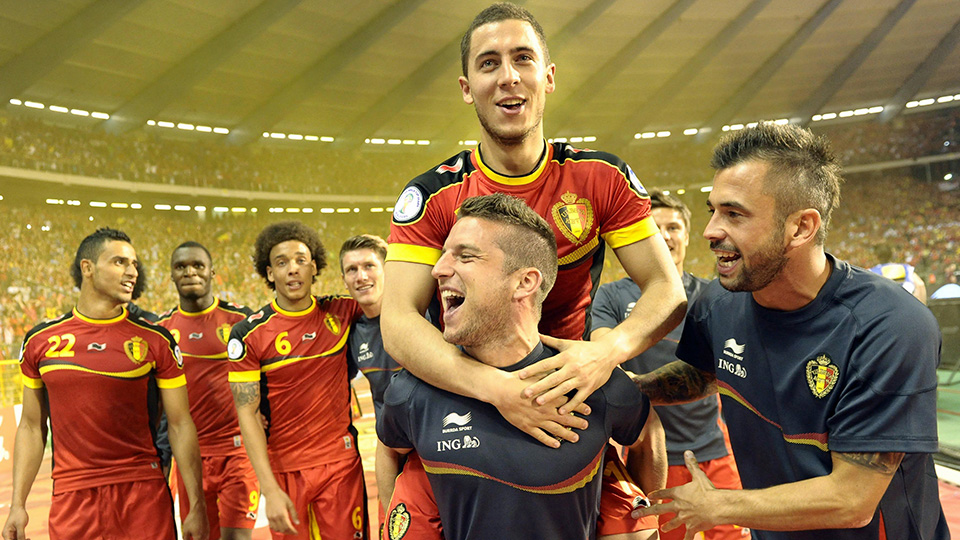
And the World Cup Winner for the Least Inequality is...
Of 32 teams taking part, Belgium is slated to beat Germany in the final. Still as Belgium performs strong in many measures of wellbeing, and ranks within the top 10 countries in several areas of the Better Life Index, let's not forget that over the past 25 years, inequality in wealthy countries within the Organization for Economic Co-operation and Development (OCED) has increased by 3 percent. According to Inequality Watch, inequality in Belgium, alongside France and Hungry, has remained stable over the past quarter century, while the wealth gap in Turkey and Greece has actually reduced.
Perhaps the inequality reduction trophy, in this case, should go to either Greece or Turkey instead of Belgium. As for the actual soccer-playing World Cup – and not the Inequality games – we’ll know more today once Belgium takes on Algeria and Brazil battles Mexico.
3 WAYS TO SHOW YOUR SUPPORT


- Log in to post comments


