
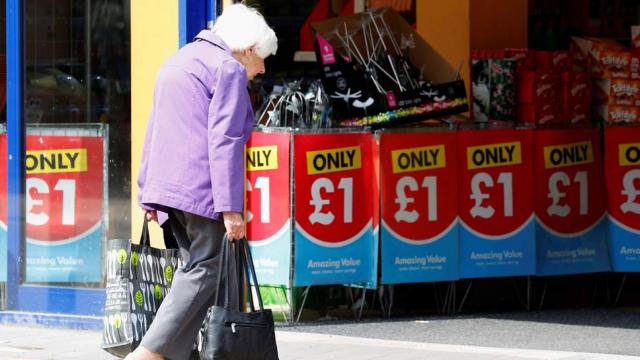
Britain is experiencing a financial crisis on a level not seen since the 2008 credit crunch, with many new households now living in poverty. A report recently released by the Office of National Statistics shows that average U.K. household expenses are now higher than average household income for the first time in 30 years. Nearly £80 billion in loans were taken out, yet only £37 billion was deposited into U.K. banks.
Phil Andrew, chief executive of StepChange Debt Charity, takes exception to the wording of the report, which he believes suggests that those in debt have brought it upon themselves. "It’s really unfortunate that this very useful data is so heavily sprinkled with the phrase that households are ‘living beyond their means,’” Andrew said.
“The reality is that too many households, here in Britain, in 2018, simply cannot make ends meet, however hard they try. Not having enough money to make ends meet is not the same thing as living beyond your means – which implies you have a choice, when too many people do not.”
StepChange recently conducted its own report on household debt, which showed that a person on a wage of under £10,00 a year (just under $13,000) spent on average 93 percent of their income on housing, bills and food.
“At a time when incomes are not increasing in line with costs, it is no surprise that household debt has increased to this extent,” Neil Cowan, Policy and Parliamentary Officer for the Poverty Alliance, told Occupy.com. Cowan cited both low wages and loan sharks as key reasons why the poor are getting so much poorer.
“People on low incomes will be particularly affected, made worse by the fact that they often have to pay a premium to access credit, which risks locking them into poverty. As well as taking action to reduce costs – like housing, transport and childcare costs – we must also do more to ensure that people are paid decent wages and have access to levels of social security that enable them to have a decent standard of living without being forced into high-cost borrowing.”
Changes in the U.K. benefits system are also a key factor. A new scheme known as Universal Credit is slowly rolling out to replace the old benefits system, and is having worrisome teething problems. Many people are now waiting weeks and even months for payments and those on zero-hour or freelance contracts with unpredictable workloads are suffering in particular.
“Working people claiming universal credit are having their benefits capped when they shouldn’t be, and losing the effects of ‘work allowances’ worth up to £258 per month simply because of the dates on which their paydays and universal credit 'assessment periods' happen to fall,” said a spokesperson from the Child Poverty Action Group.
As a result, “Far from offering much-vaunted simplicity, universal credit rules leave many workers unable to predict what their payments will be from one month to the next. People who happen to move house at the ‘wrong’ point in their assessment period can also lose hundreds of pounds in help with rent.”
Those claiming disability benefits are also being disproportionately affected.
“It’s simply not right that working age people with a long-standing illness are about 50 percent more likely to be trapped in poverty than healthy people,” says Helen Barnard of the Joseph Rowntree Foundation. “It means people with a mental health condition are locked in a daily struggle to make ends meet, with 56 per cent reporting being unable to afford basic items or pay their bills. We know living in poverty can compound mental health problems and people in poverty are much more likely to experience anxiety and depression.”
Simplistic and draconian assessments for disability benefits have been widely criticized for not taking into account “hidden illness.”
Neither is the Brexit effect to be underestimated. On August 6, the National Farmers Union announced that a no-Brexit deal would mean the U.K. runs out of food within about a year. “This has been a real test for Government to show the farmers and the many concerned members of the public that they think that our ability to produce food in this country is truly important,” said NFU President Minette Batters.
“We strongly believe that every British citizen should be entitled to a safe, traceable and high quality supply of British food that is produced to some of the highest animal welfare and environmental standards in the world. Home-grown food production must have the unwavering support of Government if we are to achieve this post-Brexit.”
Walk through any major city center in the U.K. today and you are guaranteed to see someone sleeping rough. A few years ago this was not the case. With wage freezes, a rise in the use of unstable contracts, the continued roll-out of a flawed benefits systems and the ham-fisted handling of the Brexit deal, the U.K. is looking at an interesting – and not especially comfortable – period ahead.