Read

User menu

Search form

Tens of Thousands Surround Irish Dáil in Protest over Water Charges

Tens of Thousands Surround Irish Dáil in Protest over Water Charges
Thu, 12/11/2014 - by Henry McDonald
This article originally appeared on The Guardian

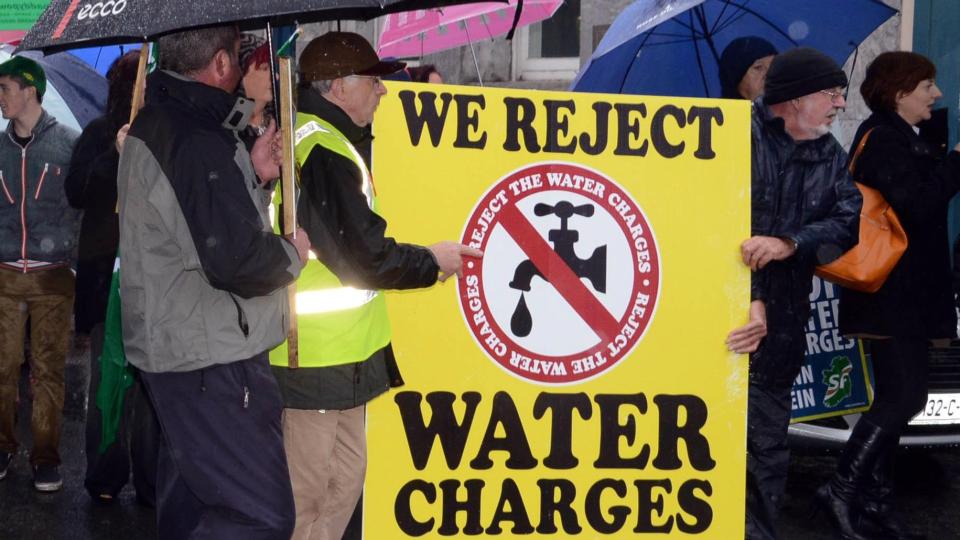
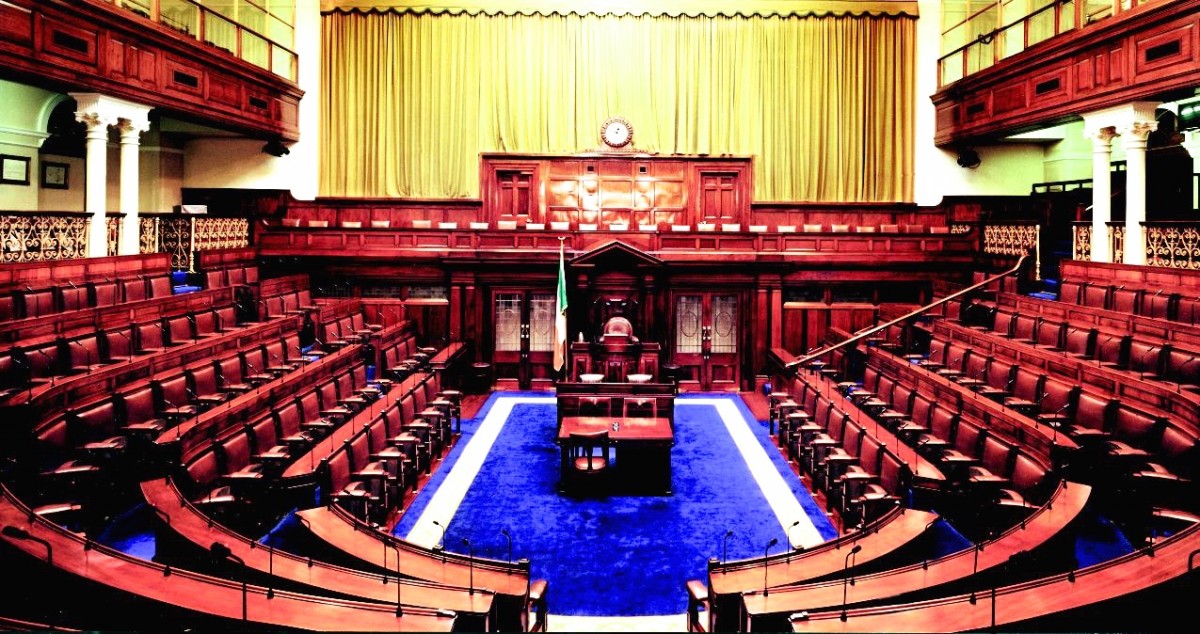
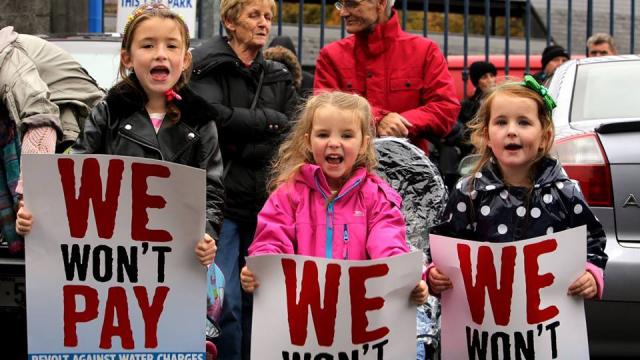
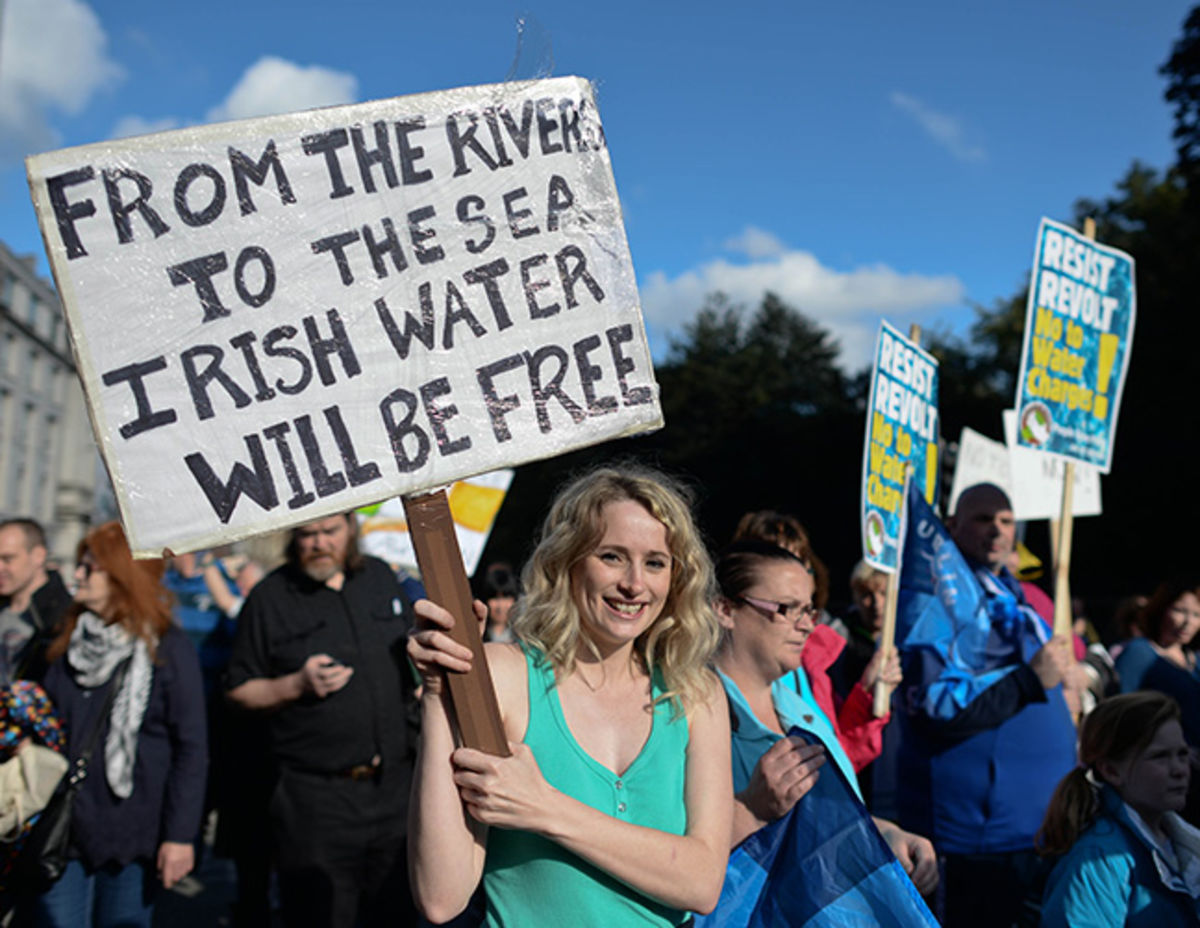
Tens of thousands of demonstrators opposed to the introduction of water charges in Ireland surrounded the country’s parliament bringing Dublin to a near standstill.

A small number of protesters clashed with police outside the Dáil on Wednesday afternoon, with at least two men arrested, the Garda Síochána said.

Coins, stones and plastic bottles were hurled at police lines and one Garda officer was taken to hospital after being struck in the face by a missile. The large crowds caused traffic chaos and most of central Dublin’s streets were brought to a standstill.

The Garda estimated that about 30,000 people took part in the protest, while the Europe-wide protest group Right2Water said the figure was closer to 100,000.

The overwhelming majority who attended took part in a peaceful show of opposition to the charges. By late afternoon, however, about 1,000 demonstrators were still blocking O’Connell bridge, leading to Dublin’s main thoroughfare.

Despite exiting the international bailout last year, a growing economy and falling unemployment, the introduction of water charges has proved to be the potentially lethal issue that could doom the current Fine Gael-Labour coalition in the 2016 general election. Both ruling parties’ fortunes have plummeted in recent opinion polls, with Sinn Féin and independents gaining most support from the public ire over the water charges.

Government ministers appeared on radio and television stations to push home the message that the charges would not be abolished.

Paudie Coffey, Ireland’s junior environment minister, said the government had already revised and lowered the water rates, which will cost €1.15 (£0.90) a week for a single household or €3 for a multiple-person household.

“That’s for the provision of drinking water but also to pay for the disposal and treatment of raw sewage,” the minister said.

But at the main rally at the back of government buildings in Dublin’s Merrion Square, Sinn Féin’s deputy leader, Mary Lou McDonald, told the crowd that the revised charges were not enough to end public anger over the issue.

“They thought that by giving minor concessions that the people of this country would be bought off,” McDonald said. “They were wrong.”

Paul Murphy, a leftwing TD, or Dáil deputy, with the Anti-Austerity Alliance, called for a campaign of non-payment of water charges when the first bills arrive in April. Murphy, who won a Dáil seat in a Dublin byelection in October over his opposition to water charges, said the size of the protest on a freezing cold day had exceeded his expectations.

Originally published by The Guardian

3 WAYS TO SHOW YOUR SUPPORT

ONE-TIME DONATION

Just use the simple form below to make a single direct donation.

DONATE NOW

MONTHLY DONATION

Be a sustaining sponsor. Give a reacurring monthly donation at any level.

GET SOME MERCH!

Now you can wear your support too! From T-Shirts to tote bags.

SHOP TODAY

Sign Up

Article Tabs

From a pro-democratic perspective, civil society and new media organisations are surging in the aftermath of the Orban regime.

The country’s new prime minister, Andy Burnham, has promised a break from the politics of the last 40 years—realizing more broadly that Labour must stand up for the 99% against big business, or the party will become irrelevant.

The tragic shooting of Lorenzo Salgado Araujo is just the latest example of ICE having a fundamental disrespect for human life — further proving why the agency should be stripped of funding and shut down, and its rank-and-file agents and leadership prosecuted.

While the U.S., EU and their allies are enabling Rojava—the strongest force against Islamic State— to fall, it is vital for internationalists to continue to support this beacon of democracy and liberation.

June 23, 2026 may be remembered as the beginning of the end of the Democratic Party establishment.

The current wave of food recalls is a direct byproduct of President Donald Trump’s administration deliberately removing the safeguards put in place aimed at protecting American consumers more than a century ago.

From a pro-democratic perspective, civil society and new media organisations are surging in the aftermath of the Orban regime.

We can still celebrate success while simultaneously putting a cap on net worth.

The country’s new prime minister, Andy Burnham, has promised a break from the politics of the last 40 years—realizing more broadly that Labour must stand up for the 99% against big business, or the party will become irrelevant.

Much like the resistance to AI data centers, the opposition to Flock surveillance cameras has brought the left and the right together against billionaires who are trying to force America into becoming even more of a police state.

Much like the resistance to AI data centers, the opposition to Flock surveillance cameras has brought the left and the right together against billionaires who are trying to force America into becoming even more of a police state.

Posted 1 month 3 weeks ago

The country’s new prime minister, Andy Burnham, has promised a break from the politics of the last 40 years—realizing more broadly that Labour must stand up for the 99% against big business, or the party will become irrelevant.

Posted 1 month 3 weeks ago

We can still celebrate success while simultaneously putting a cap on net worth.

Posted 1 month 1 week ago

The current wave of food recalls is a direct byproduct of President Donald Trump’s administration deliberately removing the safeguards put in place aimed at protecting American consumers more than a century ago.

Posted 2 weeks 3 days ago

From a pro-democratic perspective, civil society and new media organisations are surging in the aftermath of the Orban regime.

Posted 2 weeks 6 days ago

The current wave of food recalls is a direct byproduct of President Donald Trump’s administration deliberately removing the safeguards put in place aimed at protecting American consumers more than a century ago.

From a pro-democratic perspective, civil society and new media organisations are surging in the aftermath of the Orban regime.