

Most Americans don't want Elmo to get fired.
They also don't want enormous funding cuts to medical research, after-school and summer programs, new road and transit projects, climate change research, and a program to help low income people heat their homes.
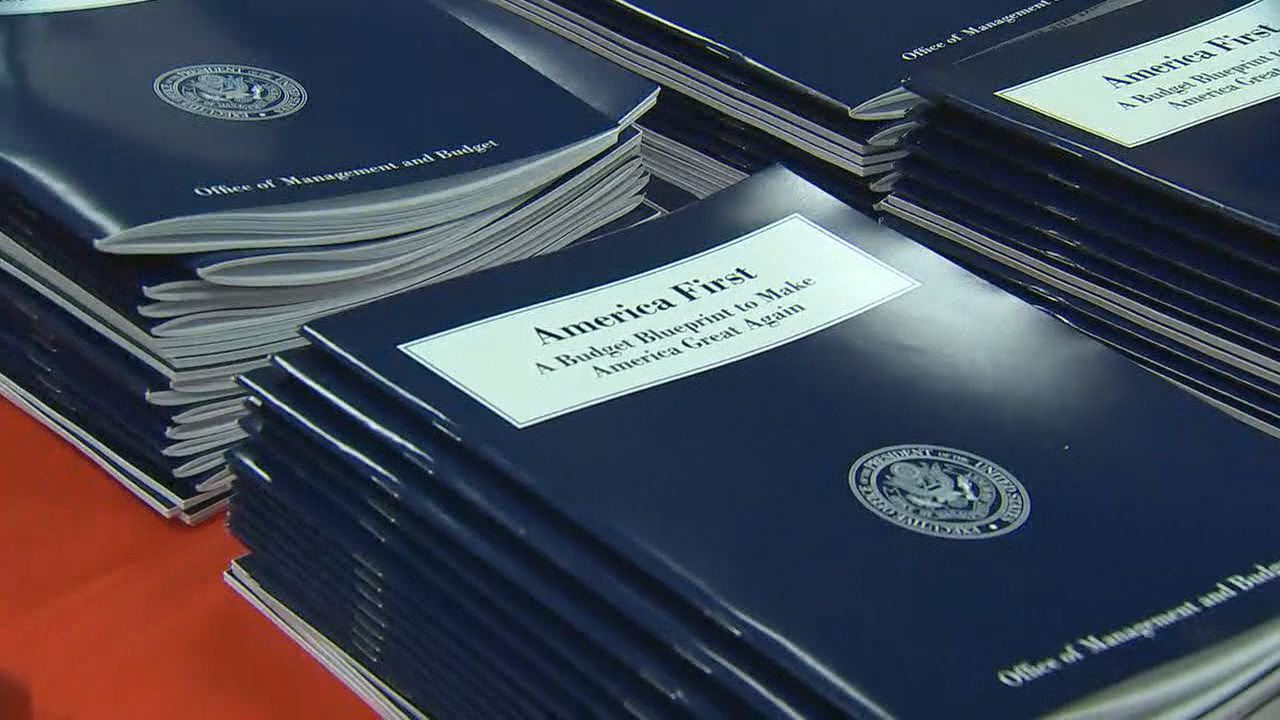
Those cuts—and many more—comprise the "morally obscene" budget put together by the Trump administration, and a new Quinnipiac pollpublished Friday demonstrates that those proposals are deeply unpopular with most Americans.
The numbers showing widespread disapproval of President Donald Trump's budget are out just as public figures call for a "total shutdown" of government over the president's alleged ties to Russia, and as Trump grapples with the collapse of his attempt to pass a cruel and unpopular healthcare bill.
This latest poll also comes on the heels of other recent surveys that show tanking public support for the president and his policies.
Trump's proposed severe funding cuts face disapproval by huge margins. The budget's slashing of public funding for medical research, for example, faces a whopping 87 percent disapproval, with only ten percent of respondents voicing approval.
"By wide margins," Quinnipiac notes, "American voters say other proposed cuts are a 'bad idea:'"
84 - 13 percent against cutting funding for new road and transit projects;
67 - 31 percent against cuts to scientific research on the environment and climate change;
83 - 14 percent against cutting funding for after-school and summer school programs;
66 - 27 percent against eliminating the National Endowment for the Arts and the National Endowment for the Humanities;
79 - 17 percent against eliminating the Low Income Home Energy Assistance Program.
President Donald Trump's oft-repeated campaign promise to build a wall on the U.S.-Mexico border is also a "bad idea," 64 percent of respondents said. Only 35 percent approved of the wall.
"[W]hen it comes to cutting public TV, the arts, after-school programs, and scientific research to improve the environment, it's a stern 'hands off' from voters," said Tim Malloy, assistant director of the Quinnipiac University Poll. "And that wall? Forget it."
Respondents supported just two aspects of the budget: increased funding for health programs provided by the Department of Veterans Affairs (85 - 13 percent), and increased military funding (58 - 39 percent).
Most Americans also don't agree with significantly increasing funding for charter schools and school voucher programs, as the budget proposes. In addition, they believe that tax cuts to the wealthy are a bad idea (74 - 22 percent), an opinion even shared by most Republicans (50-43 percent).
When it comes to the budget, it seems that quite a lot of voters agree with progressive critics such as the Institute for Policy Studies, which argues that "[i]n cut after cut, the proposal pours salt in the wounds of the very working people Trump pledged to help."
Moreover, an overwhelming majority—73 percent—are "very concerned" or "somewhat concerned" about the climate crisis, and 59 percent want the U.S. to do more to address it. The Trump administration, meanwhile, is committed to denying climate science and obliterating environmental regulations. (The poll also found that most voters don't want Trump to repeal those regulations.)
In answers to questions about other controversies swirling around the Trump administration—namely, the allegations that Trump's campaign was linked to Russia and the ongoing court defeats of his immigration policies—it's clear that voters are not on Trump's side, either.
The majority of respondents oppose the Muslim ban, and support the court decisions blocking it. They also oppose his now-rescinded ban on all refugees entering the U.S.
Sixty-three percent of respondents are "very concerned" or "somewhat concerned" about Trump's relationship with Russia, and 65 percent believe that alleged Russian interference in the November election is a "very important" or "somewhat important" issue.
A wide majority also supports an independent investigation into the connections between the Trump campaign and Russian officials.
The poll was conducted from March 16 to 21, and Quinnipiac surveyed 1,056 voters nationwide in phone calls to landlines and cell phones. The margin of error is plus or minus three percentage points.

3 WAYS TO SHOW YOUR SUPPORT



- Log in to post comments


