
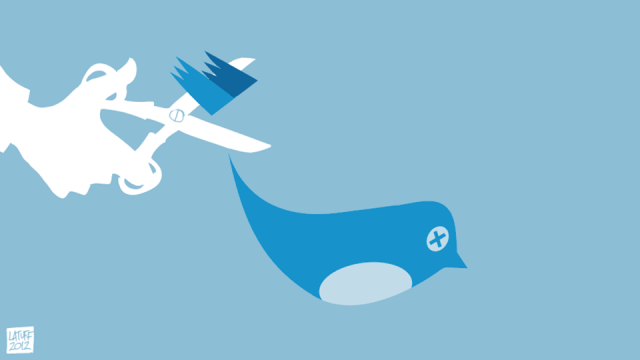
Twitter has a reputation as an open platform for expressing one's opinions. It's become a place for dissent and debate. It played a key role in the "Arab Spring" revolutions of the last couple of years.
But last week, it agreed to censor a pro-Ukrainian Twitter feed in Russia. It also blocked a "blasphemous" account in Pakistan. It's not the first time Twitter has censored politically sensitive accounts. Now, it seems, Twitter's reputation as a platform for free speech is at risk.
Here's a brief history of Twitter's foreign policy.
At a conference in 2011, CEO Dick Costolo proudly proclaimed, "We’re the free speech wing of the free speech party.” His words came after events in Egypt, Tunisia — and also the U.S. — where Twitter made it possible for people to organize protests and voice their ideas inside often repressive regimes. Twitter was a place where you could let your unfettered opinion ring free, even if your government wasn't too happy about it.
But then things began to change.
The next year, Twitter decided that it was going to allow countries to block certain content on the social media site. "We give ourselves the ability to reactively withhold content from users in a specific country — while keeping it available in the rest of the world," Twitter wrote in a blog post.
Since then, any request to remove content from Twitter is filed to a database called Chilling Effects Clearinghouse, which is maintained by eight American law schools and the Electronic Frontier Foundation (EFF).
Twitter didn't immediately exercise this new power, but it became policy, and slowly but surely requests started rolling in. The idea was that it was better to allow some censorship as opposed to a country completely blocking the platform. It was the "the least worse censorship," as the EFF's Global Policy Analyst Eva Galperin explained to Business Insider.
Fast forward a couple years, and Twitter's country-by-country takedown policy has been getting some new attention.
This past Monday, Twitter was called out for blocking a pro-Ukrainian political account from Russian users. If a user's profile connected the user to Russia and they tried accessing @PravyjSektorRus, a Ukrainian ultra-nationalist group, the users were met with a message that read "This account has been withheld in: Russia."
Two days later, Twitter was again in the news for reportedly working with Turkey to monitor content. This comes about two months after Turkey shut down the platform entirely. A senior government official in Turkey told Reuters that Twitter will be more responsive to Turkish court orders calling for content to be removed from the platform.
Moving forward to Thursday, and Twitter is revealed to have blocked tweets after a Pakistani bureaucrat requested they be taken down.According to The New York Times, the Pakistani claimed the tweets were "blasphemous" or "unethical." Twitter complied with his five requests, which you can view on Chilling Effects.
Twitter has yet to make a public statement about any of these cases, and it did not respond to our request for comment. The company has previously explained that it simply wants to follow the law each country it operates in:
Many countries, including the United States, have laws that may apply to Tweets and/or Twitter account content. In our continuing effort to make our services available to users everywhere, if we receive a valid and properly scoped request from an authorized entity, it may be necessary to reactively withhold access to certain content in a particular country from time to time.
"Over the last several years Twitter has made the explicit point of being a defender of free speech," Galperin said. "This is something the CEO has said himself. You cannot claim to be a defender of free speech and then cave in to Pakistan or Russia. You simply can’t have it both ways. To watch it backpedal like this is extremely disappointing."
Galperin holds Twitter to a higher standard than other platforms like Facebook and Google since Twitter asked for higher expectations when it called itself a defender of freedom of speech. Google notably pulled out of China entirely after facing issue over censorship. While Twitter is trying to avoid such a total pullout from any country, the current state of censorship may be a mistake.
"Companies like Google and Facebook cave like this all the time, but they never called themselves the free speech wing of the free speech party," Galperin said. "This is what Twitter is good for. This is what Twitter has built its reputation on."
Originally published by Business Insider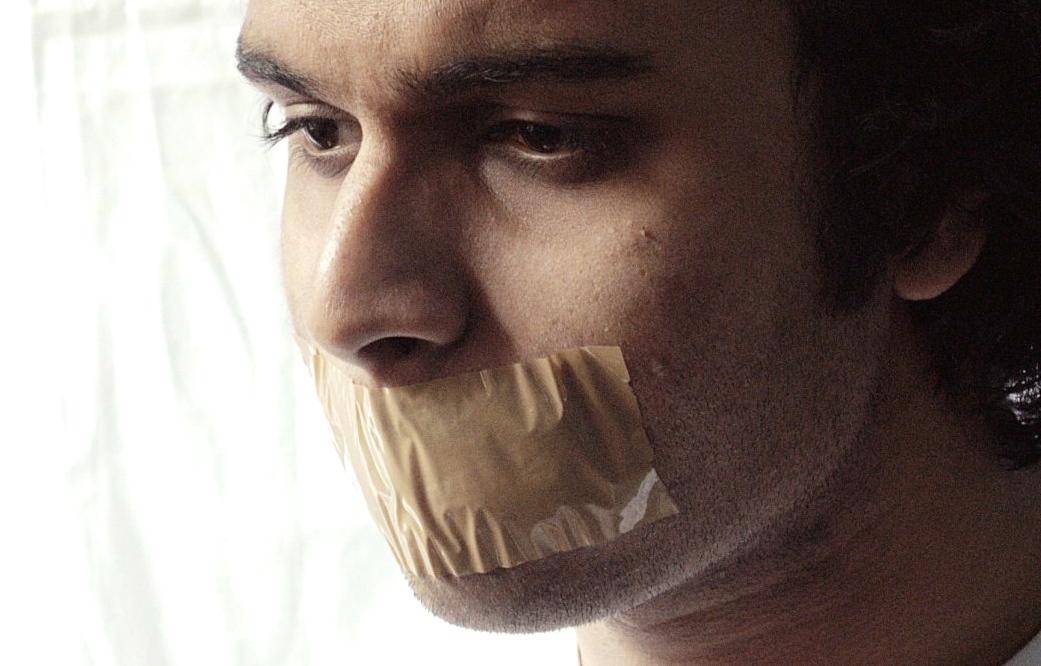
3 WAYS TO SHOW YOUR SUPPORT
- Log in to post comments


