
Not long ago I was asked to speak to a religious congregation about widening inequality. Shortly before I began, the head of the congregation asked that I not advocate raising taxes on the wealthy.
He said he didn’t want to antagonize certain wealthy congregants on whose generosity the congregation depended.
I had a similar exchange last year with the president of a small college who had invited me to give a lecture that his board of trustees would be attending. “I’d appreciate it if you didn’t criticize Wall Street,” he said, explaining that several of the trustees were investment bankers.
It seems to be happening all over.
A non-profit group devoted to voting rights decides it won’t launch a campaign against big money in politics for fear of alienating wealthy donors.
A Washington think-tank releases a study on inequality that fails to mention the role big corporations and Wall Street have played in weakening the nation’s labor and antitrust laws, presumably because the think tank doesn’t want to antagonize its corporate and Wall Street donors.
A major university shapes research and courses around economic topics of interest to its biggest donors, notably avoiding any mention of the increasing power of large corporations and Wall Street on the economy.
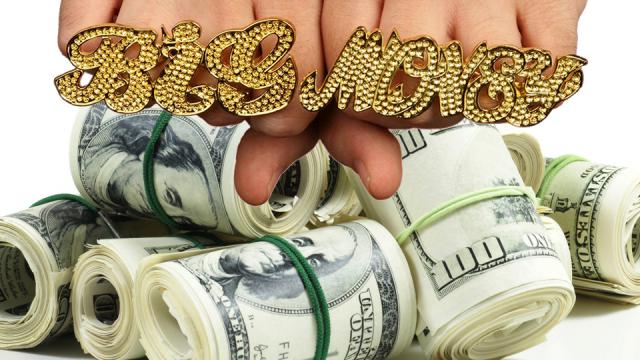
It’s bad enough big money is buying off politicians. It’s also buying off nonprofits that used to be sources of investigation, information, and social change, from criticizing big money.
Other sources of funding are drying up. Research grants are waning. Funds for social services of churches and community groups are growing scarce. Legislatures are cutting back university funding. Appropriations for public television, the arts, museums, and libraries are being slashed.
So what are non-profits to do?
“There’s really no choice,” a university dean told me. “We’ve got to go where the money is.”
And more than at any time since the Gilded Age of the late nineteenth century, the money is now in the pockets of big corporations and the super wealthy.
So the presidents of universities, congregations, think tanks, and other nonprofits are now kissing wealthy posteriors as never before.
But that money often comes with strings.
When Comcast, for example, finances a nonprofit like the International Center for Law and Economics, the Center supports Comcast’s proposed merger with Time Warner.
When the Charles Koch Foundation pledges $1.5 million to Florida State University’s economics department, it stipulates that a Koch-appointed advisory committee will select professors and undertake annual evaluations.
The Koch brothers now fund 350 programs at over 250 colleges and universities across America. You can bet that funding doesn’t underwrite research on inequality and environmental justice.
David Koch’s $23 million of donations to public television earned him positions on the boards of two prominent public-broadcasting stations. It also guaranteed that a documentary critical of the Kochs didn’t air.
As Ruby Lerner, president and founding director of Creative Capital, a grant-making institution for the arts, told the New Yorker’s Jane Mayer, “self-censorship” practiced by public television … raises issues about what public television means. They are in the middle of so much funding pressure.”
David Koch has also donated tens of millions of dollars to the American Museum of Natural History in New York and the Smithsonian National Museum of Natural History, and sits on their boards.
A few weeks ago dozens of climate scientists and environmental groups asked that museums of science and natural history “cut all ties” with fossil fuel companies and philanthropists like the Koch brothers.
“When some of the biggest contributors to climate change and funders of misinformation on climate science sponsor exhibitions … they undermine public confidence in the validity of the institutions responsible for transmitting scientific knowledge,” their statement said.
Even though gift agreements by universities, museums, and other nonprofits often bar donors from being involved in decisions about what’s investigated or shown, such institutions don’t want to bite hands that feed them.
This isn’t a matter of ideology. Wealthy progressives can exert as much quiet influence over the agendas of nonprofits as wealthy conservatives.
It’s a matter of big money influencing what should and should not be investigated, revealed, and discussed – especially when it comes to the tightening nexus between concentrated wealth and political power, and how that power further enhances great wealth.
Philanthropy is noble. But when it’s mostly in the hands of a few super-rich and giant corporations, and is the only game available, it can easily be abused.
Our democracy is directly threatened when the rich buy off politicians.
But no less dangerous is the quieter and more insidious buy-off of institutions democracy depends on to research, investigate, expose, and mobilize action against what is occurring.
[via RobertReich.org]
3 WAYS TO SHOW YOUR SUPPORT



- Log in to post comments


