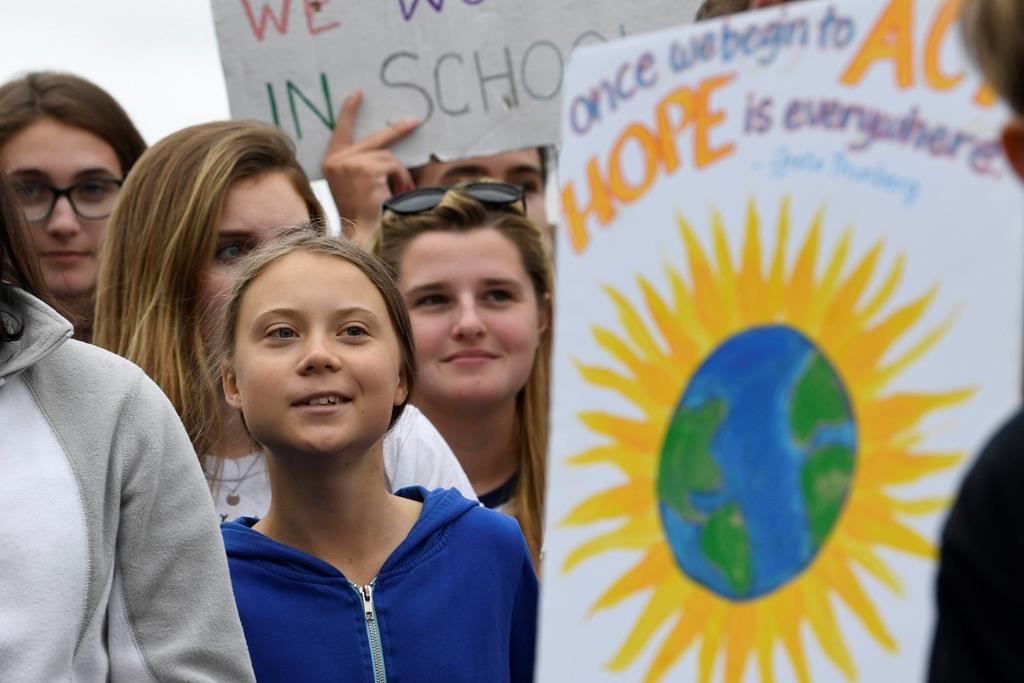
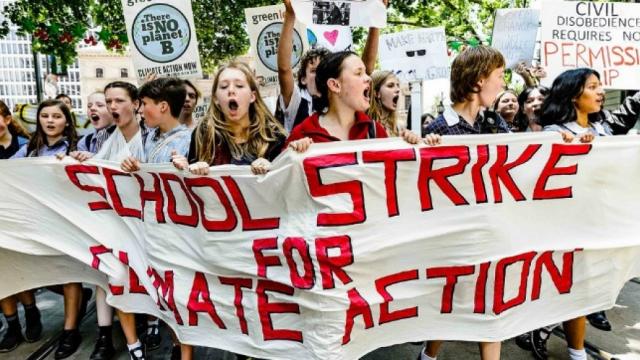
Greta Thunberg has become the face of the youth-led global climate movement. Her unabashed statements against world leaders have drawn widespread praise and a large following. However, the reactions from journalists, presidents and others have been mixed at best.
Earlier this month, Russian President Vladimir Putin dismissed Thunberg's UN speech, claiming, “When someone is using children and teenagers in personal interests, it only deserves to be condemned.” He essentially implied that the 16-year-old activist is being manipulated.
Funny, because the allegation of manipulation was nowhere to be found among the youth groups organizing pro-Putin events to influence the opinions of young Russians.
Putin's hypocrisy is certainly not unique. Adults support youth activism when it is expedient. Enthusiasm for young people’s political actions often align with one’s ideology and values, and most adults love to see youth activism – but only when young people are supporting causes they can get behind.
When Thunberg criticized world leaders at the UN for inaction, telling them, “Yet you all come to us young people for hope. How dare you,” her statement carried a lot of weight. Young people’s idealism has given adults optimism for the future. But in other cases, it has created grave concerns that society will go astray if children with perceived pie-in-the-sky ideas ever achieved power and influence.
Yet such hypocrisy has consequences. Activism demands publicity. Even more important, it demands neutral coverage, and the type of attention an individual or group receives shapes public opinion. Thunberg has not been covered the same across all media outlets. She appeared on the Daily Show with Trevor Noah, CBS This Morning, and Good Morning Britain.
She even met former President Barack Obama. But most of the people viewing these channels are liberals or moderates, meaning that many who might oppose Thunberg and her actions have not yet been exposed to her ideas. The majority of conservative audiences, rather, have been listening to commentators who cast doubt on the sincerity of teenage climate activists, and some have even stooped to lobbing personal insults.
Laura Ingraham compared Thunberg to children in Stephen King’s book and film adaptation Children of the Corn. John Nolte of Breitbart called supporters of Thunberg “Gretards.” Conservative commentator Harry Cherry called Thunberg a “freak”, and Daily Wire podcast host Michael Knowles was widely criticized for calling Thunberg a “mentally ill Swedish child.”. As journalists have noted, criticism of climate change activists usually comes from white males who view the debate through a gendered lens. Nonetheless, the attacks on Thunberg draw attention away from her message, and that is the point.
This line of attack isn’t shocking to say the least, but it still doesn’t line up with how conservative media outlets have covered conservative youth activists. Take the Parkland students advocating gun reform, for example. Although many journalists and media outlets that have called for gun control praised the students and provided sympathetic coverage, conservative commentators like Fox News belittled them while praising students like Kyle Kashuv, the Parkland student who publicly defended the second amendment.
Kashuv appeared on Fox for numerous interviews and commentators and radio hosts alike praised him. His pro-second Amendment stance has gotten greater reception than the other Parkland activists calling for gun reform, solely because his politics align with the majority of conservatives. The only criticism Kashuv has ever faced for his activism has come from the political left.
On the other hand, the same thing occurs when liberals respond to conservative youth activists by alleging they're just repeating talking points instead of advocating original thoughts or ideas. Often liberals used these activists as punchlines. In other cases, some media outlets wouldn't cover them extensively. The nationwide student walkout to support the second Amendment, for example, received press coverage but was minuscule compared to the March for Our Lives demonstrations and the attention they received.
Such imbalance in reactions to youth activism certainly isn’t new. Radicals in the 1960s routinely faced criticism by those who held institutional power. But when conservative youth activists organized to defend institutions, such as university administrators and government institutions, they received wide praise. Even some journalists wrote sympathetic accounts about them to demonstrate that not all young people were influenced by radicalism.
Overall, adults use young people far too often as props to take moral stands on issues. If young people are presumed more inherently innocent, it gives political causes stronger justification and a higher moral ground to stand on. But the lack of consistency in praise and criticism makes these commitments fragile. Once teenage activists take movements into territories that might be unappealing for supporters, those same individuals who praised them often back away. Therefore, the only true allies young activists have are often themselves.