
Fifty-three-year-old farmer Jaswant Sainhara never thought he could be an activist. But in August he was among the thousands of farmers from across 20 Indian states who braved sweltering heat to demonstrate in New Delhi against the Biotechnology Regulatory Authority of India (BRAI) Bill.
The BRAI Bill ensures that India's government will have all the rights to regulate the research, transport, import, manufacture and use of organisms and products of modern biotechnology. India recently rejected two patent appeals by biotech giant Monsanto, dealing the latest setback to a company that recoups its research investments in large part via its sale of patents.
But the world's largest democracy has to do more to beat back the dangers of GMOs. And India’s organic seed banks might just be the natural weapon required to defeat the GMO beast.
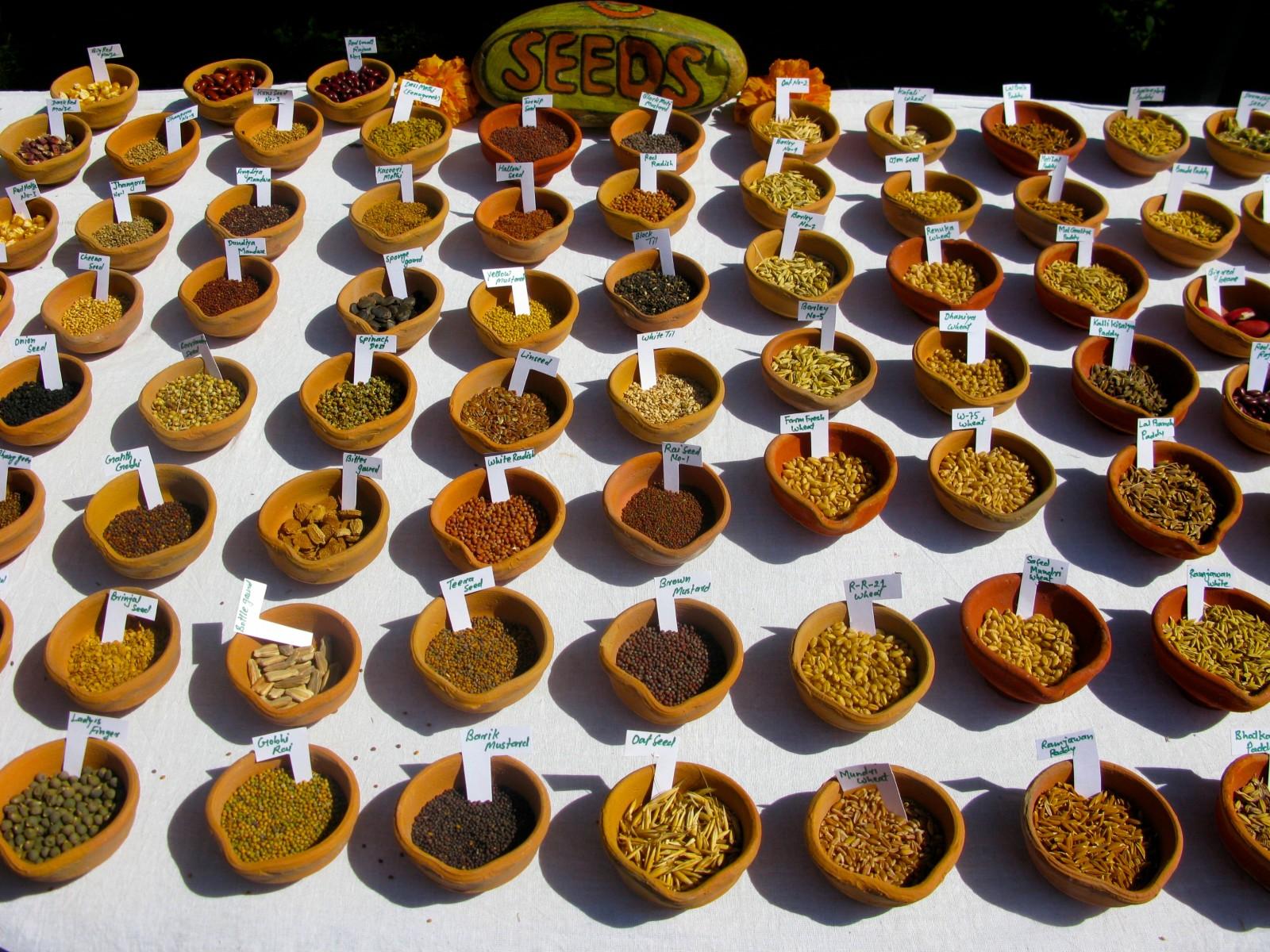
Gift of Seed
The country's first organic seed bank, Navdanya, was set up by the renowned physicist and environmentalist Dr. Vandana Shiva. Winner of the 1993 Right Livelihood Award, Shiva started Navdanya in 1987 to protect India’s seed diversity and farmers' right to save, breed and exchange seed freely. Navdanya means “nine seeds," symbolizing the protection of biological and cultural diversity. The name also means “new gift.”
The center, headquartered in New Delhi with a biodiversity farm in Dehradun, grows more than 1,500 varieties of seed in organic settings where the seeds adapt to seasonal variations — like lots of rain one season and no rain the next. Navdanya was created to protect farmers in the context of emerging threats like the TRIPS (Trade Related Intellectual Property Rights) Agreement put forward by the World Trade Organization, which further opened the door to introducing GMOs, patents on seed and the collection of royalties from those patents.
For a country in the grips of biological manipulation by companies like Monsanto, organic seeds are increasingly viewed as a much-needed counterweight. To that end, Navdanya has grown to become a network of seed keepers and organic producers spread across 17 states in India, providing crucial sanctuaries of biodiversity with 111 community seed banks and operations that have trained over 500,000 farmers in seed sovereignty and sustainable agriculture. It also operates as a collective powered by the people it seeks to serve, promoting a rise in women farming especially.
Shiva says we are living in a moment that demands an “emergency saving of seeds,” as plants become ever more appropriated and colonized by corporations in the form of intellectual property. “Seed is not just the source of life. It is the very foundation of our being,” says Shiva.
Navdanya also has a center called the Bija Vidyapeeth (whose literal meaning is School of Seed) that teaches the importance of biodiversity and organic farming. Since 1991, Navdanya has organized farmers through the Bija Satyagraha Movement to keep farmers in control of their seeds in defiance of laws that make seed a corporate monopoly — and make seed saving and seed sharing a crime.
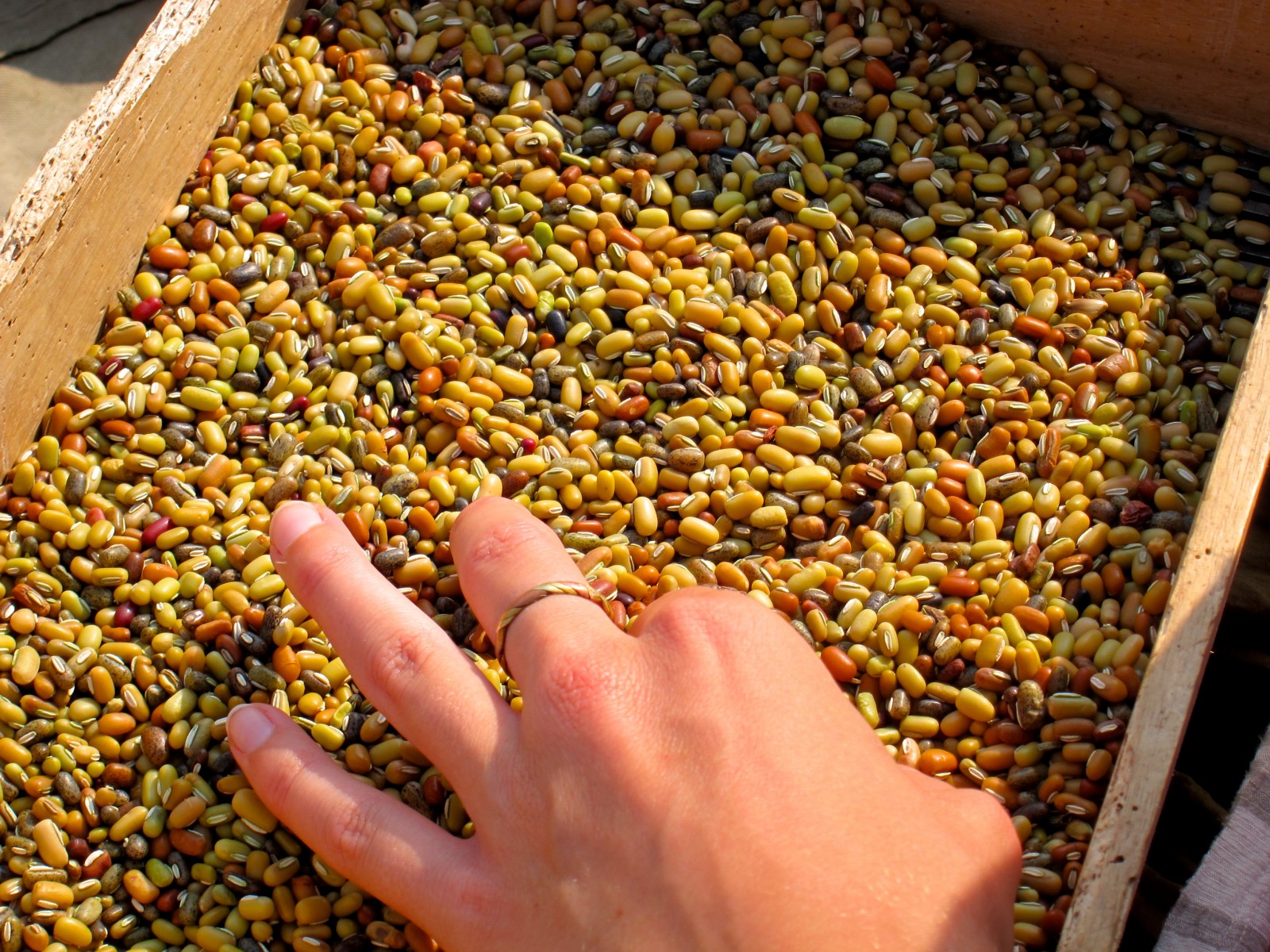
Seed Activism
In a recent study titled “Seed Freedom: A Global Citizens Report," Shiva’s research showed the ways that genetic contamination is rapidly spreading and, specifically, how India has lost organic cotton seed varieties due to contamination by Bt Cotton. The report also points to other places, like Mexico, facing similar challenges.
“Mexico, the historical cradle of corn, has lost eighty percent of its corn varieties,” according to the report. It is in the face of this global scourge, Shiva hopes, that organic seed banks will help create a different future.
Worldwide, these banks operate on various scales, with distinct forms of operations and funding. SeedSavers.org, for instance, offers an alternative model to biotech-fueled agriculture through “participatory preservation of organic seeds" among its members to ensure the planet maintains a “genetically diverse food supply.” The group, headquartered in Decorah, Iowa, operates one of the largest seed banks in North America where it works with farmers and gardeners to secure heirloom varieties of seeds.
Each year thousands of seed varieties are exchanged among "backyard preservationists" through the group's Seed Savers Exchange Yearbook, which helps members find varieties suited to their particular region and source material to use in localized breeding projects. Their preservation methods keep open-pollinated and heirloom seeds circulating among gardeners and farmers, making those varieties available to everyone.
Crowd-sourced Seed Banks
As people send in seeds, these banks are becoming a sort of crowd-soured preservation of seeds that are in the danger of being lost. The Bay Area Seed Interchange Library, located at the Berkeley Ecology Center, is another example. Here, people "check out" seeds, grow them, let some plants sow seed, then return those seeds to the library to share with other gardeners.
Meanwhile, the message in some mainstream media appears to be catching on. As the Daily Mail reported in October, scientists are increasingly joining forces to challenge industry claims that genetically modified food is safe for humans.
As scientists and farmers already know, organic seed banks may be our best investment against bio-piracy and the poisoning of our global food supply. Now, it is up to governments like India, the U.S. and nations around the world to pass laws pushing back against biotech giants like Monsanto to preserve our collective future.
Follow the author Paromita Pain on the Commons or on twitter at @ParoP
3 WAYS TO SHOW YOUR SUPPORT



- Log in to post comments


