
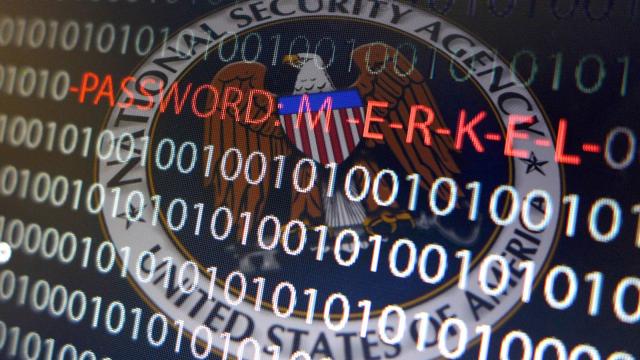
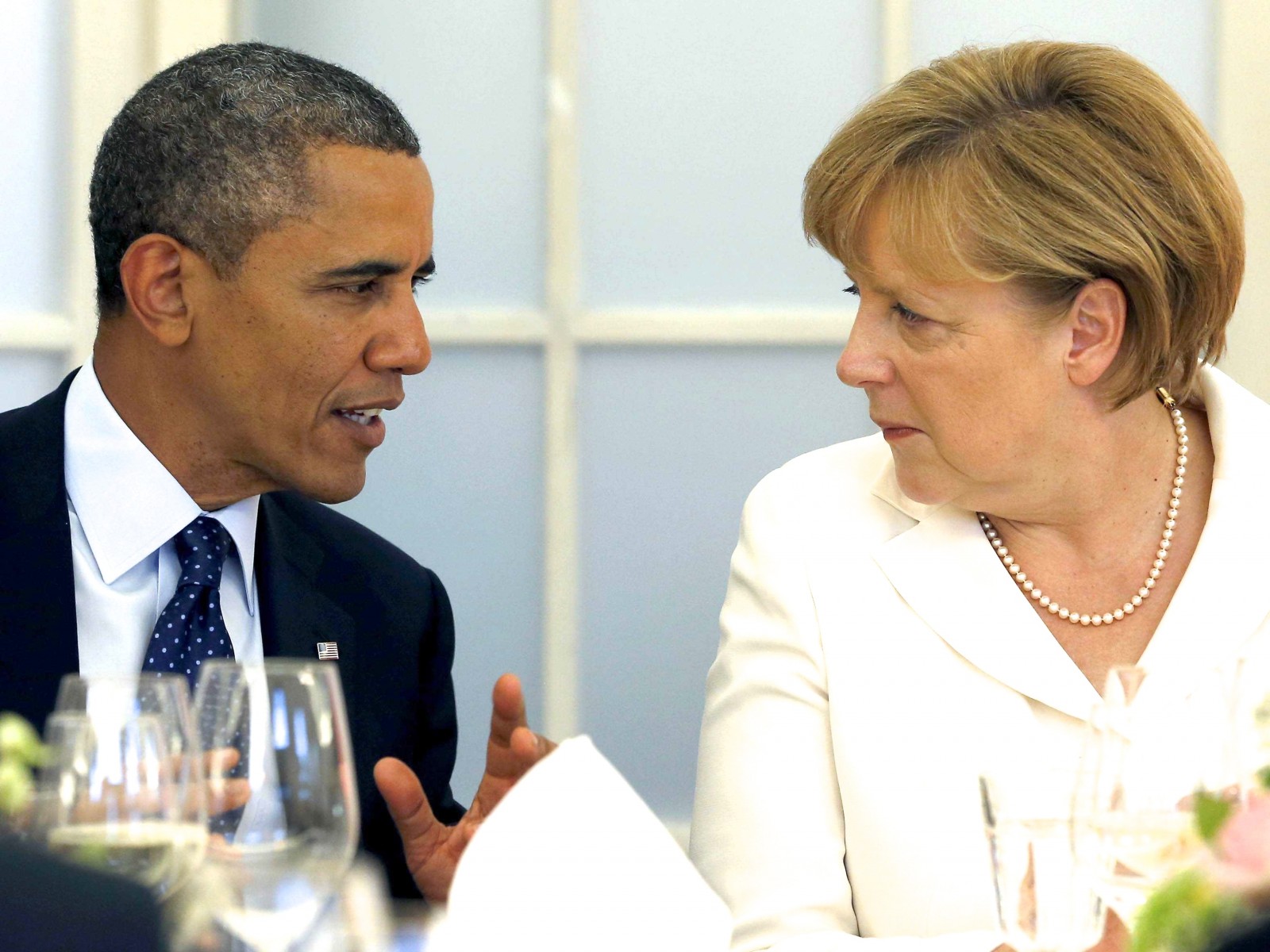
German Chancellor Angela Merkel, arguably the most powerful woman in the world, is now probably also its most famous victim of U.S. spying. Merkel, said to be “livid” when she heard the news some weeks ago, called President Barack Obama to complain. Is this what Edward Snowden intended when he began leaking details of NSA surveillance: that someone powerful enough to put a stop to things would eventually say “Nein”?
Yet despite the bluster, if Merkel doesn’t want her own conversations recorded, she appears to be doing little to help fellow Europeans avoid the same fate.
If anything, in the behind-the-scenes meetings recently taking place between intelligence agencies at the White House, Germany is likely seizing upon Merkel’s public humiliation to demand a greater share of NSA data. The Chancellor has already suggested she’d like to join the “five eyes” club – a shadowy, exclusive intelligence-sharing body of English-speaking allies that includes the U.S., U.K., Australia, New Zealand and Canada.
For all the diplomatic sound and fury, the leaders of Germany, France and Spain made it clear last week that there will be no European “Declaration of Independence” from the United States. When Merkel and other continental heads of state met at a summit meeting in Brussels, they conspicuously refused to push for a new data privacy law to better protect Europe’s citizens.
A draft of such a law, which was voted for overwhelmingly by European Parliament, would place new restrictions on the transfer of personal data to U.S. corporations. It was the chance, according to Jérémie Zimmermann, spokesperson for the French advocacy groupLa Quadrature du Net, to give European citizens “effective legal tools to regain control over their personal data in the face of the predatory behaviors of giant companies whose business models are based on collecting everyone's data, favoring the rise of global surveillance.”
The attitude of Europe’s leaders is a signal victory for U.S. companies like Google, Facebook, Amazon and Apple, and a stunning defeat for the many civil rights groups demanding E.U. sanctions for violations of its citizens' privacy.
If Europe’s leaders are proving to be all words and no action, that's in part because the NSA revelations also highlight the role of those countries' very own security services operating under secret surveillance. Britain's capacity to tap into submarine cables that carry the world's communications makes the Government Communications Headquarters, or GCHQ, Britain’s NSA partner, an intelligence superpower. "They are worse than the U.S.," Snowden told the British daily The Guardian.
Merkel’s case shows that any European can be targeted, that nothing is secret – and that Europe’s citizens are, for the moment, left to their own devices, technically and legally, to defend their right to privacy.
Privacy activists Big Brother Watch, Open Rights Group, English PEN and Constanze Kurz of Germany’s Chaos Computer Club are now taking the U.K. government to the European Court of Human Rights on behalf all internet users in the U.K. and E.U. A website, Privacy not Prism, has been set up to fund the legal action.
The group's suit argues that Britain acted illegally by collecting vast amounts of data leaving or entering the country, including the content of emails and social media messages. “We have to do something politically and legally,” explains Kurz of Germany's CCC. “These large-scale spaces that are not subject to legal control and in which no one can check up on what's going on have to be ended.”
As Nick Pickles of Big Brother Watch notes, “Britain’s position internationally on fiber optic cables is such that the likelihood is it’s not just British citizens whose privacy has been infringed upon but also those Europeans whose data is routed through the U.K.”
An internal memo released by U.S. whistleblower Edward Snowden, which was published in The Guardian, shows that Britain's GCHQ fears legal challenges to its surveillance methods: "Our main concern is that references to agency practices (i.e. the scale of interception and deletion) could lead to damaging public debate which might lead to legal challenges against the current regime."
According to Pickles, the legal battles initiated on both sides of the Atlantic are just the beginning.
“It’s a great tribute to Edward Snowden that we are having this debate around the world and there’s undeniable public interest in what he’s disclosed," said Pickles. "But the test for Snowden’s success won’t just be if there’s a debate, it’s if something changes.”
3 WAYS TO SHOW YOUR SUPPORT



- Log in to post comments


