
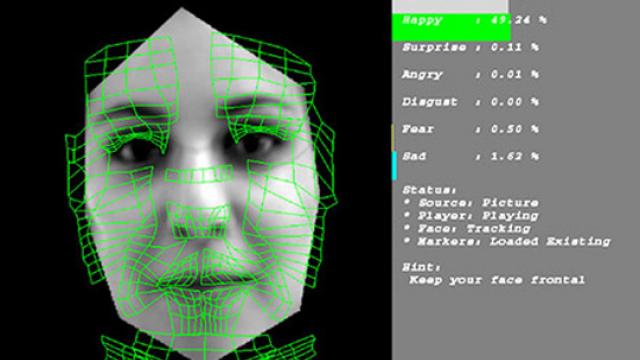
A software engineer in my Facebook community wrote recently about his outrage that when he visited Disneyland, and went on a ride, the theme park offered him the photo of himself and his girlfriend to buy – with his credit card information already linked to it. He noted that he had never entered his name or information into anything at the theme park, or indicated that he wanted a photo, or alerted the humans at the ride to who he and his girlfriend were – so, he said, based on his professional experience, the system had to be using facial recognition technology. He had never signed an agreement allowing them to do so, and he declared that this use was illegal. He also claimed that Disney had recently shared data from facial-recognition technology with the United States military.
Yes, I know: it sounds like a paranoid rant.
Except that it turned out to be true. News21, supported by the Carnegie and Knight foundations, reports that Disney sites are indeed controlled by face-recognition technology, that the military is interested in the technology, and that the face-recognition contractor, Identix, has contracts with the US government – for technology that identifies individuals in a crowd.
Fast forward: after the Occupy crackdowns, I noted that odd-looking CCTVs had started to appear, attached to lampposts, in public venues in Manhattan where the small but unbowed remnants of Occupy congregated: there was one in Union Square, right in front of their encampment. I reported here on my experience of witnessing a white van marked "Indiana Energy" that was lifting workers up to the lampposts all around Union Square, and installing a type of camera. When I asked the workers what was happening – and why an Indiana company was dealing with New York City civic infrastructure, which would certainly raise questions – I was told: "I'm a contractor. Talk to ConEd."
I then noticed, some months later, that these bizarre camera/lights had been installed not only all around Union Square but also around Washington Square Park. I posted a photo I took of them, and asked: "What is this?" Commentators who had lived in China said that they were the same camera/streetlight combinations that are mounted around public places in China. These are enabled for facial recognition technology, which allows police to watch video that is tagged to individuals, in real time. When too many people congregate, they can be dispersed and intimidated simply by the risk of being identified – before dissent can coalesce. (Another of my Facebook commentators said that such lamppost cameras had been installed in Michigan, and that they barked "Obey", at pedestrians. This, too, sounded highly implausible – until this week in Richmond, British Columbia, near the Vancouver airport, when I was startled as the lamppost in the intersection started talking to me – in this case, instructing me on how to cross (as though I were blind or partially sighted).
Finally, last week, New York Mayor Michael Bloomberg joined NYPD Commissioner Ray Kelly to unveil a major new police surveillance infrastructure, developed by Microsoft. The Domain Awareness System links existing police databases with live video feeds, including cameras using vehicle license plate recognition software. No mention was made of whether the system plans to use – or already uses – facial recognition software. But, at present, there is no law to prevent US government and law enforcement agencies from building facial recognition databases.
And we know from industry newsletters that the U.S. military, law enforcement, and the department of homeland security are betting heavily on facial recognition technology. As PC World notes, Facebook itself is a market leader in the technology – but military and security agencies are close behind.
According to Homeland Security Newswire, billions of dollars are being invested in the development and manufacture of various biometric technologies capable of detecting and identifying anyone, anywhere in the world – via iris-scanning systems, already in use; foot-scanning technology (really); voice pattern ID software, and so on.
What is very obvious is that this technology will not be applied merely to people under arrest, or to people under surveillance in accordance with the fourth amendment (suspects in possible terrorist plots or other potential crimes, after law enforcement agents have already obtained a warrant from a magistrate). No, the "targets" here are me and you: everyone, all of the time. In the name of "national security," the capacity is being built to identify, track and document any citizen constantly and continuously.
The revealing boosterism of a trade magazine like Homeland Security Newswire envisions endless profits for the surveillance industry, in a society where your TV is spying on you, a billboard you drive by recognizes you, "Minority Report"-style, and the FBI knows where to find your tattoo – before you have committed any crime: "FBI on Track to Book Faces, Scars, Tattoos," it notes; "Billboards, TVs Detect your Faces; Advertisers Salivate," it gloats; "Biometric Companies See Government as the Driver of Future Market Growth," it announces. Indeed, the article admits without a blush that all the growth is expected to be in government consumption, with "no real expectation" of private-sector growth at all. So much for smaller government!
To acclimate their populations to this brave new world of invasive surveillance technologies, UK Prime Minister David Cameron and and his Canadian counterpart, Stephen Harper, both recently introduced "snoop" bills. Meanwhile, in the US – "the land of the free" – the onward march of the surveillers continues apace, without check or consultation.
3 WAYS TO SHOW YOUR SUPPORT



- Log in to post comments


