
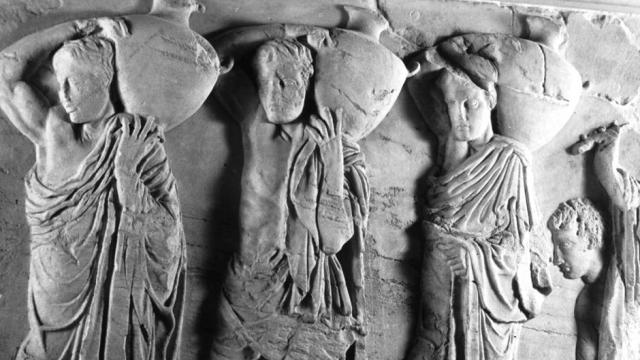
The "fire sale" privatization of Greece started in 2015, following the infamous Syriza referendum in which more than three-fifths of the Greek people voted to reject Troika-imposed bailout conditions – and yet their government, led by Alexis Tsipras, chose to accept the deal anyway.
The privatization process reached its peak the next year, when the Greek government sold the public transport giant TrainOSE to the Italian company Ferrovie dello Stato Italiane S.p.A for 45 million euros. This happened after a very brief bidding period and despite considerable employee pushback, including a 24-hour strike that paralyzed the country.
Now, a second round of fire sales is taking place ahead of the upcoming third bailout negotiations for Greece, whose current bailout package will expire in August 2018. Since last year, the sale of the country's roads, rights to the use of its ports, and other public sector resources have only yielded around 4 billion euros – a far cry from the projected 50 billion euros that were promised when the privatization plan was put in motion. At best, it will result in a 6 billion euro profit, nowhere near enough to cover the ailing Greek economy's massive overhead spending.
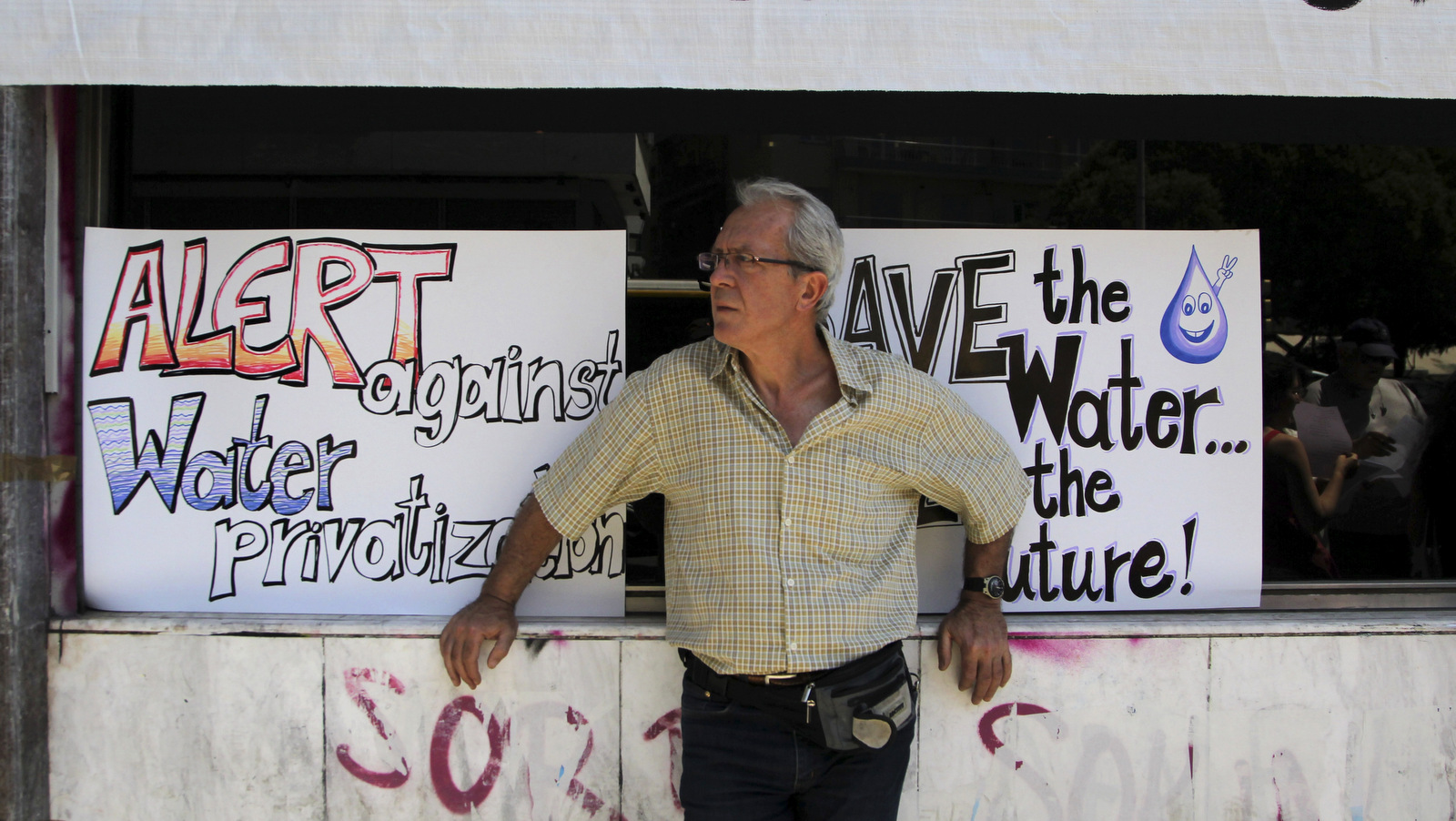
A movement to Save Greek Water
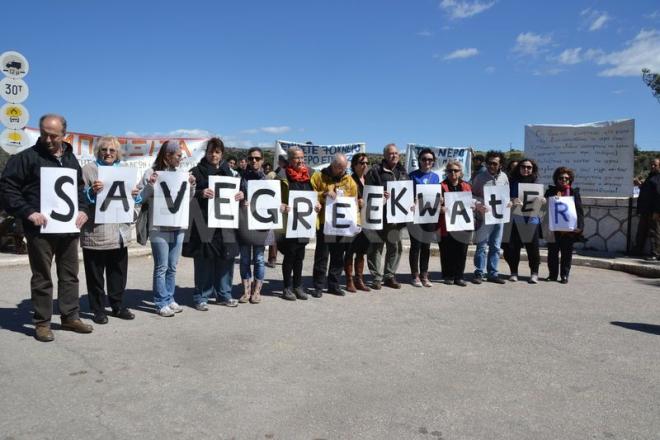
In 2016, under the EYATH initiative (representing Thessaloniki's public sector water workers) and activists, Save Greek Water was launched in an attempt to curb the Syriza administration's efforts to privatize public water reserves. The initiative enjoyed enormous support from the public and media, and seemed to curbing further efforts to move the privatization talks forward. That was until last December, when an article published by Stavroula Symeonidou, president of the Workers Union of DEYA of Drama, revealed that Greece's public water sector was being purposefully sabotaged by its own government.
"...DEYAs are not financially dependent on the State/Central Government, therefore they do not, in any way whatsoever, contribute to the public debt... however they are equally restricted in (actually barred from) recruiting any new personnel, which means that over time their already limited resources will reach zero," Symeonidou wrote.
The article also warned about the danger of further levies being imposed on Greek farmers using public water sources like ground- and rainwater wells. This dire prediction came to pass last month, when an "irregular water source charge" was imposed on the major rural regions of the country, directly targeting farmers and households in the affected areas. According to a statement released by the Syriza administration, 2.5 percent of the proceeds from this levy will be invested in the interest of supporting the Greek public sector – but not the DEYA initiative. This is being seen as an obvious attempt to further hobble any resistance to privatization.
In an interview with Maria Kanellopoulou for Dialogos Radio, the extent of the government's sabotage of public water administration was brought to the forefront once again in a context where the EU had also established itself as a major proponent of these privatization attempts:
Said Kanellopoulou: "We saw that despite the Supreme Court decision that we had back in 2014 that prohibits the privatization of water services in Greece... we have this recent development in which both EYDAP (the Athens water utility) and EYATH (the Thessaloniki water utility) were transferred... to this new 'Superfund' which is the new European privatization fund agreed to between the Greek government and its creditors in the Third Memorandum."
This inclusion of public Greek water companies to the "Superfund" was made official through a law published in the Greek Government Gazette in late May, which finalized the process that would facilitate the rapid privatization of the country's water supplies.
This is all being done despite the slew of failed privatization attempts that have taken place in the country – and, equally important, despite the overwhelming European trend to maintain public facilities strictly within the control of the public sector. Given the current allowances made by the Greek legislature, private companies that gain access to water and sanitation are almost certain to hike prices to the level of monopolies, with little to no guarantees on the quality of the services they will provide.
Now fears are growing that this could lead to limited access to water and sanitation for hundreds of thousands if not millions of citizens, constituting a direct violation of their human right to water.
Many have already given up on the water privatization battle, seeing it as a hopeless struggle against a Syriza administration that has already backed a series of disastrous policies. But some, looking for a glimmer of hope, are eyeing Slovenia, which in November 2016 set a precedent by adding a constitutional amendment to recognize water as a public resource and a human right for its citizens. This was done in spite of the long history the country has with water privatization, and even in spite of the complex CETA trade deal between the EU and Canada.
According to Jutta Schütz, spokesperson for the European Water Movement, “We welcome the introduction of the human right to water in the Slovenian constitution, as the great result of a citizens' initiative. Now civil society should be vigilant to guarantee a democratic and transparent management of the integrated water cycle founded in the participation of citizens and workers.”
Provided that Greece's upcoming bailout negotiations don't fall through entirely, perhaps there is still some hope to rescue the country's public water resources. If not, then it seems that nothing will stop the complete bargain-bin sale of almost every asset in the country.
3 WAYS TO SHOW YOUR SUPPORT


- Log in to post comments


