
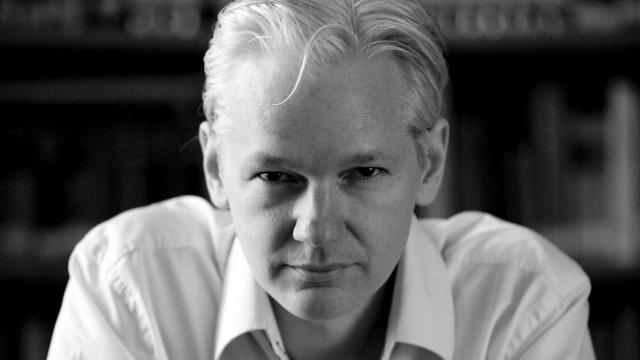
Revealing American secrets appears to be the ultimate betrayal for the Obama Administration and members of Congress. But as the mainstream media has a field day eviscerating Obama’s secret NSA spying program, a separate clandestine debate is beginning to trickle into public discourse: how to prosecute journalists who publish big leaks.
Journalists in the business may publicly scoff at the idea. But just look at Big Media's cowering, near-silent response to the U.S. government's attack on Julian Assange and Wikileaks — which has concurrently sprung back into the news with the trial that's now underway in Fort Meade against whistleblower Bradley Manning — and you get an eerie sense where things might be headed.
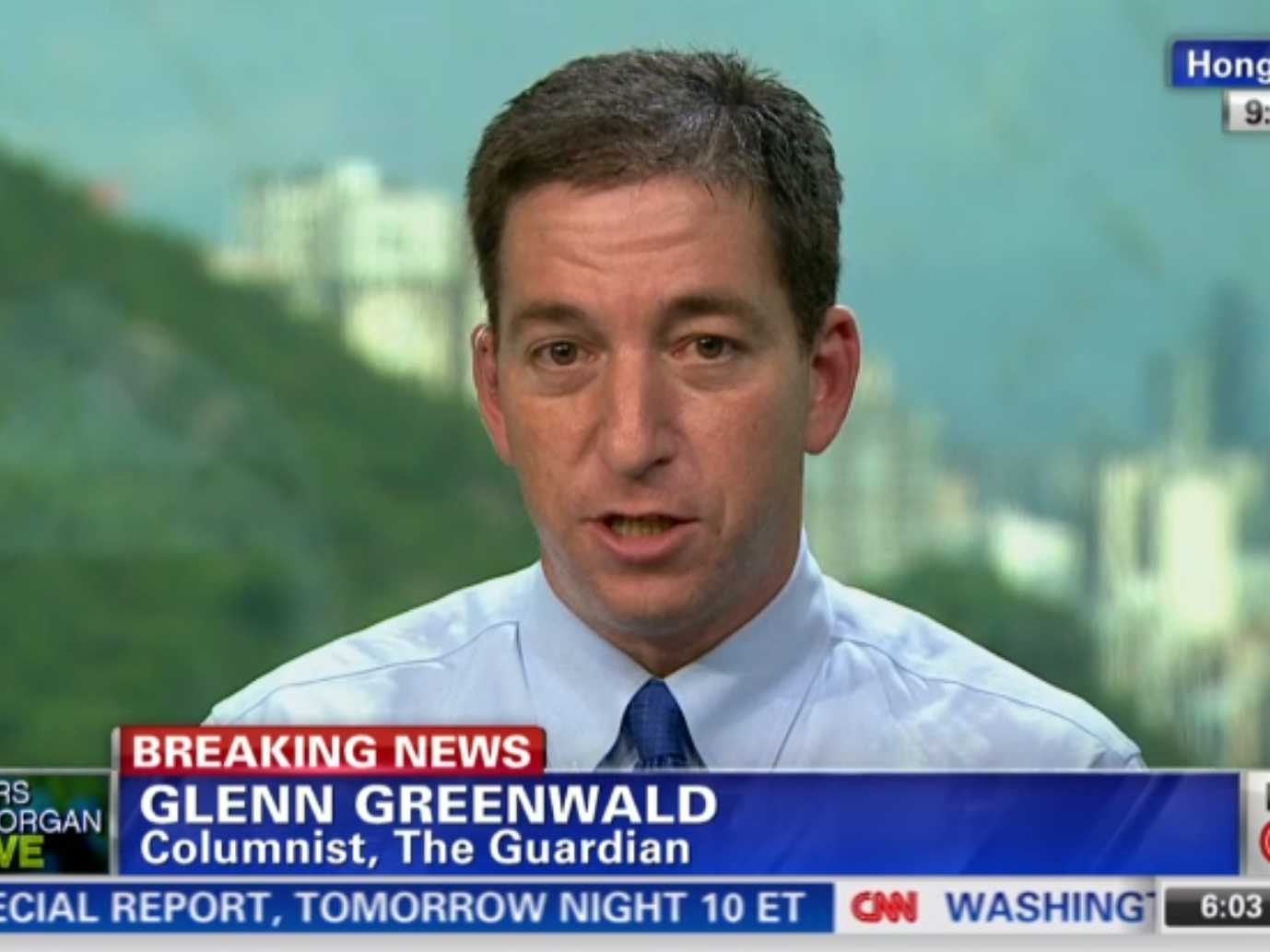
At least one U.S. representative last week called for Glenn Greenwald’s prosecution. Greenwald is the columnist from The Guardian who revealed information leaked by Edward Snowden, a former government contractor working with Booz Allen Hamilton, showing the extent of the U.S. government's massive dragnet that is scooping up communications histories of millions of Americans. Revelations about the National Security Agency PRISM program are continuing to unfold.
But instead of defending Americans' civil liberties, U.S. Representative Peter King (R-NY) on FOX News called for Greenwald’s prosecution:
“Not only did he disclose this information, he said that he has names of CIA agents and assets around the world, and he’s threatening to disclose that …. That to me is a direct attack against Americans … putting American lives at risk.”
While appearing on MSNBC, Greenwald denied having covert CIA names and threatening to reveal them. In fact, he shot back that it was more than offensive when a sitting member of Congress should target a “watchdog of democracy”:
“I think that most Americans find it instinctively repulsive the idea that journalists should be arrested and prosecuted for doing what journalists are suppose to do which is reporting on what the United States government does in the dark.”
But is the official response to Greenwald's revelations so different from the government's witch-bating of Assange, whose Wikileaks exposed war crimes and unlawful military activity in the Iraq war? Not very, and therein lies the problem.
Assange has been holed up in the Ecuadorian embassy in Britain since June 19, 2012, to avoid extradition to Sweden where he is facing sexual assault allegations. He fears that if he is extradited to Sweden, he will be turned over to the U.S. to face trial for publishing hundreds of thousands of leaked American diplomatic cables. The leaker himself, Bradley Manning, could face life in prison for exposing, among other things, a video that showed U.S. attack helicopters slaughtering civilians in Baghdad.
Leaders from both political parties called Assange a “high-tech terrorist.” Chief among them, California Democratic Senator Dianne Feinstein wrote an opinion piece — eerily similar to Rep. King’s claims — for the Wall Street Journal on December 7, 2010 demanding the WikiLeaks founder be prosecuted under the Espionage Act.
“Mr. Assange claims to be a journalist and would no doubt rely on the First Amendment to defend his actions," she wrote. "But he is no journalist: He is an agitator intent on damaging our government, whose policies he happens to disagree with, regardless of who gets hurt.
The fundamental difference between Greenwald and Assange rests on the philosophical question: What qualifies someone as a journalist? This is a philosophical debate — now more than ever, in the era of Internet and citizen-journalism — because there are no concrete and universal requirements to be sanctified in the media profession.
Traditionally, a journalist was recognized as someone who compiled information to be presented as news through a chosen medium. The transmission vessel could be a newspaper, a television or a radio.
But let’s look at that definition through a contemporary lens. Anyone (you, myself and even my 83-year-old grandmother) today can gather information and share it through a chosen medium. See something cool happening? Write 140 characters and tweet it. Snap a picture of an interesting protest? Put a fancy filter on it and share it through Instagram.
Mainstream journalists (I used to be one) like to believe they are special. After all, many of them graduated from prestigious journalism schools, where “journalism ethics” have been hammered into their brains. But a lot of journalists actually don’t hold journalism degrees. Some don’t possess college degrees at all. Yet we're all part of this ever-changing landscape of that profession formerly known as the Fourth Estate.
Now, new media altered the idea altogether of who can be a journalist. I like to believe everyone can be and should be journalists. When we see something important, we should write about it, photograph it, or record audio and share it with as many people as possible.
That’s what both Greenwald and Assange did. They held important information that showed ways the U.S. government was lying to the public, and revealed it. Assange showed the slaughter of civilians. Greenwald revealed spying on Americans.
Both men took courageous leaps. As the mainstream media runs to the side of Greenwald and other traditionally recognized “watchdogs of democracy,” they should remember what happened to Assange. The next time reporters expose government lies, they too might be labeled "high-tech terrorist."
3 WAYS TO SHOW YOUR SUPPORT



- Log in to post comments


