
Energy companies are notorious for their insistence and tenacity in creating new pipeline projects. Just look at TransCanada's reviled Keystone XL, which took nine years to win approval earlier this month by Nebraska regulators, although the project's future still hangs in the air.
The fact is, despite the damage they continue to cause to human health and the environment, investment in oil and gas industry infrastructure remains stable. The United States has the largest network of energy pipelines in the world, with more than 2.5 million miles of pipe on or underground. The American Petroleum Institute, one of the most powerful lobbying arms of the fossil fuel industry, estimates that investment in oil and gas will remain more than $80 billion annually until after 2020, at which point it will decrease to $60 billion by 2025.
Readers may find this continued support for fossil fuels surprising, not least given that global oil prices have fallen sharply over the past couple of years. Pipelines remain extremely dangerous and unreliable. Nonetheless, projects are continuing apace, as demonstrated by the industry's relentless efforts to battle against and wear out protesters from the Keystone XL to the Dakota Access Pipeline.
For example, Enbridge Energy, from Canada, is proposing a replacement of its old Line 3 pipeline in Minnesota, which was installed in the 1960s and is now considered too costly to remove. Instead, the company is seeking to build a new $7.5 billion pipeline to replace it. To make matters worse, all of the crude oil that doesn’t leak from Line 3 will be burned, releasing a vast stream of carbon into the atmosphere.
Meanwhile, Energy Transfer Partners, the Fortune 500 company that is building the Dakota Access Pipeline across the Standing Rock Sioux's tribal land, is also busy constructing Mariner East 2, a pipeline in the West Virginia, Ohio and Pennsylvania regions to carry crude oil to refineries in Philadelphia. ETP is also behind contentious projects like Bayou Bridge in Louisiana and Trans-Pecos in Texas.
But make no mistake: the implementation of these pipelines isn't easy. Across the nation, energy companies are increasingly being accused of malicious, often illegal tactics to subdue resistance and keep protestors at bay. The violent events that took place during the DAPL occupation in North Dakota provide enough evidence of this.
Resistance is Rising
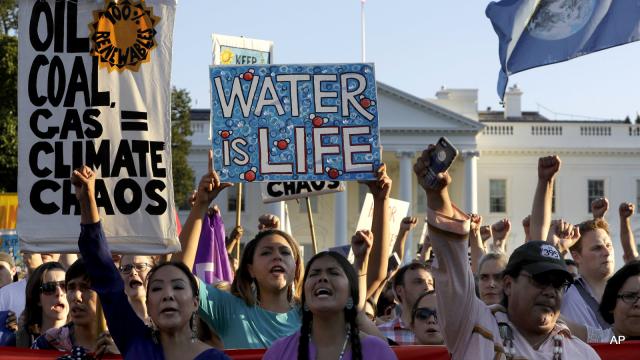
Yet even amid the companies' growing use of scare tactics and secret maneuvers, citizens are ramping up direct action. People have braved the elements and matched the energy giants with their own brand of force, as residents nationwide turn to a mix of creative and traditional tactics to halt as many projects as they can.
For example, in late September, people participated in a "Hold the Line" rally in the Minnesota State Capitol to protest the Line 3 project. Among them was 70-year-old Minnesotan David Johnson, who said he would stand firm against large energy companies despoiling their state.
“I didn’t want to [be a speaker], but I love this land,” he said. “It’s a pretty isolated part of the county right on the edge of the vast wetlands. There’s lots of wildlife and very few people. I don’t want it threatened by the pipeline and their access roads and the potential leaks."
Also in September, angry residents in Superior, WI, took more drastic and visible measures through direct action. Unicorn Riot reported that citizens overturned cars to block the way to the pipeline construction site, and chained themselves to the cars.
Meanwhile, in Pennsylvania, four residents filed a federal lawsuit against Energy Transfer Partners claiming that the company had violated their constitutional rights, harassed landowners and caused emotional distress to pipeline protestors.
"Since May of 2015, every day of my life has been affected by the plans to build this pipeline, and the lengths that Energy Transfer Partners will go to in the pursuit of profit," said plaintiff Elise Gerhart, who lives on property that the pipeline will cross. "We've been needlessly harassed by agencies and violently threatened by individuals who've been intentionally incited and mobilized."
Citizens are increasingly challenging the process by which energy companies seize private property for the use of pipelines, known as eminent domain, generating more controversy over the issue. And people-powered organizations like 350.org are leading campaigns to remove the source of funding for these projects by getting big banks to divest from fossil fuels.
In some cases, environmental agencies are also doing their part to block unsafe aspects of these pipeline projects, like in North Carolina, where the Department of Environment Quality rejected the Atlantic Coast Pipeline’s erosion control plan.
Despite the overwhelming evidence that pipelines remain unreliable, prone to damage, disrepair and devastating leaks, energy companies continue to treat their bottom line as the only factor when making decisions. As a result, more and more citizens are stepping up to hold companies accountable for their actions, and for their lies, using all the legislative, judicial, financial, political, physical and other creative tactics at their disposal.
3 WAYS TO SHOW YOUR SUPPORT



- Log in to post comments


