
Occupy first changed the national conversation on inequality and capitalism to the extent that the full force of the nation-state was turned against a few thousand campers. Who would have predicted that a tent was so subversive an object that its sale would be banned in many locations? Next, it changed the national calendar by bringing together labor unions and immigrant groups to celebrate May Day together for the first time since the Cold War.
Since that day, Occupy has changed its internal conversation. Emerging from a series of horizontal assemblies in May, the Strike Debt campaign that launched on September 17 moves from convergence around the tactic of occupation to consensus around the politics of debt. Debt is the tie that binds the 99%, whether you’re part of the 75% of Americans in debt, or the 25% below the poverty line whose lack of access to official debt is the scarlet letter of impoverishment. We stand with the millions already in default on mortgages, student loans, credit cards and medical bills, with those struggling to make ends meet, and with those whose life opportunities are foreclosed by the amount of debt it now takes to construct the disappeared American Dream.
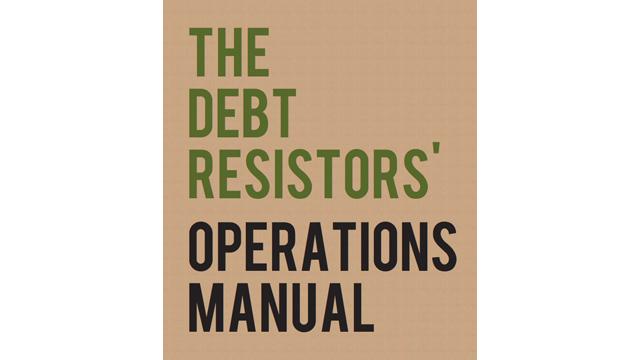
We refuse the assertion that debt must be forgiven to corporations but totally repaid as a matter of morality by people. We understand this for what it is: a system of social control that constrains us to lifetime of debt, ended and resolved only by death. In short, you are not a loan. And to help you, Strike Debt has published "The Debt Resistors’ Operations Manual," a systematic practical guide for debtors on how to improve your situation and what your options are, up to and including debt refusal. In the words of the opening declaration:
"We gave the banks the power to create money because they promised to use it to help us live healthier and more prosperous lives—not to turn us into frightened peons. They broke that promise. We are under no moral obligation to keep our promises to liars and thieves. In fact, we are morally obligated to find a way to stop this system rather than continuing to perpetuate it."
Like the Occupy movement magazine Tidal, the Manual is free. It was researched, written and edited collaboratively in an intense two-month period and printed in a week. For those accustomed to the sclerotic pace of academic research, this process has truly been an eye-opener. It’s been published in paper by a mixture of donations and support from those within Strike Debt. The Manual will continue to be updated as we get better informed and as the situation changes.
The Manual is one of the most substantive pieces of militant research to emerge from the Occupy Movement, a pleasant contrast to the moribund rash of books and articles based on one person’s take on what happened last September. The not-so-easy-to-fool people at Naked Capitalism have given it a thumbs up already:
"This guide achieves the difficult feat of giving people in various types of debt an overview of their situation, including political issues, and practical suggestions in clear, layperson-friendly language." Indeed, the Manual covers all forms of debt and offers a crisp political analysis of the debt society.
The future is about building the possibility of openly declared debt refusal, or debt strike, following the lead of students in Quebec, consumers in Greece and the Catalan independence movement. Do not go quietly into austerity, join us.
3 WAYS TO SHOW YOUR SUPPORT



- Log in to post comments


