
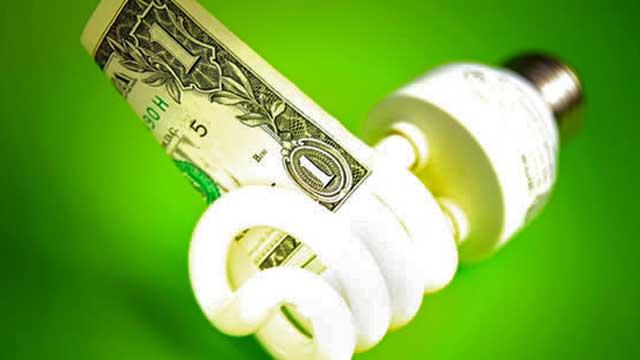
Our political leaders in Washington seem to be stuck in a paradigm where taxes are a thing to be continually cut and minimized. Both parties have called for lower corporate tax rates and have worked to reduce import tariffs. Republicans are continually calling for lower taxes on the rich, and sometimes call for lower rates across the board (just to throw a bone to common people). And while President Obama and the Democrats in Congress call for slightly higher taxes on the rich, even they envisage a top marginal tax rate of no more than 40%. Given this approach to garnering revenue for the government, one would get the impression that taxes are always a bad thing; that there is no such thing as a good tax.
Unfortunately, this viewpoint misses the benefits that can be garnered from taxes that are appropriately assessed, sometimes at extremely high rates.
Let’s start with taxes on energy sources whose production causes some sort of external cost. These “externalities” (as economists call them) are not factored into the price that consumers see when they purchase energy, but they are paid for by society in some form or another. Taxing energy use that is associated with externalities helps to cover the unseen costs of the energy’s production and thereby helps the market come to a more efficient level of demand for that energy source.
This idea is nothing new. America has had a gas tax in place for decades, in part to help pay for highway construction and repair, and in part to help reduce our use of an energy source that has numerous externalities. But we could easily expand this use of taxes to include all energy sources that produce externalities by implementing a BTU tax like that proposed during the Clinton administration. And while the typical arguments for this usually revolve around environmental or national security concerns, there are other benefits to this type of tax that rarely get discussed.
For instance, a BTU tax would ensure that all Americans are contributing to the funding of the federal government. At present, roughly 47% of Americans don’t pay any federal income tax – an unfair situation indeed. (Note that this tax should be part of a larger economic plan which would also raise wages for those on the lower end of the wage scale, so as to not overly-burden those who are working, but don’t earn enough to presently pay taxes).
Because the BTU tax would be so hard to avoid, it would also provide encouragement for those who are not presently working to find gainful employment (once again, this should be part of an overall economic package that improves employment opportunities). This final point may be enough to win over some conservatives who are typically resistant to energy taxes. This same type of tax could also be applied to all natural resources, which would ensure that we are using the nation’s resources as efficiently as possible and limiting waste and pollution.
Higher taxes can also help us avoid detrimental activities that stem from greed and corruption. A top marginal income tax rate that applies to only the highest of incomes could help to deter the backdating of stock options, the packing of corporate boards, the extremely risky bets by traders who work for financial institutions and the type of gamesmanship that we’ve seen recently in the LIBOR scandal.
All of these activities are undertaken in order to increase income above and beyond what are already extremely large levels. In other words, traders weren’t encouraging the manipulation of the LIBOR rate in order to boost their income from $50,000 to $55,000 a year; they incited these actions to boost salaries by hundreds of thousands, if not millions, of dollars from what were already incomes in the top 1 percent.
Democrats have suggested cracking down on such activity through financial regulation and the creation of a large bureaucracy. Yet such greedy, corrupt behavior could be deterred with a marginal tax rate that confiscates most of the income above a certain level (for instance, an 80% rate on all income above $1 million a year).
If such a rate could be combined with tax simplification and a reduction in rates on lower incomes, and used to avoid over-reaching and largely bureaucratic government legislation, it might be enough to garner the support of moderate conservatives. Such a tax rate could also discourage those who benefit from less-than-perfect markets from over-exploiting their position for unnecessary financial gains (think movie stars and super-star athletes).
The bottom line is this: if the government is taking a majority of income above a certain level, there is now less of an incentive to increase one’s income above that point. The key here is to make the tax rate high enough (40% isn’t going to cut it) to provide a meaningful deterrent, and to set the income threshold high enough that the system doesn’t punish success or deter necessary risk taking. President Obama’s proposal of increasing the marginal tax rate on incomes over $250,000 to 39.6% fails on both counts – the income threshold is too low and the tax rate isn’t high enough.
Taxes obviously drive behavior, and that reality can be used to our society’s advantage if we can simply find ways to tax the behaviors we want to discourage or avoid. Taxes levied in appropriate places and at meaningful levels can help drive efficiency and reduce energy waste, lessen pollution and the creation of trash, and help deter the corruption and greedy behavior that has exacerbated our income disparity and jeopardized our economy – all without increasing the size or scope of government.
Unfortunately the current tax debate between Republicans and Democrats misses that golden opportunity. I guess it’s far too easy to simply pander to voters with the promise of a tax cut.
Aaron Swisher is the author of “Resuscitating America – An Independent Voter’s Guide to Restoring the American Dream.”
3 WAYS TO SHOW YOUR SUPPORT



- Log in to post comments


