
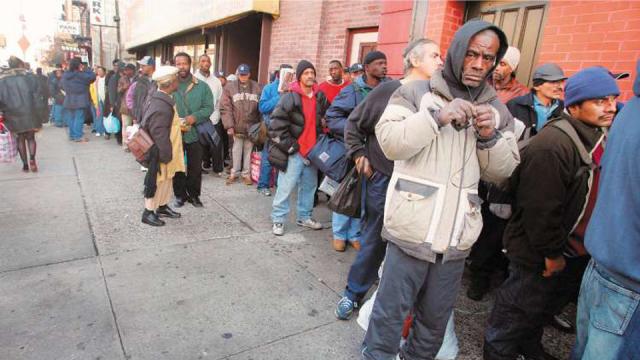
We've got a problem in this country. I know it, you know it, and the politicians know it too, but most won't even say it out loud: poverty. We're bracing ourselves for next month's release of the 2011 numbers - most economists predict that we're looking at the highest rates of poverty in fifty years.
In the years before the recession, we were making some strides. We had programs like Head Start that helped build strong kids from the get-go. We had high employment, and things were moving in the right direction. But even then, when we had budget surpluses, we couldn't get the nation's political leaders to focus on a real commitment to significantly reducing poverty in America. Then the recession hit, and everything changed. Many of those who were in poverty last decade were pushed into "deep" poverty (less than half of the poverty line) and we have an emerging group called the "newly poor"- those suburban families whose houses are under water, who can't pay their gas, and whose six-figure jobs dissolved when the bubbles burst. The face and the type of poverty in this country is changing rapidly: suburbs in the largest metro areas saw their poor populations increase 25 percent from 2000 to 2008 - almost five times faster than in the cities, according to Brookings.
If you're not poor, and you don't have friends who are poor, you might have little clue about what it's like to be in poverty. For too many people before the recession, poverty was about "them." About "those people." Now, poverty is "us" - those sitting next to us in the pews, fellow workers laid off, brothers or sisters with their houses underwater. We have a whole group of hardworking people, through no fault of their own, who are slipping through the cracks and under the poverty line. According to the Census, nearly half of Americans are under the poverty line or barely above it: they are one paycheck, one health crisis, one breath away from falling below that line. Folks who used to donate their used clothes to Salvation Army are now shopping there; families who used to donate to food banks are standing in their ever-growing lines.
We've got a poverty problem in this country, paired with leaders who won't even say the word "poverty," let alone solve the problem. We have a political class, on both sides of the aisle, that is so far removed from the hardships of a normal life that they can't even connect with the middle class, let alone the poor. We've got professional politicians who think they're representing their people, but how can they when they're forced to raise thousands of dollars a day to get re-elected?
We have a system set up for politicians to move farther and farther away from their constituents and into the hands of the donors, the rich, the powerful. Instead of representing their district, they're trolling for money and have lost touch with the people who need them the most - the poor and vulnerable. I don't think all members of Congress came here to overlook the poor, but they were elected into a system that does it for them; in Washington, it's always campaign crunch time, and the pervasive dominance of money in politics has made it nearly impossible for the stories and hardships of the poor to make headway into the national conversations.
The Bible says a nation is judged by how it treats the poor, the vulnerable, and who Jesus called "the least of these." Will we continue to ignore the poor? Will we finally gather the political will in this country now that it's moved to the suburbs and the societal mainstream? Now that it's next to us? Now that it's us?
The poor don't have lobbyists or super PACs to get their voices heard in Washington, and they certainly don't have a real commitment in the party platforms at the conventions this season. So people of faith and conscience will keep beating the drum about poverty and asking each candidate, every candidate, what their policies will do to the least of these. Doesn't the highest American poverty rate in 50 years make this a moral issue - and a political issue?
3 WAYS TO SHOW YOUR SUPPORT



- Log in to post comments


