Read

User menu

Search form

Corporate Lobbying Costs Hit $380 Million In 9 Months Pushing Pacific Trade Deal

Corporate Lobbying Costs Hit $380 Million In 9 Months Pushing Pacific Trade Deal
Wed, 7/29/2015 - by Alex Wilts
This article originally appeared on Reuters

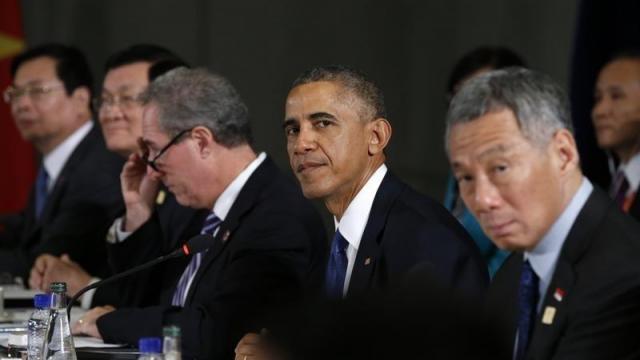
Washington lobbying by companies and groups involved in global trade boomed in the past nine months, records show, as Congress debated a landmark trade pact proposed by President Barack Obama, the 12-nation Trans-Pacific Partnership (TPP).

Lobbying expenditures by members of a pro-TPP coalition increased to $135 million in the second quarter of 2015, up from $126 million in the first quarter and $118 million in the fourth quarter of 2014, according to Senate Office of Public Records reports reviewed by Reuters.

The spending surge occurred among members of the U.S. Business Coalition for TPP, a group that hopes a final TPP deal can be completed by the end of 2015.

Trade negotiators from the 12 TPP countries will gather in Hawaii this week for meetings aimed at wrapping up the deal.

"I'm confident that everybody is going to do everything they can, but the U.S. won't take a bad deal," said U.S. Chamber of Commerce senior vice-president for Asia Tami Overby, one of many private sector representatives heading to Maui for the talks.

The chamber, Washington's largest corporate lobbying group, led the pack in spending in all three quarters. From April to June, it spent $17.9 million, excluding subsidiaries, up 29 percent from the first quarter, the Senate records show.

Another big spender was Business Roundtable, an association of U.S. company chief executive officers. Spokeswoman Amanda DeBard said lobbying on fast-track was a "significant part" of the company's overall expenditures during the second quarter.

U.S. labor groups, which fought fast-track and oppose the TPP because of worries about its impact on jobs, said they intended to redouble their efforts to fight the trade deal after the fast-track legislation was approved by Congress.

Labor union AFL-CIO increased its lobbying expenses by more than 43 percent between the first and second quarters to $920,000, not including subsidiaries.

The overall lobbying expenditure rise coincided with a congressional battle over legislation to give Obama "fast-track" power to negotiate trade deals and speed them through Congress, as well as whether to shut down the U.S. Export-Import Bank.

Ex-Im supports U.S. exporters and foreign buyers of U.S. goods. Aerospace group Boeing Co, a member of the TPP coalition and an Ex-Im beneficiary, more than doubled its lobbying expenses to about $9.3 million during the second quarter.

Boeing declined to provide a detailed breakdown for its lobbying expenses but said it focused heavily on reauthorizing Ex-Im.

Originally published by Reuters

3 WAYS TO SHOW YOUR SUPPORT

ONE-TIME DONATION

Just use the simple form below to make a single direct donation.

DONATE NOW

MONTHLY DONATION

Be a sustaining sponsor. Give a reacurring monthly donation at any level.

GET SOME MERCH!

Now you can wear your support too! From T-Shirts to tote bags.

SHOP TODAY

Sign Up

Article Tabs

From a pro-democratic perspective, civil society and new media organisations are surging in the aftermath of the Orban regime.

The country’s new prime minister, Andy Burnham, has promised a break from the politics of the last 40 years—realizing more broadly that Labour must stand up for the 99% against big business, or the party will become irrelevant.

The tragic shooting of Lorenzo Salgado Araujo is just the latest example of ICE having a fundamental disrespect for human life — further proving why the agency should be stripped of funding and shut down, and its rank-and-file agents and leadership prosecuted.

While the U.S., EU and their allies are enabling Rojava—the strongest force against Islamic State— to fall, it is vital for internationalists to continue to support this beacon of democracy and liberation.

June 23, 2026 may be remembered as the beginning of the end of the Democratic Party establishment.

The current wave of food recalls is a direct byproduct of President Donald Trump’s administration deliberately removing the safeguards put in place aimed at protecting American consumers more than a century ago.

From a pro-democratic perspective, civil society and new media organisations are surging in the aftermath of the Orban regime.

We can still celebrate success while simultaneously putting a cap on net worth.

The country’s new prime minister, Andy Burnham, has promised a break from the politics of the last 40 years—realizing more broadly that Labour must stand up for the 99% against big business, or the party will become irrelevant.

Much like the resistance to AI data centers, the opposition to Flock surveillance cameras has brought the left and the right together against billionaires who are trying to force America into becoming even more of a police state.

Much like the resistance to AI data centers, the opposition to Flock surveillance cameras has brought the left and the right together against billionaires who are trying to force America into becoming even more of a police state.

Posted 1 month 3 weeks ago

The country’s new prime minister, Andy Burnham, has promised a break from the politics of the last 40 years—realizing more broadly that Labour must stand up for the 99% against big business, or the party will become irrelevant.

Posted 1 month 3 weeks ago

We can still celebrate success while simultaneously putting a cap on net worth.

Posted 1 month 1 week ago

The current wave of food recalls is a direct byproduct of President Donald Trump’s administration deliberately removing the safeguards put in place aimed at protecting American consumers more than a century ago.

Posted 2 weeks 2 days ago

From a pro-democratic perspective, civil society and new media organisations are surging in the aftermath of the Orban regime.

Posted 2 weeks 5 days ago

The current wave of food recalls is a direct byproduct of President Donald Trump’s administration deliberately removing the safeguards put in place aimed at protecting American consumers more than a century ago.

From a pro-democratic perspective, civil society and new media organisations are surging in the aftermath of the Orban regime.