
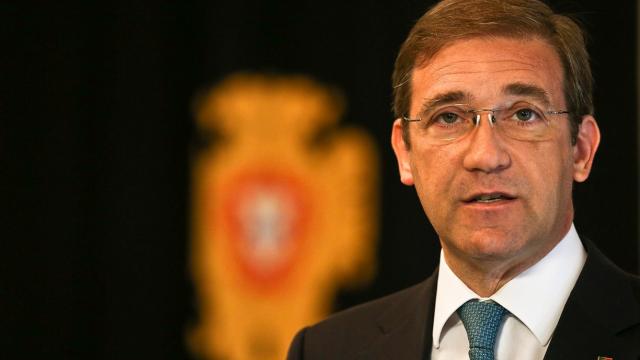
Pedro Passos Coelho must seek parliamentary backing within 10 days of taking office. Photograph: Andre Kosters/EPA
Portugal appeared headed for months of political uncertainty – even crisis – on Monday after the main opposition Socialists and their allies pledged to bring down the country’s new minority government as early as next week.
Pedro Passos Coelho, controversially nominated as prime minister last week by president Aníbal Cavaco Silva following inconclusive elections on Oct. 4, looks set to fall at the first hurdle when he seeks parliamentary backing for the new centre-right government’s program, which he is obliged to do within 10 days of taking office.
His rightwing Forward Portugal Alliance (PAF), which over the past four years has pushed through a raft of tough pay, pension and public spending cuts as well as swinging tax hikes as part of Portugal’s €78 billion bailout agreement, won the most votes and has the largest bloc of seats in parliament, but lost its overall majority.
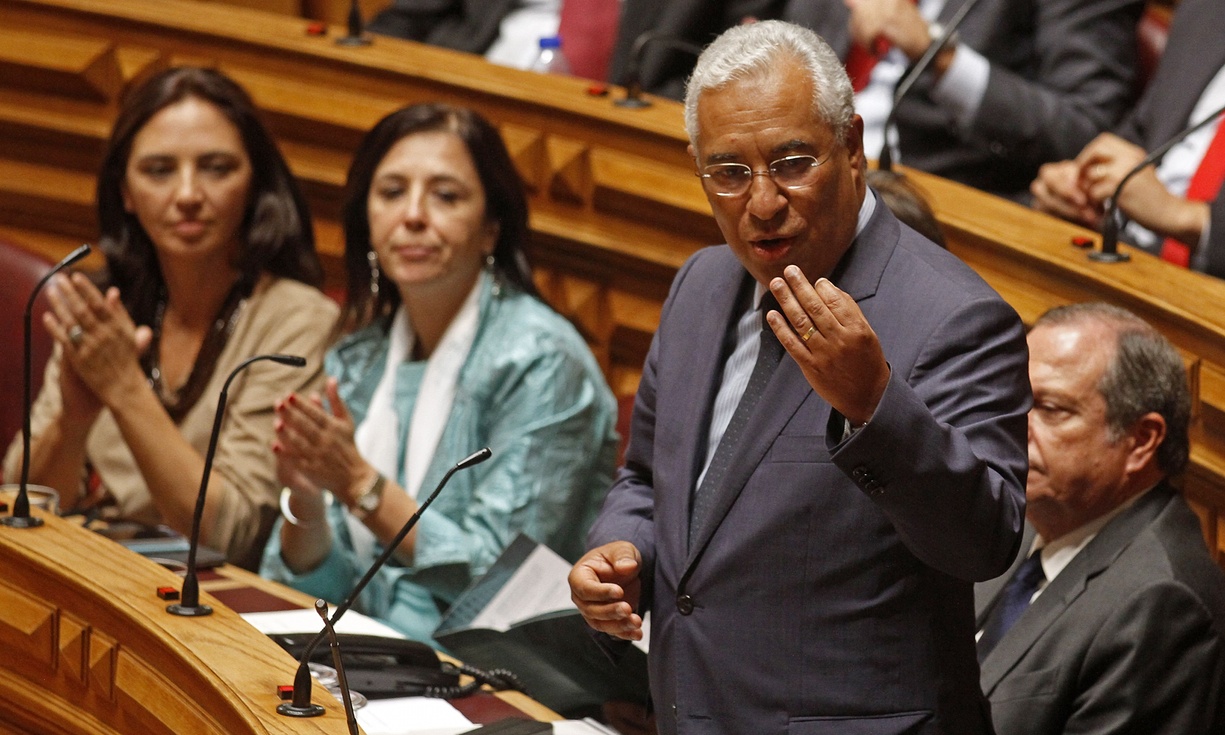
The moderate Socialist party and its allies – the Communists, Greens and Left Bloc – now control 122 seats in Portugal’s 230-seat parliament and the party leader, António Costa, has insisted a leftist alliance could form a stable and durable government. He accused Cavaco Silva of “wasting time” by nominating a prime minister who lacks majority parliamentary support.
Almost two thirds of the electorate (62%) – the combined votes of the Socialists, Left Bloc and Communists – voted against rightwing austerity policies, Costa has pointed out.
But the president, a former leader of Passos Coelho’s Social Democratic party (PSD), has made it clear he has grave reservations about any Portuguese government propped up by what he described last week as an anti-European, hard-left faction.
Even if the prime minister’s four-year program is voted down and the government collapses, Cavaco Silva could in principle opt to leave him in place at the head of a caretaker government with limited powers until fresh elections can be held next June – potentially triggering a full-blown political crisis.
Germany’s chancellor, Angela Merkel, last week described the prospect of a radical anti-austerity coalition in Portugal as “very negative” and Portuguese bond yields rose on Monday, signalling investor fears of a prolonged period of political instability that could damage Portugal’s still-fragile recovery.
With debt still standing at 130% of GDP, the country emerged from a deep three-year recession in 2014.
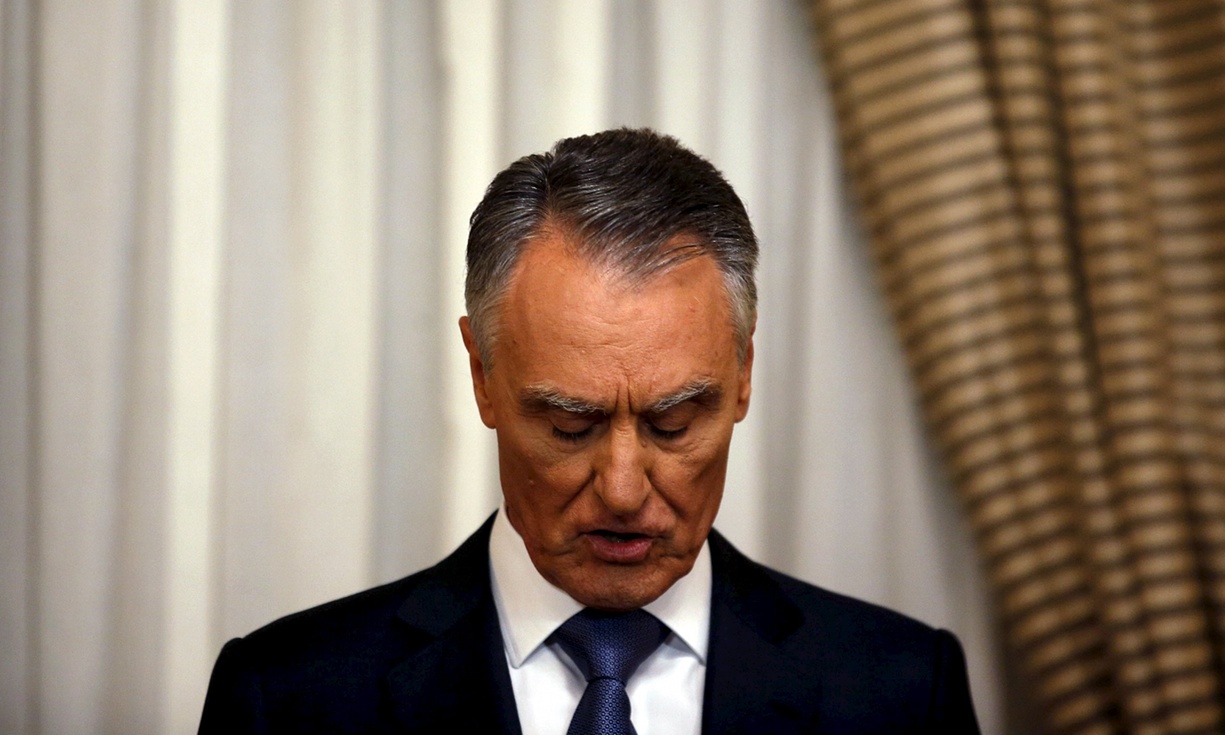
In their first flexing of post-election muscle, leftwing MPs on Friday blocked the appointment of the centre-right’s choice for speaker, electing their own candidate instead. They also promised to present a motion rejecting any program that retains the core of the previous government’s policies.
Cavaco Silva drew sharp criticism for asking Passos Coelho to form a minority government, denying other parties the opportunity. He argued that no governing coalition in Portugal had ever featured an “anti-European” party that had campaigned to take the country out of the euro – as both the Communists and the Left Bloc have done.
A stable government that complied with eurozone rules and could maintain the confidence of international lenders, investors and financial markers was “absolutely crucial to the financing of our economy, economic growth and job creation,” Cavaco Silva insisted, adding that in his view, Portugal’s future outside the EU would be “catastrophic.”
The president’s remarks sparked an intense debate about the extent to which the eurozone’s harsh economic imperatives may now be taking precedence over the democratic process.
Cavaco Silva insisted he was following electoral convention: the job of forming a new government has always gone to the leader of the biggest party, he noted – even when, as was the case with the Socialists in 2009, it did not have a majority. And in any event, “the final decision belongs to parliament,” he said.
Público newspaper described his comments last week as “deeply ideological and at times alarmist.” What happens if parliament does reject the new government’s programme is far from clear.
The president could appoint Costa as prime minister – although his concerns over a possible confrontation between a leftist government in Lisbon and the eurozone might make that improbable.
“The president’s speech was so violent that it is now highly unlikely he will agree to nominate a Socialist government supported by even more leftwing parties,” commentator António Costa Pinto said.
Alternatively, Passos Coelho – who argues that about 70% of the electorate voted for mainstream, broadly pro-European parties, so a radical leftwing alliance would be illegitimate – could be asked to stay on at the head of an interim administration charged with running day-to-day affairs, but with limited budgetary powers.
That might prove a hugely controversial decision, with several Portuguese newspapers and commentators already questioning how a Socialist-led government with majority parliamentary backing could legitimately be denied.
3 WAYS TO SHOW YOUR SUPPORT



- Log in to post comments


