
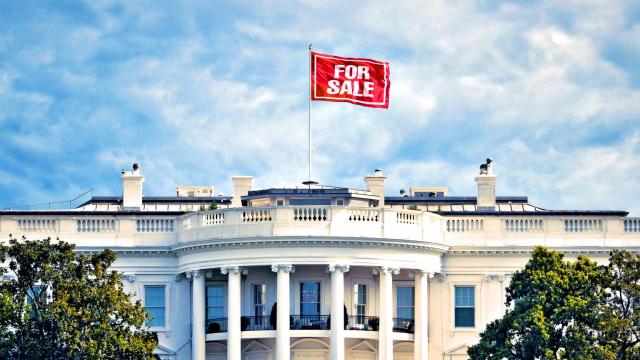
The Supreme Court has eviscerated our already thin federal campaign finance rules, so reformers have turned to the states — the “laboratories of democracy” — to do better.
Their efforts were born of frustration at the lack of movement in Washington. According to Public Citizen, 16 states have now passed resolutions calling for a US constitutional amendment to overturn Citizens United. But the arduous amendment process makes that effort unlikely to come to fruition.
Efforts in Congress seem stymied as well. Campaign finance advocates expect the DISCLOSE Act, which would require corporate disclosure of campaign donations and bar foreign-owned corporations, federal contractors and banks that received bailout funds from donating to political campaigns to be re-introduced at some point. But it’s a long shot — Senate Republicans blocked the measure in 2010, and again in 2012.
Another proposal is the Government by the People Act, which would encourage small-dollar donations and offer new public financing for elections. As of March 6, it had 140 co-sponsors in the House. Maryland Governor Martin O’Malley, a Democrat who is reportedly considering a 2016 presidential run, recently came out in support of the measure.
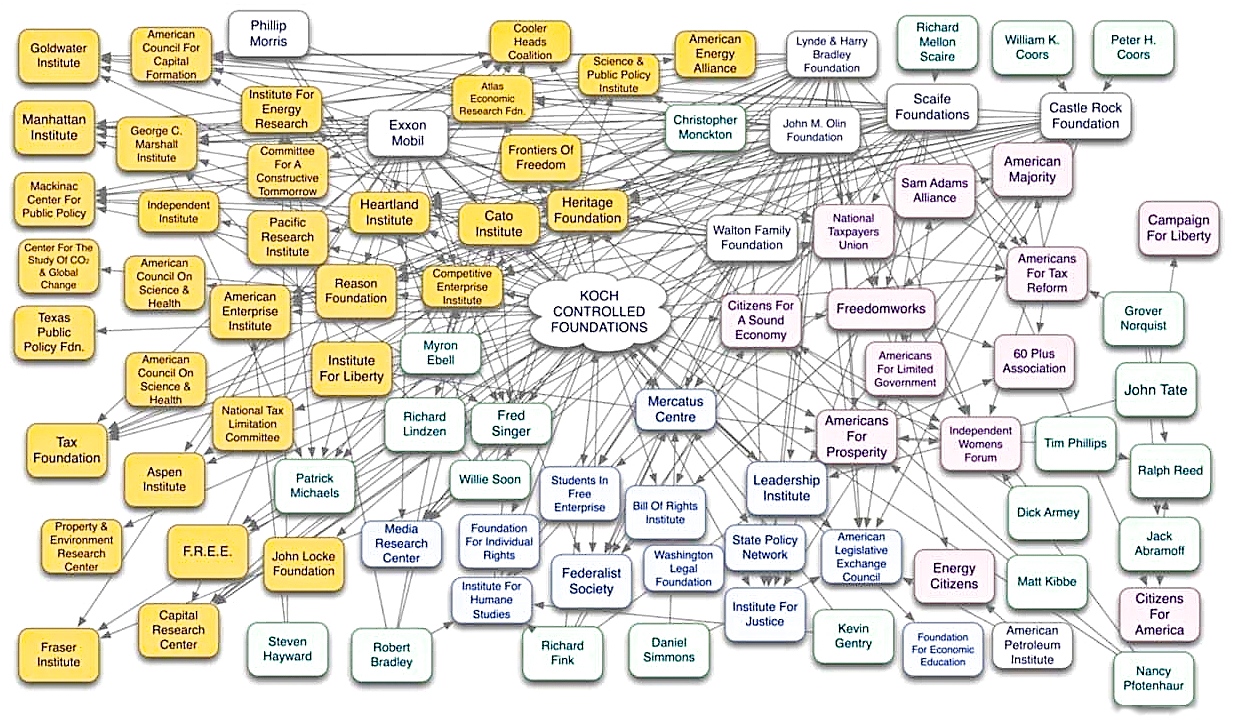
A major part of the problem is that both major parties rely on dark money to fuel their campaigns — although they don’t do so in equal measure. According to the Center for Responsive Politics, 85 percent of spending by outside groups that didn’t disclose their donors supported conservative causes during the 2012 election cycle.
So unless there’s a massive campaign finance scandal, in practical terms, with a highly polarized Congress, there’s little hope in the immediate future of any substantive effort to rein in dark money in federal elections
So it’s at the state level that real efforts are underway to keep the voices of the wealthiest from drowning out those of the majority. Here are some campaigns to keep an eye on…
In California, lawmakers came close to passing Senate Bill 27, which arguably would have created the strictest disclosure requirements in the country. Under the bill, nonprofits would have had to disclose their donors when they first reached $50,000 in spending in an election, or when donors gave $100 for explicitly political purposes. The Sacramento Bee reports that the measure failed to reach the required two-thirds supermajority last week, when Republican lawmakers said they objected to the timeline of the bill’s implementation.
Another measure, Senate Bill 52, is California’s DISCLOSE Act. It requires the three largest funders of political ads on TV to be displayed for at least five seconds at the beginning of each spot, and has similar requirements for print and radio. It also directs voters to more information about a campaign’s financing. It passed the Golden State’s senate last year, and grassroots activists are now pushing to gain passage in the assembly.
SB 831 would force non-profits like ALEC to disclose the donors who pick up the tab for lawmakers to go on expensive junkets. The Los Angeles Times reported that the bill was inspired by a trip 18 legislators took last year that was paid for by “the California Independent Voter Project, a nonprofit group funded over the years by tobacco giant Altria Group Inc., Southern California Edison, Eli Lilly & Co., Pacific Gas & Electric Co., the California Beer & Beverage Distributors, the Pharmaceutical Research and Manufacturers Assn., Chevron Corp. and the state prison guards union.”
In New York, Governor Andrew Cuomo introduced an ambitious package of campaign finance reforms last summer. It would, as The Huffington Post’s Paul Blumenthal writes, “both target corruption and introduce public financing for state elections. It would also lower campaign contribution limits, close loopholes for corporate donations, limit spending by party housekeeping accounts, increase disclosures and strengthen enforcement.”
According to The New York Times, “The prospect of greater competition is the reason many in Albany have tried to stop public financing.“
“But encouragingly, in the last few days the Assembly included the governor’s campaign finance proposal in its version of the budget. The problem, as is often the case in Albany, is the Senate, controlled jointly by Dean Skelos, the Republican leader, and Jeffrey Klein, an independent Democrat."
Because the reform package is part of the proposed state budget, a vote must take place by the end of the month.
Going back to the days when the state fought against the political control of the copper barons, Montana has a rich tradition of regulating campaign spending that creates the “appearance” of corruption. In 2012, the Supreme Court struck down a Montana law that directly conflicted with Citizens United.
But that ruling applies to federal elections, and Andy Kroll reports that a group of Republicans is trying to get an initiative on the 2014 ballot that would ban dark money from state contests.
Perhaps the most innovative attempt to combat the influence of dark money is a new initiative called the States’ Unified Network (SUN) Center. The initiative will start out as an informal working group bringing together campaign finance watchdogs from 10 states — New York, California, Alaska, Idaho, Maine, Montana, Maryland, Massachusetts, Washington and Iowa, along with New York City — to collaborate on efforts, The Washington Post notes, to “highlight proposed legislation and standing campaign finance law.”
They will combine records of campaign donors into a multi-state database. Ann Ravel, chairwoman of the California Fair Political Practices Commission, told the Post, “Ultimately, the group could go in many other directions, such as joining enforcement matters, potentially joining in some sort of pressure groups of states with the federal government.”
The SUN Center has information about several other legislative initiatives underway in Michigan, New Jersey, Arizona, Massachusetts and North Carolina.
And pro-democracy activism isn’t limited to the state level. The Move to Amend coalition lists 383 local resolutions calling for Citizens United to be overturned that have either been passed or are being considered.
As Kim Barker told Bill Moyers, “the Supreme Court was naive about how campaign finance really works.” It appears that a growing number of Americans aren’t as easily fooled.
3 WAYS TO SHOW YOUR SUPPORT
- Log in to post comments


