
On its surface, the Internet appears to be a free-for-all, a place to communicate, conduct business, read news or simply watch silly cat videos. But the truth is that in the United States, the Internet is not an open space. It offers the illusion of freedom, even though our rights to access, create, distribute and secure information remain squarely in the hands of a few private companies.
To understand why this is, we need to look at the current state of Internet infrastructure in the United States. Late Alaska senator Ted Stevens was once ridiculed for saying, "The Internet is a series of tubes." Ironically, he wasn't too far from the mark. Cables, wires, fiber optics and copper connect everyone on the Internet to everyone else. For the Internet to work, the router in your home must be connected to the telephone pole on your street, which must be connected to your Internet Service Provider's network, and, in turn, the rest of the Internet.
This physicality is incredible. The vast distances we spanned, taking Internet to the farthest corners of the globe, are a testament to the human spirit and private enterprise. But this physicality has consequences, as the infrastructure - the "tubes" that connect us - in the United States are all owned by a handful of private companies, such as Comcast and Time Warner. The platforms we use on the Internet, such as Facebook and Google, are also run on servers owned by those private companies.
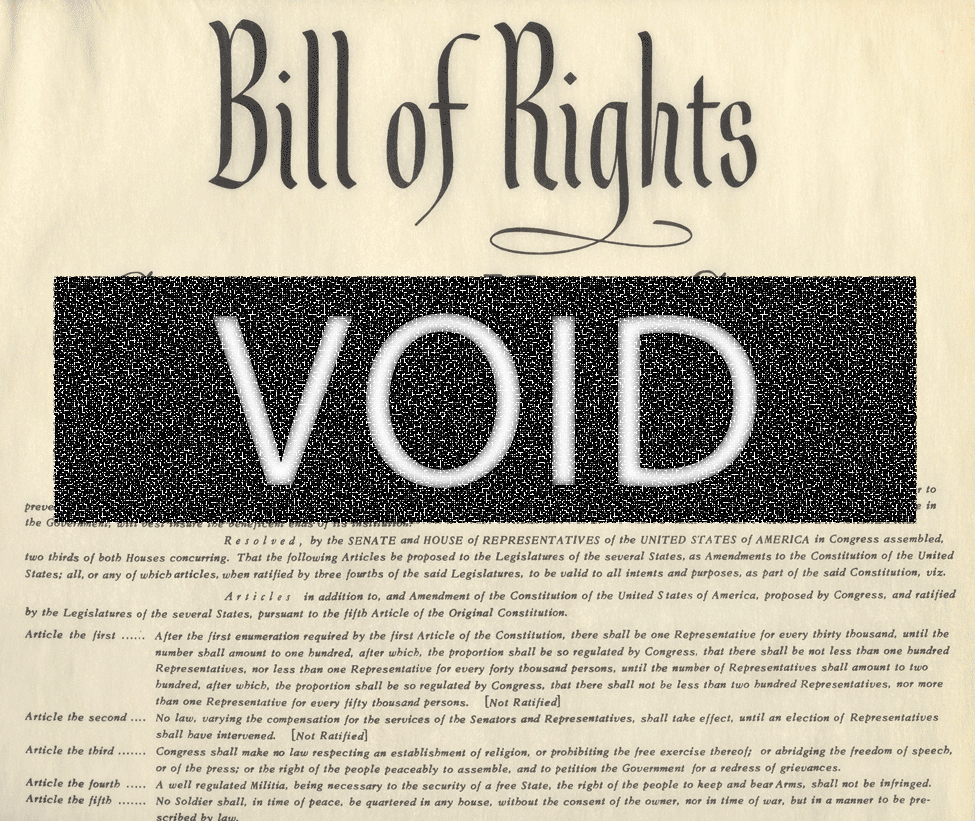
We relinquish any rights we have the moment we sign up for any of these companies' services. The Bill of Rights does not apply to this privately owned space, nor do these companies honor those rights. Our data and information is theirs to package and sell, censor and limit.
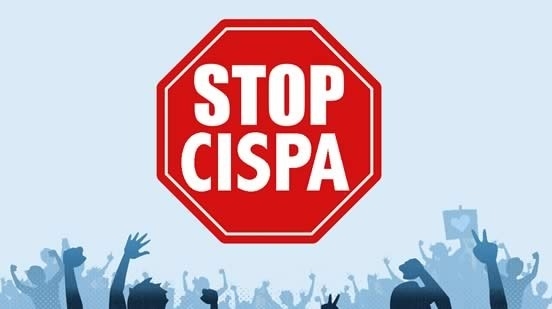
Laws to protect any of these rights don't exist. The laws currently governing the online realm date back 20 years, when the Internet was in its fledgling state. Currently, Internet-related bills that are up for discussion threaten to make things worse.The Stop Online Privacy Act and the Protect Intellectual Property Act (often referred to collectively as SOPA/PIPA) would have severely crippled the way we can create and distribute content online. A new bill called the Cyber Intelligence Sharing and Protection Act (CISPA) currently being marked up in closed hearings in the House would take away our right to sue private companies for turning over our information to the government or each other. Reform of the vague Computer Fraud and Abuse Act (CFAA), which many criticized after the death of Internet activist Aaron Swartz, threatens to become more narrow-minded and harsh.
We must educate ourselves on these issues. Reform begins with knowledge. With so much of our lives online, we cannot afford to not know how the Internet works. The next step is to start fighting for your rights with your vote. It's time to make Internet rights an election issue - only then can we get the consumer protections and online freedoms we need to keep America free.
3 WAYS TO SHOW YOUR SUPPORT


- Log in to post comments


