
Francisco is a guitarist in Andalucia, southern Spain. Aside from his guitar, Francisco is regularly seen out and about carrying a stack of books. He's studying Greek, English and Latin. Francisco's enthusiasm to learn and do well in his exams is commendable – though as he admits, instead of still pursuing full-time education in his 30s, he'd rather have a job.
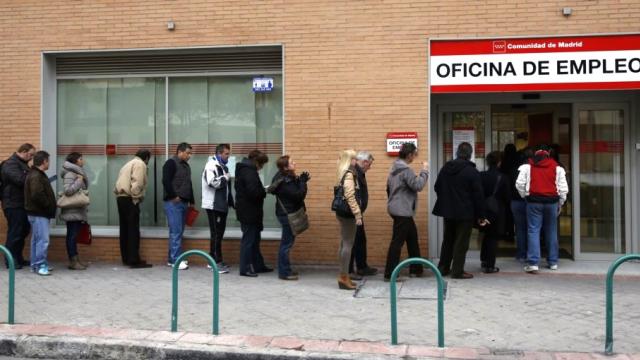
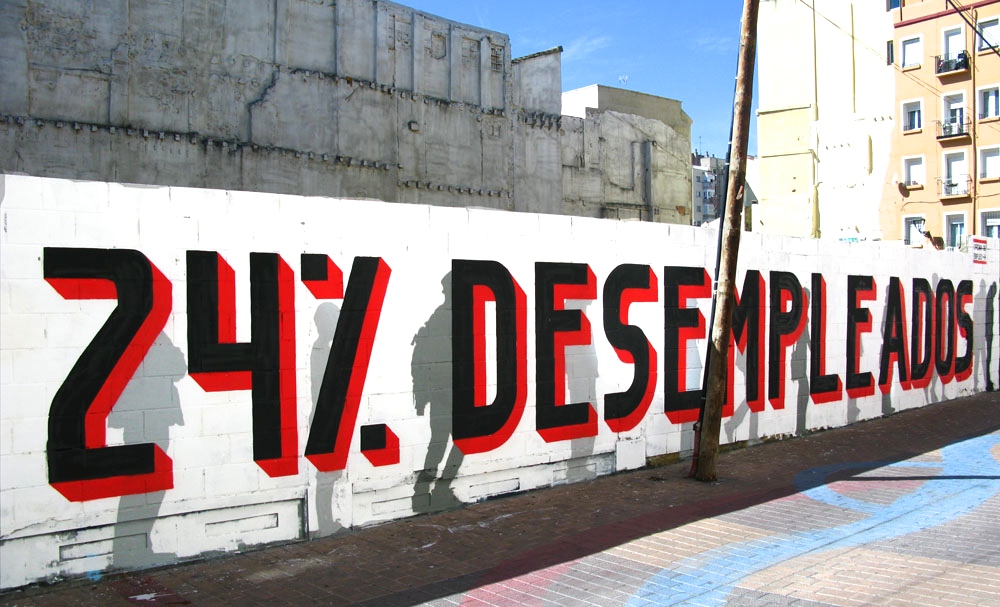
The unemployment statistics in Spain speak for themselves: a 26% jobless rate for the working population and, as of June last year, a record 51% for under-25s. So what are young people in Spain doing instead of working? It seems the country's youth are either staying in education, demonstrating in the streets, grappling with business opportunities, migrating to another country – or in some cases, giving up.
15-M movement
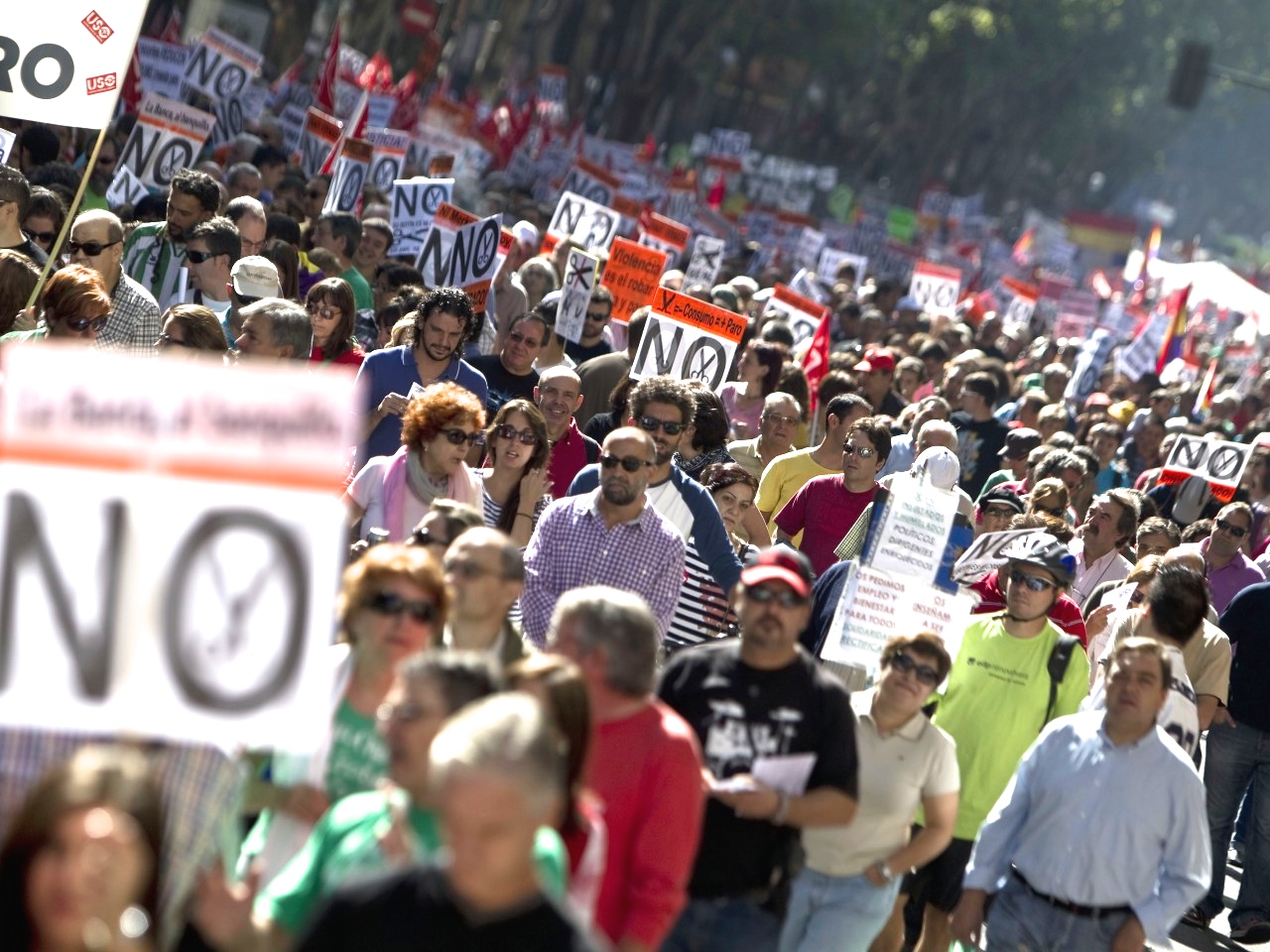
In the summer of 2011, the eight-year rule of the Spanish Socialist Workers' Party (PSOE) came to an end. During this time, a small, youth-centered movement known as the Spanish Indignados – since referred to more commonly as the 15-M movement – gathered in protest on May 15, one week before local elections. The Indignados, who sustained a month-long occupation of Madrid's Puerta del Sol as millions more protested in cities across the country, quickly transformed into the biggest political development in a generation.
A combination of innovative online and offline activism steered 15-M away from traditional forms of political engagement, and has helped to sustain it since. It was said to have been the harbinger of the Occupy Wall Street movement, which emerged in the U.S. a few months later and adopted many of the decentralized, direct democratic processes exercised in Spain.
The 15-M movement may have fueled hopes for the 6.5 million Spaniards who took part in the demonstrations during the summer of 2011. But as the heterogeneous movement poignantly voiced concerns and dreams shared by young people across the nation, today frustrations amongst Spain's youth are higher than ever.
As I wrote in November 2011, Spanish Prime Minister Mariano Rajoy's promise to introduce “profound” and “serious” austerity measures has helped lead to more riots in Spain – and the country is still ablaze in 2014, perhaps now more than ever.
On March 22, tens of thousands of people gathered in Madrid for a "Dignity March" to protest EU-imposed austerity measures. While most of the protest was peaceful, there has been an increase in radicalization, particularly amongst young people. With more than 50% unemployment among Spanish people under 25, the increase in outrage is not only understandable but surely could have been expected.
Gloom, despair and resignation describe the atmosphere amongst Spain's youth. Aside from provoking escalated protests, the lack of jobs is causing many young, overqualified Spaniards to flee their country in pursuit of better opportunities abroad.
Pedro Lorente Llorente is a friend of mine who lives in Baza, a town in inland Andalucia that's been hit particularly hard by the recession. In his 40s and looking for work himself, Pedro said he is appalled by the lack of opportunity for Spain's younger population.
“The reality of what is going on in Spain is on the street and not what they say in the news," he told me. "Right now the future of Spain's youth looks pretty black. The country is not creating anything. With minimal job opportunities, many young people are going to other countries to find work.”
Another Spaniard, Juan Antonio Franco Lopez, is currently studying English, French and Italian at Manchester Metropolitan University in the U.K. Juan, 21, blames the Spanish government for not supporting young people's efforts to find work.
“There are lots of well prepared graduates that cannot find a job in Spain so they have to try and find one in countries like Germany and Britain,” Juan told me.
“I will try and find a job in Spain when I finish university. No doubt it will be difficult and I will probably end up back in the UK looking for work.”
Asked about the recent demonstrations rocking his country, Juan said they are to be expected. “I think they are a normal step that society has to follow to fight for its rights,” he said.
El Ninis
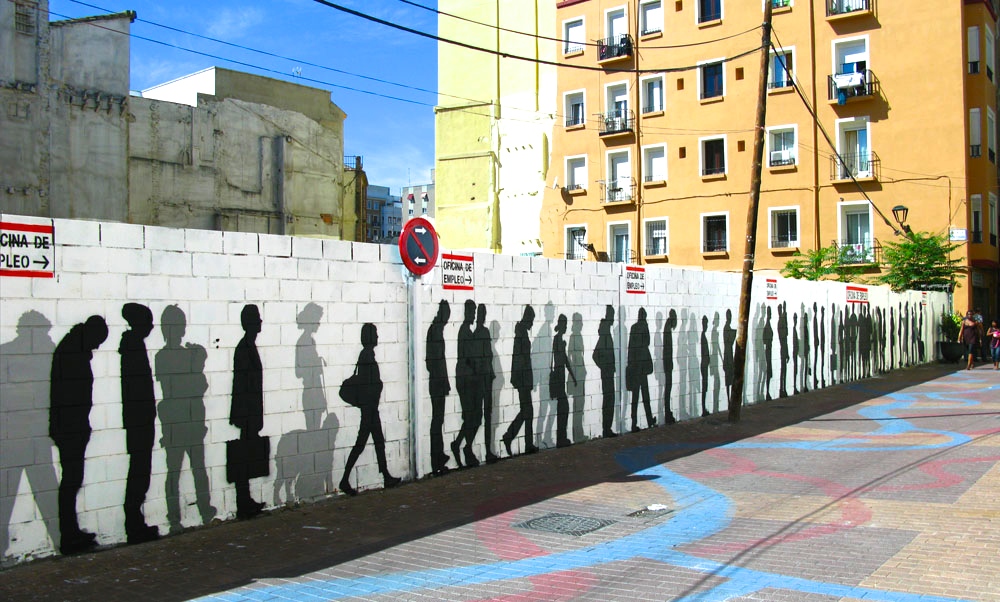
While some of Spain's so-called "lost generation" are staying in education rather than opting to "do nothing" in the face of the crisis, a new term has been coined to describe those who are almost giving up: “Ninis.” It's an abbreviation for “Ni estudian ni trabajan” – “They neither study nor work” – referring to those who have given up the job search and have left education.
Even for some who have work, the future isn't rosy. Many are facing reduced hours and salary cuts. Ana Burgos has worked for several years as a teacher and caregiver at a school for disabled students in the interior of Andalucia. She works long, hard hours practically every day – and since January of this year, Ana has not been paid.
“The government has no money to give to people with disabilities,” Ana told me. “I don't want to leave my job, though, as I might not be able to find another one.”
Without government support, some young Spaniards are using commercial initiative to try and find solutions – but it's far from easy in the economic climate. Unable to find work, Francisco De Asis Montesinos-Vidal attempted to embark on a business venture. He wanted to start exporting "traditional" Spanish products to the UK. But without government support and with extremely high business taxes to pay, Francisco's project never got off the ground.
The initial excitement around the 15-M movement of 2011 might have died down. But with the country's youth left to their own devices, while the Spanish government fails to offer solutions and the unemployment keeps rising, many young Spaniards could soon turn to newer tactics of survival as they press for economic and social change. The name of one of the growing, organized bodies here perhaps says it all: “Juventud sin futuro,” or Youth without future.
3 WAYS TO SHOW YOUR SUPPORT



- Log in to post comments


