
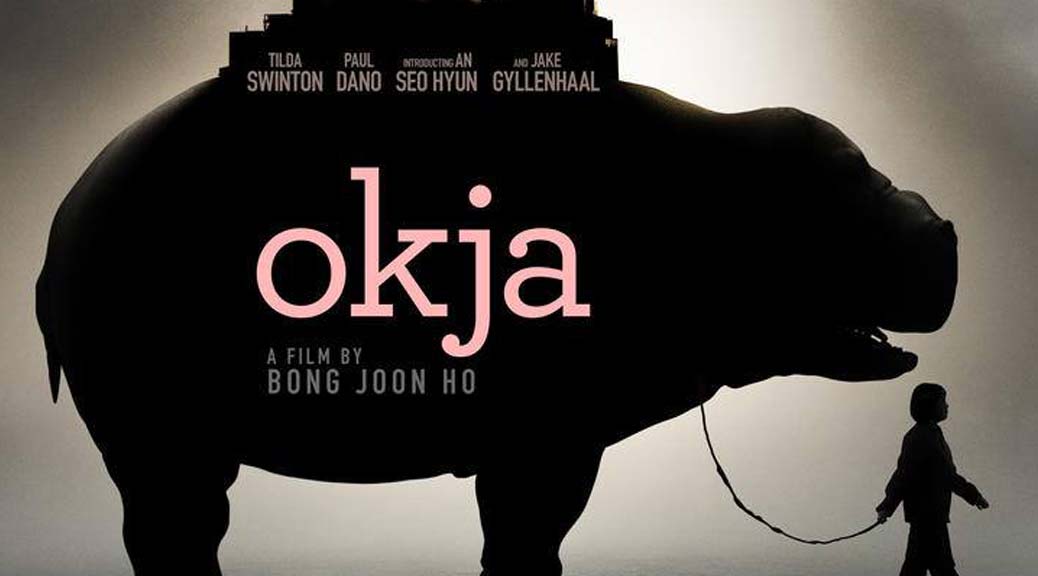
Two of my favorite screenwriters, K. Austin Collins and Armond White, recently commented on the Netflix film Okja, which sparked many a cinephile controversy at the Cannes Film Festival this year. Their opinions ranged from mildly enthused to rather incredulous, with “anti-capitalist” and “childish propaganda” thrown around in equal parts. They described Bong Joon-Ho’s latest film without mincing words. For me, the film exists somewhere between the two: as a kind of socio-political fairy tale with clear-cut villains and do gooders. In fact, nothing about Okja is mincing in the least.
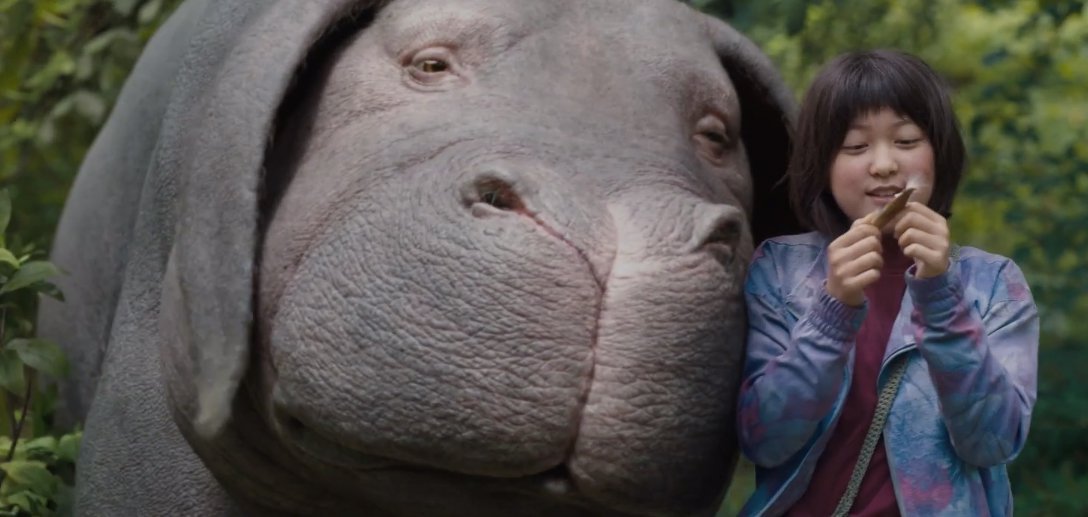
Biting with tenderness and edginess, Okja – similar to the director’s previous movie, Snowpiercer – is an almost modern dystopia, showcasing a world that anyone with sense wouldn't want today. And yet, it is today. And yesterday. And tomorrow. It is recent and soon to be history, vivid and eccentric, but all too familiar and true: it is the story of corporate dream factories run amok. Okja is a tome on the real beating heart of capitalism and the implications of letting that system operate with little to no impunity. It's also a pop-up book about a young heroine who just wants her friend back. Her friend Okja, the super pig.
The movie opens with a crazy colorful presentation by the Mirando (Monsanto, anyone?) Corporation, describing in detail how kind and humane its new GMO/animal slaughter process will be. Tilda Swinton, the insecure face and CEO of Mirando, plays with the notion of public image as reality and does it to an intriguing fault. She insists her super pig project won’t contribute to climate change and will be as harmless as possible. For who? People? And why talk about food in such a way? Is there a danger to eating this meat? Swinton's character brushes off all critics as haters and sticks to her guns: she is on the side of good. Or as the CEO of Enron once said, “On the side of angels.”
It doesn’t take long for Okja to get into a high stakes adventure involving animal rights groups (militant but nonviolent, in hilarious ways), publicists and TV hosts. In one of the highlights, Okja leads everyone on a Benny HIll/Buster Keaton-style chase through downtown Seoul in an effort to escape its captors. For the little girl at the center of the film, who is invested in Okja completely out of love, this trip is anything but a fish out of water. She is goal oriented and just wants her family to be whole. There is a language barrier between her and everyone else (she is Korean), so no one really understands her plight and therefore cannot learn any lessons. Then again, the lessons to be learned aren’t for the characters, but the audience.
In one highlight of Okja, a factory farm is painfully compared to concentration camps, and in most unsettling ways. After more than an hour, we come to see these animals as real life beings, and therefore become disgusted by their treatment. Yes, these are computer-animated creatures being slaughtered in a fictional film, but does it mean we should take the meaning less seriously? Making this picture was an incredibly bold and brazen move on the part of Bong Joon-Ho. But he’s a director of bold and brazen moves (just watch Snowpiercer where he argues that humanity ought to be reset), so it’s rather apropo.
Yes, this is a movie of bias. Bias towards decency. Bias towards respect. Bias towards goodness. It must be understood that there are some genuine wrongs in the world, without grey areas at all. It’s wrong to lie us into war. It’s wrong to steal healthcare from poor people. And it’s wrong to torture, either people or animals. I’m no vegan, but Okja succeeds in making me second guess my buying choices. Its emotional resonance is thoughtful and powerful, almost to the point of crying. K. Austin Collins and Armond White are most articulate wordsmiths. But perhaps they got trapped down the critical rabbit hole this time, without an ounce of charm to lend them a hand. Grab on, if you can. Always, grab on.
Rating: 5 / 5
Bill Arceneaux is a film critic from New Orleans and a member of Southeastern Film Critics Association. Follow him on twitter at @billreviews.
3 WAYS TO SHOW YOUR SUPPORT



- Log in to post comments


