
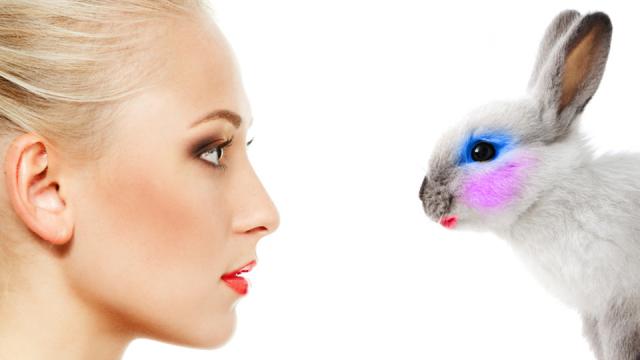
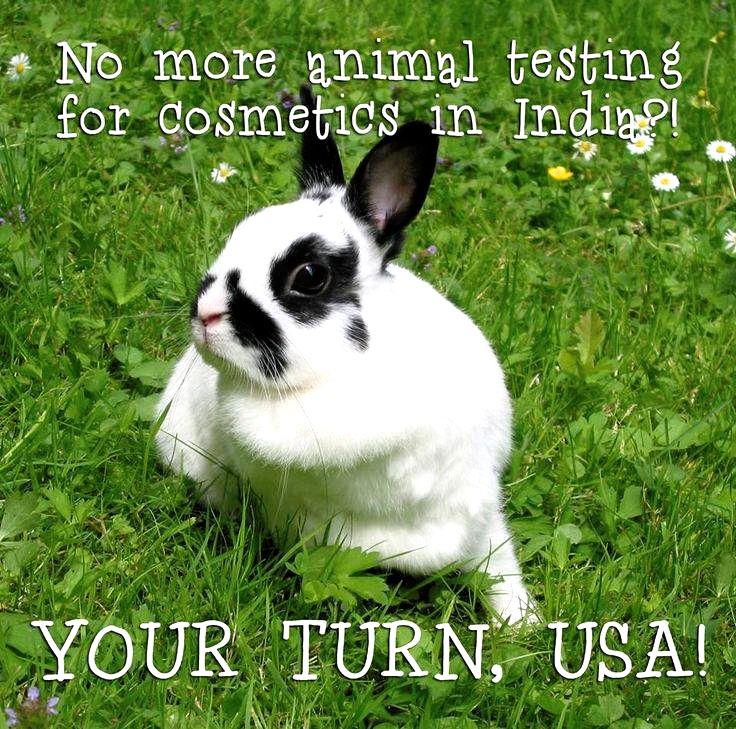
Finally, after a very long while, India is in the headlines for all the right reasons. First the country announced a national ban on animal testing for cosmetics. Then, five months later, it declared a complete “ban on the import of all cosmetic products which have been tested on animals.”
As many in the country’s media proudly reported, India recently became the first country in South Asia to ban the import of animal-tested beauty products.
Activists have long been working to create awareness around the issue, and the ban was largely a result of Humane Society International/India's “Be Cruelty Free” campaign – one of the largest global campaigns on animal cruelty which petitioned the Ministry of Health earlier this year with over 70,000 signatures.
The ban will become effective Nov. 13 in the form of Rule 135-B, which states, “Prohibition of import of cosmetics tested on animals... No cosmetic that has been tested on animals after the commencement of Drugs and Cosmetics (Fifth Amendment) Rules, 2014 shall be imported into the country.”
The amended Drugs and Cosmetics Rules, which previously enabled the import of animal-tested cosmetics, puts India in the league of the European Union and Israel, which have enacted such prohibitions since 2009. China now also promises to follow suit.
China earlier required a “mandatory” animal testing requirement on any product to be sold inside the country. That country has now agreed to start work on forbidding the mandatory requirements for local cosmetic products.
Promoting Ahimsa
“India has no reason to buy or test cosmetics on animals,” says the animal rights activist Vaikunth Narayanan. “We have a huge industry of natural products like the Khadi industries where great products are produced at very reasonable prices. Besides, it works along Gandhian principles: Ahimsa, or nonviolence, is a principle for all living creatures.”
Alokparna Sengupta, the campaigns manager for Humane Society International/India steering the successful Be Cruelty Free drive, says, “India has made history for animals in South Asia. This is a huge achievement that could not have been possible without the compassion of our government, consumers and industry.”
And the decision isn’t just restricted to the area of cosmetics. As Sengupta says, “This can be a defining moment in the modernization of India’s safety science, with potentially hundreds of thousands more animals spared pain and suffering.”
Legal Necessity?
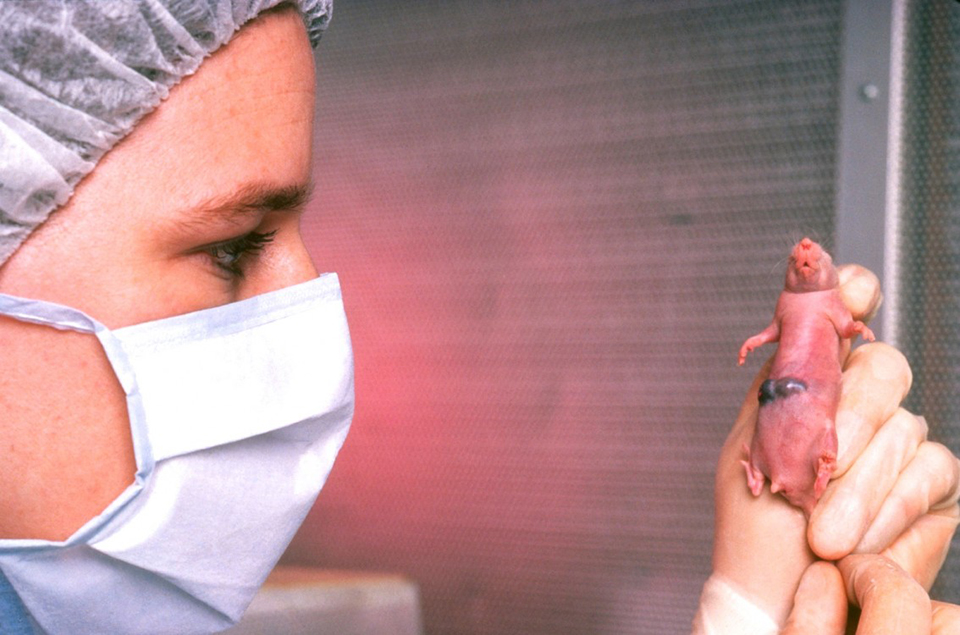
The use of animals in cosmetics safety testing is not legally required in India. Yet the Bureau of Indian Standards recommends certain tests which legalize skin and eye irritation, in which chemicals are rubbed on to the shaved skin or dripped into the eyes of rabbits; repeated force-feeding studies that last weeks or months, looking for signs of general illness or specific health hazards; and even widely condemned “lethal dose” tests, in which animals are forced to swallow massive amounts of a test chemical to determine the dose that causes death.
As the Humane Society International website explains, “At the end of a test, the animals are killed, normally by asphyxiation, neck-breaking or decapitation. Pain relief is not provided.”
No official statistics exist on the widespread use of animal testing for cosmetics in India. Tests recommended by the Bureau of Indian Standards include the use of rats, rabbits and hamsters. Cosmetic companies that are already in full compliance with a test and sales ban in the 28 countries of the Europe Union initially resisted a similar ban in India.
As Sengupta says, “We have heard the industry’s arguments during extensive consultation meetings, and not a single issue raised justified tampering with India’s cosmetics animal testing ban, nor the long-awaited import ban."
"Testing cosmetics on animals goes against the non-violence principle of Ahimsa, and protecting sentient animals from suffering is enshrined in India’s constitution as the duty of every citizen," Sengupta concluded.
A Sustained Campaign
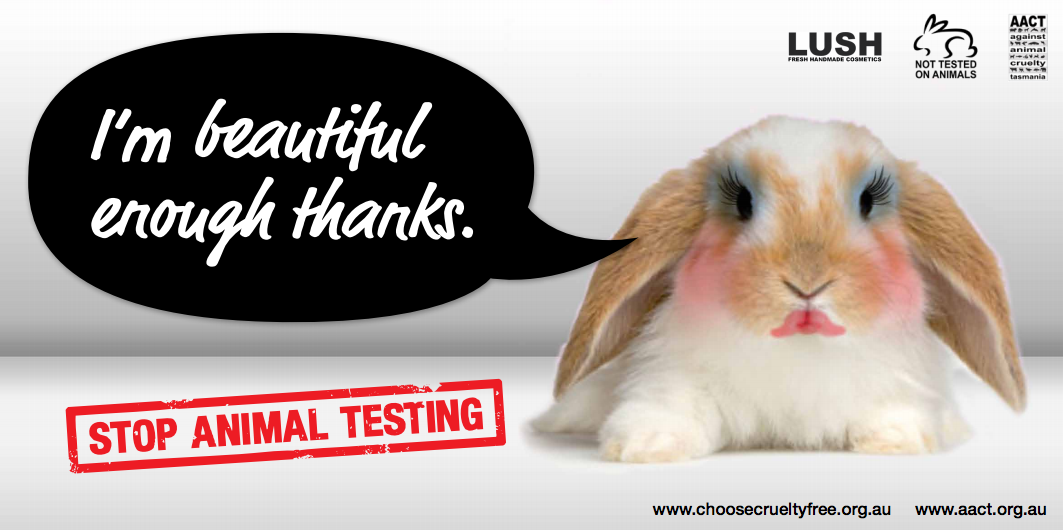
Humane Society International received more than 70,000 signatures from citizens across India to bolster its case. However, the campaign didn’t happen overnight but was the result of sustained and patient efforts.
In a statement, Gauri Maulekhi, a trustee with People for Animals, said: “India has shown outstanding leadership by so swiftly advancing first a ban on cosmetics animal testing and now a ban on animal-tested cosmetics imported from overseas."
"By working so diligently with the #BeCrueltyFree India campaign, our policy makers have put India on the map as a country transforming its laboratories and regulation from outdated test methods to state-of-the-art science. Animals, consumers, scientists and companies have everything to gain from such modernization.”
Especially among the older generation in India, using cruelty free products has always been the norm. “In India, we have a rich tradition of using natural products like leaves, oils and herbs as cosmetics,” says Dr. Narayan Shetty, an Ayurveda practitioner. “It’s time we went back to our roots.”
Follow the author @ParoP.
3 WAYS TO SHOW YOUR SUPPORT



- Log in to post comments


